Ask anyone observing Ekadashi why they avoid grains, and you’ll likely get vague answers: “It’s tradition,” “My grandmother did it,” “Everyone does it.” But few know the actual scriptural reasoning behind this ancient practice.
Today, we’re diving deep into the Padma Purana, Skanda Purana, and other authoritative texts to uncover the fascinating story of how sin personified came to reside in grains on Ekadashi—and why this makes the 11th lunar day the most powerful fasting day in the Vedic calendar.
Ekadashi (एकादशी) literally means “the eleventh” in Sanskrit. It refers to the 11th tithi (lunar day) in both the waxing (Shukla Paksha) and waning (Krishna Paksha) phases of the moon.
Frequency:
Why the 11th day?
The number 11 is significant in Vedic cosmology:
To understand why grains are forbidden on Ekadashi, we must journey to Satya Yuga (the first cosmic age) and witness an epic battle described in Padma Purana, Uttara Khanda, Chapter 38.
During Satya Yuga, a powerful demon named Mura (मुर) arose. He was the son of Taaljangh and surpassed even his father in strength and cruelty.
Mura’s Reign of Terror:
The dispossessed Devas wandered in despair until they finally approached Lord Vishnu for help.
Lord Vishnu, moved by the Devas’ plight, agreed to confront Mura.
Padma Purana describes:
सहस्रं दिव्यं वर्षाणां युद्धं तेन कृतं प्रभो।
“For one thousand divine years, the Lord battled with him.”
The battle was ferocious. Vishnu’s divine weapons destroyed Mura’s vast army, but the demon himself proved extraordinarily resilient. After a thousand celestial years of continuous combat (equivalent to 360,000 human years), Lord Vishnu grew fatigued.
Exhausted from the prolonged battle, Vishnu traveled to Badarikashrama (modern-day Badrinath in the Himalayas) and entered a beautiful cave called Himavati to rest in Yoga Nidra (divine yogic sleep).
Mura, seething with rage, tracked Vishnu to the cave. Seeing his enemy sleeping, the demon thought:
“Today I will kill this slayer of demons! He is vulnerable!”
As Mura prepared to strike the sleeping Vishnu, something extraordinary happened.
From Lord Vishnu’s transcendental body—specifically from his 11 senses—emerged a radiant divine feminine energy.
Padma Purana describes her:
तस्याः शरीरात् उद्भूता देवी दिव्यास्त्रधारिणी।
तेजसा दिव्यरूपेण शोभमाना महाबला॥
“From His body emerged a goddess bearing divine weapons,
Resplendent with divine radiance, possessing great power.”
This magnificent goddess, armed with celestial weapons, stood between Mura and the sleeping Vishnu.
Mura, arrogant and lustful, saw the beautiful maiden and proposed marriage. She responded:
“If you can defeat me in battle, I shall marry you. But if you lose, you forfeit your life.”
The ensuing battle was swift and decisive.
The goddess shattered all of Mura’s weapons with her divine power. She destroyed his chariot, killed his army, and finally—with one devastating blow—beheaded the demon Mura.
When Lord Vishnu awakened, He saw the slain demon and the victorious maiden standing before Him.
Their conversation (Padma Purana):
Vishnu: “Who are you, and how did you slay this terrible demon?”
Goddess: “O Lord, I am Maha Shakti (Great Power), your internal potency, manifested from your eleven senses (ekadasha indriyas). I am your eternal servitor, and I have slain Mura to protect you.”
Pleased beyond measure, Vishnu asked her to choose any boon.
Her request:
यदि तुष्टोऽसि मे स्वामिन् वरं देहि महाप्रभो।
यो जनः मम वासरे उपवासं करिष्यति॥

स पापेभ्यो विमुच्येत मोक्षं च लभते परम्।
“O Lord, if you are pleased with me, grant me this boon:
Whoever fasts on my day (Ekadashi)
Shall be freed from all sins
And attain supreme liberation (moksha).”
Vishnu joyfully granted her wish and proclaimed:
त्वां नामतः एकादशी इति ख्याता भविष्यति।
एकादश्यां उपवासेन मम लोकं गमिष्यति॥
“You shall be known by the name Ekadashi (born from the eleventh).
By fasting on Ekadashi, one shall attain My supreme abode.”
From that day forward, Ekadashi became the most sacred fasting day, blessed by Vishnu Himself.
The story doesn’t end with Mura’s death. There’s a crucial second chapter that explains why grains specifically are avoided on Ekadashi.
According to Padma Purana (as narrated by Sage Vyasa to Jaimini Rishi), at the time of creation, Lord Brahma created Papa Purusha—the personification of all sins.
Papa Purusha’s purpose:
To control Papa Purusha and administer karmic justice, Yamaraja (god of death) and various hellish planetary systems were also created where sinful souls suffer.
When Ekadashi Devi was created and blessed with the power to absolve all sins of those who fast on her day, Papa Purusha became terrified.
His reasoning: “If people observe Ekadashi fasting, all their sins will be destroyed! My very existence will become meaningless! Where can I hide?”
In desperation, Papa Purusha approached Lord Vishnu, fell at His feet, and pleaded:
त्वत्कृतोऽहं महाभाग निवासं न लभे क्वचित्।
एकादश्याः प्रभावेन जीवाः मुच्यन्ते सर्वतः॥

कुत्रापि तिष्ठामि तत्र न स्थातुं शक्नुवे प्रभो।
“O Lord, I am Your creation, yet I find no place to reside.
By the power of Ekadashi, souls are being liberated everywhere.
Wherever I try to stay, I cannot remain there.
Ekadashi’s power drives me away!”
Hearing Papa Purusha’s plea, Lord Vishnu offered a solution—but with conditions:
Padma Purana records Vishnu’s declaration:
एकादश्यां दिने पाप अन्नमाश्रय तिष्ठ त्वम्।
यो जनः भक्षयेत् अन्नं एकादश्यां हरेर्दिने॥

स पापी भवति ध्रुवं मत्संदेशं उल्लङ्घ्य तु।
Translation: “O Sin personified, on Ekadashi day, you may reside in grains (anna).
Whoever eats grains on Hari’s day (Ekadashi),
That person certainly becomes sinful, having violated My command.”
The Divine Arrangement:
Vrihan Naradiya Purana elaborates:
यानि कानि च पापानि ब्रह्महत्यादिकानि च।
अन्नमाश्रित्य तिष्ठन्ति संप्राप्ते हरिवासरे॥
“Every type of sin in this world, including the grievous sin of killing a Brahmana,
Resides in food grains on the Day of Lord Hari (Ekadashi).”
Vishnu’s wisdom:
The key principle: Vishnu didn’t eliminate sin—He contained it in a specific place (grains) on a specific day (Ekadashi) so that conscious devotees could avoid it.
When scriptures say “anna” (अन्न), they refer to all cereals, grains, and pulses.
Cereals/Grains:
Pulses/Legumes:
Grain-derived products:
Certain spices:
Non-grain flours:
Roots and tubers:
Fruits (all types):
Dairy:
Nuts:
Rock salt (sendha namak)
Regular iodized salt is sometimes avoided by strict observers
Sweeteners:
Vegetables:
The Puranas don’t mince words about the consequences of eating grains on Ekadashi. Here are some stark warnings:
भूयो भूयो दृढा वाणी श्रूयतां श्रृणवन्तु जनाः।
न भोक्तव्यं न भोक्तव्यं न भोक्तव्यं हरेर्दिने॥
“O human beings, listen! I tell you again and again with firm determination:
Never eat, never eat, never eat grains on the Day of Lord Hari!“
The repetition (“na bhoktavyam”) three times emphasizes the absolute prohibition.
यो भुङ्क्ते वसरे विष्णोः अन्नं ज्ञेयः पशोऽधमः।
“Whoever eats grains on Vishnu’s day (Ekadashi)
Should be considered lower than an animal.”
एकादश्यां अन्नभोजी मातृहा पितृहा गुरुहा।
“One who eats grains on Ekadashi
Commits the sin of killing one’s own mother, father, and guru.”
यज्ञैः कोटिभिरिष्टैश्च कृत्स्नया पृथिवीदनात्।
तत्फलं लभते पुण्यं एकादश्यां उपोषणात्॥
“The merit gained by performing crores of yajnas (fire sacrifices)
And giving the entire earth in charity
Is obtained simply by fasting on Ekadashi.”
The inverse is also implied: If such immense merit comes from fasting, eating grains on Ekadashi accumulates proportional sin.
Lord Yamaraja (superintendent of death and hell) instructed his messengers (Yamadutas):
एकादशीव्रतधरं जनं मा स्पृशत क्वचित्।
त्रियोनिपर्यन्तं तस्य कुलं मा स्पृशत प्रभो॥
*”Never even approach a person who observes Ekadashi fasting.
Do not touch that person’s family for three generations—
Even if they are lowborn or sinful.
But even if a person is learned in all four Vedas,
Performs all rituals, and is otherwise pure,
If they eat grains on Ekadashi,
You must bring them to hell to suffer.”*
The implication: Ekadashi fasting protects three generations; violating it condemns even the learned.
Not everyone can observe the strictest fast. Scriptures recognize different levels based on capacity:
Method:
Who:
Benefit:
Special Nirjala Ekadashi:
Method:
Who:
Method:
Who:
Allowed:
Method:
Who:
Menu Examples:
Method:
Who:
Focus:
Preparation:
Reduce food intake gradually
Mental preparation
Last meal timing
Morning Routine:
Wake during Brahma Muhurta (1.5 hours before sunrise, around 4-5 AM)
Cleanliness
Puja to Lord Vishnu
Chanting/Japa
Hare Krishna Hare Krishna Krishna Krishna Hare Hare Hare Rama Hare Rama Rama Rama Hare Hare
Scripture Reading
Throughout the Day:
Avoid:
Engage in:
Evening:
Critical Point: The fast MUST be broken during the proper Parana time on Dwadashi (12th tithi).
Why Timing Matters:
Padma Purana states:
द्वादश्यां पारणं कार्यं प्रातःकाले विशेषतः।
यदि न भङ्क्ते द्वादश्यां व्रतं व्यर्थं भवेत् तु तत्॥
“The fast must be broken on Dwadashi in the morning, specifically during the proper time.
If not broken on Dwadashi, the vow becomes fruitless.”
Parana Protocol:
Check Parana time
What to eat first:
First full meal:
Feeding others (optional but meritorious):
What If You Miss Parana Time?
If the Parana window is missed, the fast can be broken later on Dwadashi, but with reduced merit. Never extend the fast into the next tithi unnecessarily.
Every Ekadashi throughout the year has a specific name and associated narrative. Here are some of the most significant:
1. Vaikuntha Ekadashi (Margashirsha Shukla Ekadashi)
2. Nirjala Ekadashi (Jyeshtha Krishna Ekadashi)
3. Mokshada Ekadashi (Margashirsha Krishna Ekadashi)
4. Putrada Ekadashi (Pausha Shukla Ekadashi)
5. Amalaki Ekadashi (Phalguna Shukla Ekadashi)
6. Kamada Ekadashi (Chaitra Shukla Ekadashi)
7. Utpanna Ekadashi (Margashirsha Krishna Ekadashi)
Each Ekadashi has its own vrata katha (fasting story) that should ideally be read or heard on that day.
Beyond spiritual benefits, modern science increasingly supports periodic fasting:
2016 Nobel Prize in Medicine was awarded to Yoshinori Ohsumi for discovering autophagy—the body’s cellular recycling mechanism.
What happens:
Ekadashi connection:
Ayurvedic principle validated:
Benefits:
Research finding:
Ekadashi practice:
Neurological research:
Mechanism:
Studies on caloric restriction:
2014 USC Study:
Fasting effects:
Gravitational hypothesis:
While not conclusively proven, this aligns with Ayurvedic understanding that Ekadashi is optimal for fasting due to lunar positioning.
A: Consult your doctor first. Options:
Never risk health—Krishna/Vishnu doesn’t want devotees to harm their bodies.
A: YES. Medicines are explicitly permitted.
Padma Purana states: “Prescribed medicines can be consumed on fasting days.”
Health is paramount. Take medications with water or milk as needed.
A:
Padma Purana is compassionate: “Even if followed imperfectly, Ekadashi grants benefits.”
A: DO NOT consume grain prasadam on Ekadashi, even if offered at a temple.
Scriptural instruction:
Exception: At Jagannath Puri temple, Mahaprasad (including rice) is consumed even on Ekadashi due to a special blessing, but this is unique to that temple.
A: No strict obligation. Health of mother and child comes first.
Options:
Resume full fasting after health permits.
A: Traditional guideline: Age 8-80
Practical approach:
Never force children—build positive associations with the practice.
A: Risky. Restaurant food often contains hidden grains:
Safest: Prepare food at home or eat at homes of those observing Ekadashi.
A: Follow the Ekadashi as calculated for your current location, not your birth location.
Vedic calendar calculations are location-specific. Use local panchang or ISKCON calendar for your area.
Ekadashi is not primarily about food restriction—it’s about spiritual advancement.
Ekadashi primarily serves the fourth goal—Moksha.
Most vratas (vows) give material benefits:
Ekadashi primarily offers spiritual liberation:
Padma Purana states:
न गङ्गा न गया भूप न काशी न च पुष्करम्।
न च कुरुक्षेत्रं तुल्यं भूप हरेर्दिनात्॥

चिन्तामणिसमा ह्येषा अथवापि निधिः स्मृता।
कल्पद्रुमप्रदर्शा वा सर्ववेदोपमाथवा॥
*”Neither Ganga, Gaya, Kashi, Pushkar, nor even Kurukshetra
Can equal the spiritual benefit of the Day of Hari (Ekadashi).
It is like a wish-fulfilling gem (chintamani),
Or a treasure house (nidhi),
Or a wish-fulfilling tree (kalpa-vriksha),
Or equivalent to all the Vedas themselves.”*
The authentic Puranic teaching is clear:
On Ekadashi, Papa Purusha (all sins) resides in grains by the arrangement of Lord Vishnu Himself.
Those who fast remain pure and gain Vishnu’s blessings.
Those who eat grains absorb those sins.
But remember:
Start where you are:
Every step toward observing Ekadashi properly is a step toward liberation.
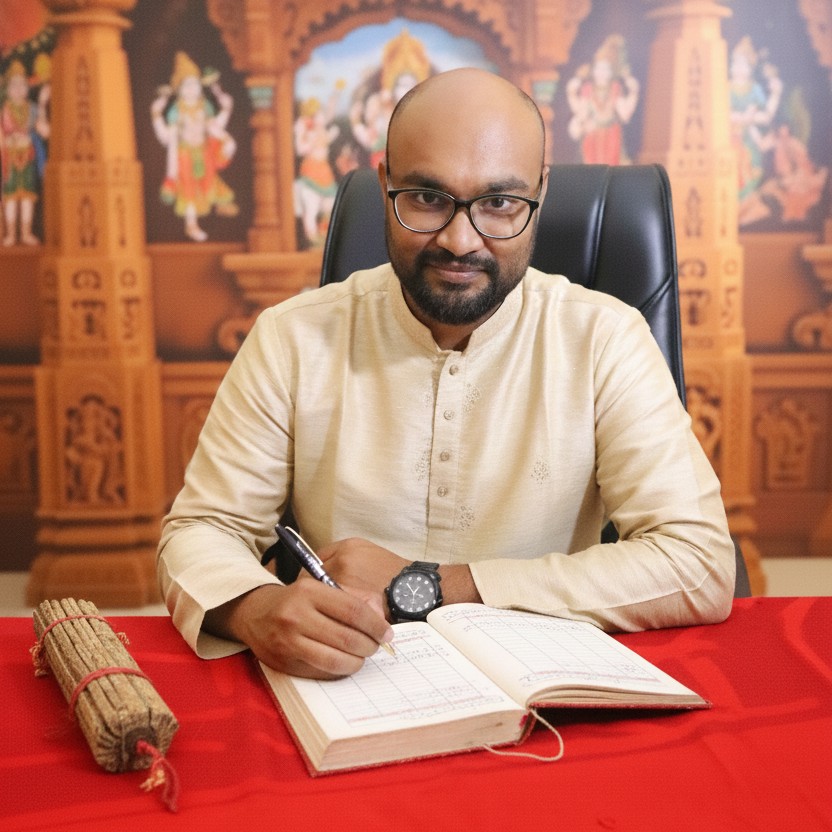
Jayanth Dev is an author writing on Hindu scriptures, Sanatana Dharma, and mythological narratives through books, long-form articles, and explanatory talks.
His work focuses on examining scriptural ideas in context—drawing from the Vedas, Upanishads, and Puranas to clarify commonly misunderstood concepts and traditions. Across both fiction and non-fiction, he approaches Sanatana thought as a living framework rather than a static belief system.
Jayanth is the author of I Met Parashurama, Escaping the Unknown, and the Dhantasura series.
Books · Articles · Videos · Speaking
Copyright © 2026 Jayanth Dev. Built with 💡 by Popupster.in — The Creative Marketing Company