I’m going to say something uncomfortable.
I question whether the Vedas we have today represent the complete Vedic transmission.
Before you close this tab, understand: this question doesn’t come from skepticism. It comes from śāstra itself—from the very texts we revere. My name is Jayanth Dev, and if this question makes you uncomfortable, stay with me. Because the discomfort itself is worth examining.
The word Veda (वेद) derives from the Sanskrit root √vid (विद्), meaning “to know.” But this isn’t casual knowledge. When the ancient rishis used the term “Veda,” they were pointing to something absolute: comprehensive knowledge addressing the totality of existence.
Veda, by definition, must be complete. It must speak to origins and dissolution, mind and matter, cosmic order and ultimate reality. When a text carries the title “Veda,” it inherits this expectation of comprehensiveness.
This is where my question begins. Because if Veda signifies complete knowledge, and if what we possess today is demonstrably fragmentary, then we must ask: What are we actually holding in our hands?
Let me ground this inquiry in śāstra—in a verse from one of the principal Upanishads.
Sanskrit (IAST):
यो ब्रह्माणं विदधाति पूर्वं यो वै वेदांश्च प्रहिणोति तस्मै।
तं ह देवमात्मबुद्धिप्रकाशं मुमुक्षुर्वै शरणमहं प्रपद्ये॥

Yo brahmāṇaṁ vidadhāti pūrvaṁ yo vai vedāṁś ca prahiṇoti tasmai |
Taṁ ha devam ātmabuddhiprakāśaṁ mumukṣur vai śaraṇam ahaṁ prapadye ||
Translation:
“To that effulgent One who in the beginning created Brahmā and who indeed delivered the Vedas to him—to that God who illuminates Himself by His own intelligence, I, desiring liberation, take refuge.”
The Śvetāśvatara Upaniṣad locates the origin of the Vedas in a transcendental dimension—before creation itself, before even Brahmā, the cosmic creator.
1. The Vedas precede creation. They are not products of human thought. They exist in a pre-cosmic state—apauruṣeya (not of human origin), eternal, self-existent.
2. The Vedas are transmitted, not composed. Brahmā receives them. The rishis perceive them. Humans preserve them. But no one creates them.
3. The source transcends any manifestation. That “effulgent One” who is the source of the Vedas is beyond all forms, beyond Brahmā himself.
The tension: If the Vedas are pre-cosmic, eternal, and comprehensive, then they cannot, by definition, be limited to what has been transmitted through specific lineages or preserved in particular manuscripts.
The verse itself invites us to distinguish between:
Let’s move from philosophy to facts. According to Patañjali’s Mahābhāṣya and the Caraṇa-vyūha, the original Vedic corpus was divided into approximately 1,131 śākhās or branches across the four Vedas.
Here’s what existed versus what survives:
Rigveda:
Yajurveda:
Sāmaveda:
Atharvaveda:
Total loss: Over 99% of original Vedic branches have disappeared.
When we speak of a “lost śākhā,” we’re not talking about a slightly different version of the same hymn. A complete śākhā included:
When a śākhā went extinct, all of this disappeared—entire knowledge systems, ritual applications, interpretive frameworks, philosophical elaborations.
Consider the Śaṅkhāyana śākhā of the Rigveda. Until recently, only two elderly practitioners in Banswada, Rajasthan, were the last surviving transmitters. An entire recension hanging by the thread of two septuagenarians. When they pass, if the transmission hasn’t been successfully continued, that śākhā becomes extinct—not theoretically, but actually.
If we accept that:
Then we must ask: What does it mean to claim “Vedic authority” when we’re working with fragments?
“The transcendental Veda is complete and eternal. The transmitted texts are historical manifestations—precious, invaluable, but incomplete.”
The Śvetāśvatara Upaniṣad’s verse gives us this framework:
The Transcendental Veda:
The Transmitted Texts:
The gap between these two is not a crisis—it’s a reality.
Acknowledging this gap doesn’t weaken the tradition—it strengthens it through intellectual honesty.
1. Humility in claims: Be cautious about absolutist statements like “the Vedas say this definitively” when we’re working with a surviving fraction. Different śākhās may have offered different perspectives.
2. Urgency in preservation: Recognizing the fragility of what remains should motivate extraordinary care in preservation, documentation, and transmission.
3. Openness to living realization: If the Vedas are ultimately transcendental, then authentic spiritual realization remains possible even when texts are incomplete. The rishis accessed this knowledge through inner perception; the texts are records, not the source itself.
4. Rigorous scholarship: Study what we have with precision, compare śākhās where possible, acknowledge textual variations, and resist conflating “what one recension says” with “what the Veda says universally.”
1. Honest Faith is Stronger Than Blind Faith
When you know the historical realities and still choose to engage deeply with the tradition, your faith becomes more robust, not weaker.
2. It Prevents Fundamentalism
Fundamentalism thrives on the illusion of absolute textual completeness. Recognizing that we’re working with fragments makes us less dogmatic and more discerning.
3. It Honors the Tradition’s Own Values
The Vedic tradition values viveka (discriminative wisdom), vicāra (inquiry), and satya (truth). Pretending we have complete knowledge when we don’t violates these very values.
The Bṛhadāraṇyaka and Chāndogya Upaniṣads are filled with debates and students questioning teachers. The entire Upaniṣadic tradition is one of rigorous inquiry, not passive acceptance.
Questioning completeness is not betraying the tradition—it’s embodying it.
4. It Redirects Our Focus
If the texts we have are fragmentary, then our focus shifts from textual authority alone to:
This isn’t just ancient history. Śākhās are becoming extinct in our lifetime.
The Rāṇāyanīya śākhā of the Sāmaveda was recently on the verge of extinction, strengthened only through intervention by institutions like the Kanchi Kamakoti Matha.
Every year, elderly practitioners pass away without adequate transmission. Every decade, another sub-branch disappears.
What can be done?
1. Specify which śākhā, which recension when discussing “what the Vedas say.”
2. Acknowledge textual variation. When recensions differ, study the differences—they might reveal important interpretive possibilities.
3. Distinguish between source text and commentary. Brilliant interpretations from Sāyaṇa, Śaṅkara, Madhva are still interpretations.
4. Hold the tension between reverence and rigour. You can deeply revere the Vedas as sacred and honestly acknowledge their fragmentary transmission.
5. Focus on preservation AND realization. Work to preserve what remains and pursue the inner realization that the texts point toward.
When I say “I question whether the Vedas we have today represent the complete Vedic transmission,” I’m not weakening your faith—I’m inviting you to refine it.
This question:
The Śvetāśvatara Upaniṣad says the Vedas come from that transcendental source—before Brahmā, before creation. That source is still there. It hasn’t diminished.
What has diminished is our access through specific textual lineages. But access limitations don’t limit the source.
The deepest reverence for Veda is not pretending we have it all.
The deepest reverence is:
Texts get lost. Lineages fade. Manuscripts crumble.
But that source—that remains.
The question “Are the Vedas we have today complete?” is not an attack.
It’s fidelity to knowledge (jñāna), respect for truth (satya), discriminative wisdom (viveka).
When we question completeness, we’re not questioning sanctity. We’re questioning our access, not the source.
And in that questioning, we honor both the texts we have—precious, invaluable, sacred—and the knowledge they point toward, which transcends any textual manifestation.
I question the completeness of the Vedas we have today.
Not out of doubt.
Out of devotion to what Veda truly signifies:
Knowledge. Complete. Eternal. Transcendent.
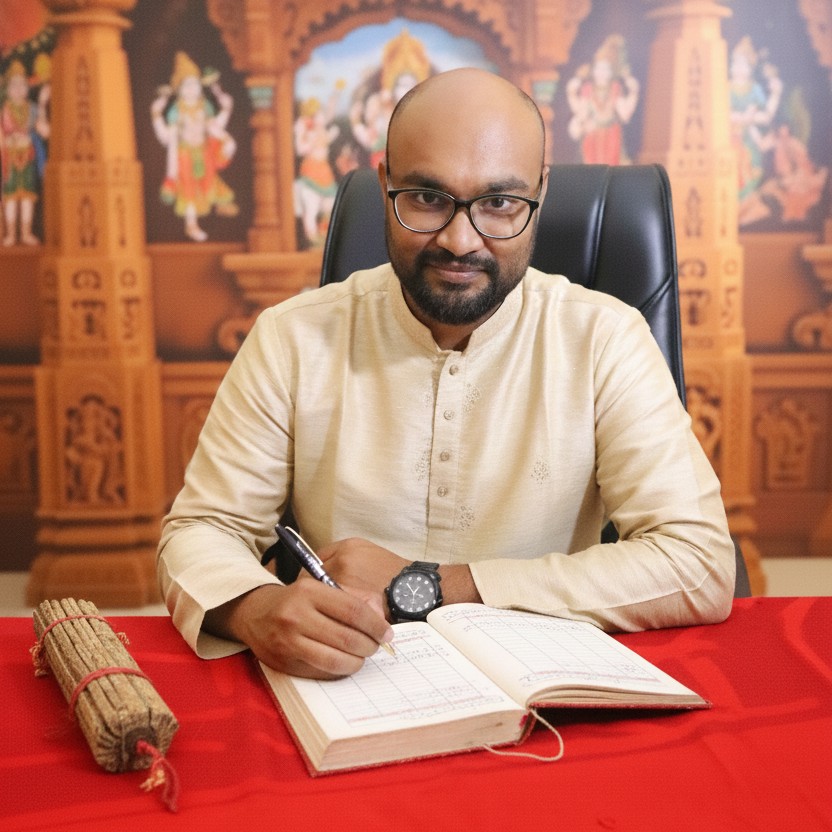
Jayanth Dev is an author writing on Hindu scriptures, Sanatana Dharma, and mythological narratives through books, long-form articles, and explanatory talks.
His work focuses on examining scriptural ideas in context—drawing from the Vedas, Upanishads, and Puranas to clarify commonly misunderstood concepts and traditions. Across both fiction and non-fiction, he approaches Sanatana thought as a living framework rather than a static belief system.
Jayanth is the author of I Met Parashurama, Escaping the Unknown, and the Dhantasura series.
Books · Articles · Videos · Speaking
Copyright © 2026 Jayanth Dev. Built with 💡 by Popupster.in — The Creative Marketing Company