Language shapes reality. The words we use to describe sacred practices reveal—or conceal—depths of civilizational understanding that have been preserved for millennia.
In modern discourse, the terms “idol” and “deity” are often used interchangeably when discussing Hindu temple worship. But this linguistic conflation obscures a profound philosophical and theological distinction that lies at the heart of Sanātana Dharma’s approach to the Divine.
When we call a consecrated temple form an “idol,” we reduce it to crafted material—stone, bronze, or wood shaped by human hands. When we call it a “deity,” we acknowledge something far more profound: a living seat of divine consciousness, ritually invoked and permanently established through ancient Vedic protocols.
This distinction is not merely semantic. It reflects an entire cosmology, a sophisticated understanding of consciousness and energy, and a living tradition that has sustained billions of devotees across millennia.
To understand this distinction at its source, we must turn to one of Hinduism’s most authoritative texts—the Śrīmad Bhāgavatam (Bhāgavata Purāṇa), composed between the 4th-7th centuries CE and attributed to Sage Vyāsa himself.
Bhāgavata Purāṇa 11.2.47 provides the scriptural cornerstone for understanding deity worship:
Sanskrit (Devanāgarī):
अर्चायामेव हरये पूजां यः श्रद्धयेहते ।
न तद्भक्तेषु चान्येषु स भक्तः प्राकृतः स्मृतः ॥
Sanskrit (Transliteration):
arcāyām eva haraye pūjāṁ yaḥ śraddhayehate
na tad-bhakteṣu cānyeṣu sa bhaktaḥ prākṛtaḥ smṛtaḥ
Translation: A devotee who faithfully engages in the worship of the Deity in the temple but does not behave properly toward other devotees or people in general is called a prākṛta-bhakta, a materialistic devotee, and is considered to be in the lowest position.
Breaking Down the Verse:
The verse uses the term arcā (अर्चा)—not “idol” (pratimā) or “image” (mūrti in its mundane sense). The arcā form is specifically the consecrated deity form in which the Supreme Lord chooses to make Himself accessible.
The arcā form is worshipped as Hari Himself. This is not symbolic worship—it is understood as direct worship of the Divine Presence that has been ritually invoked and established in the form.
The verse doesn’t warn against worshipping idols—it addresses the incomplete understanding of a devotee who recognizes the Lord in the arcā form but fails to see the same Divine Presence in devotees and all living beings.
The transformation from material form to divine seat occurs through Prāṇa Pratiṣṭhā (प्राण प्रतिष्ठा)—the ancient Vedic ceremony of consecration.
Prāṇa (प्राण) derives from the root pra (forth) + an (to breathe), meaning:
Pratiṣṭhā (प्रतिष्ठा) derives from prati (toward) + sthā (to stand/establish), meaning:
Prana pratishtha is the rite or ceremony by which a murti (devotional image of a deity) is consecrated in a Hindu temple, following detailed steps outlined in the Vedic scriptures, where verses (mantras) are recited to invite the deity to reside in the murti.
The consecration ceremony is not a simple blessing—it’s an elaborate, multi-day (sometimes multi-week) ritual protocol governed by Āgama Śāstras (temple manuals), following these key stages:
1. Karmakutir (कर्मकुटीर) – Purification from Creation: The idol is touched with Darba grass to remove any negative influences, the pujari closes the eyes of the Murthi by applying a layer of honey and ghee along with specific mantras.
2. Adhivāsa Rituals – Preparatory Immersions:
3. Snapana/Abhiṣeka (स्नापन/अभिषेक) – Sacred Bathing: The form is bathed with sacred substances including:
4. Mantra Invocation – The Moment of Transformation: At the exact astrologically calculated auspicious time (muhūrta), priests chant specific Vedic mantras to:
5. Netra Ānvāraṇa (नेत्र आन्वारण) – Opening of the Eyes: The Purohit performs Netra Anvaran or the opening of the eyes during Pran Pratishta, after which the idol becomes an auspicious deity.
This is the climactic moment—when the eyes of the form are ritually opened for the first time, the Divine is understood to begin actively “seeing” through the form.
6. Prāṇa Transfer – Infusion of Life Force: Through specialized techniques preserved in lineages, priests facilitate the transfer of:
Through Nayas, the divine shakti from the Purohit enters Murthi including Prana or life-breath, Jiva or soul, and the ten Indriyas.
Consecration is a live process like transforming mud into food through agriculture, or food into flesh and bone through digestion—if you can make flesh or even a stone or an empty space into a divine possibility, that is called consecration.
This isn’t superstition—it’s sophisticated philosophical technology based on the understanding that:
Everything is Energy: Modern science is telling you that everything is the same energy manifesting itself in a million different ways—what you call as divine, what you call a stone, what you call a man or a woman, are all the same energy functioning in different ways.
Technology Makes the Difference: Just as electricity becomes light, sound, or heat depending on the technology applied, the same fundamental energy can be transformed into a sacred presence through the proper ritual technology.
Consciousness Can Be Anchored: Through mantra, ritual discipline, and lineage transmission, consciousness itself can be invited to take up residence in a prepared vessel.
Now we can articulate the distinction with precision:
The word “idol” comes from the Greek eidolon (εἴδωλον), meaning:
In Abrahamic traditions, “idol worship” is condemned as worshipping created things rather than the Creator—treating material representations as if they were divine when they are not.
Characteristics of an idol:
The Sanskrit term arcā (अर्चा) or vigraha (विग्रह – “where the Lord assumes form”) refers to:
Characteristics of a deity:
A temple is called a prāṇa-kṣetra (प्राण-क्षेत्र)—a “field of life force” or “consciousness zone.”
This means the temple is not a building housing a statue—it’s an energized space where:
Once we understand that the temple form is a deity—a living seat of consciousness—rather than an idol, the entire structure of temple worship makes perfect sense.
Deities are treated as honored guests and living presences:
1. Suprabhātam (सुप्रभातम्) – Morning Awakening:
2. Snapana (स्नापन) – Bathing:
3. Alaṅkāra (अलङ्कार) – Adornment:
4. Naivedya (नैवेद्य) – Food Offerings:
5. Śayana (शयन) – Rest:
These aren’t arbitrary traditions—they flow from recognition of presence:
The temple doesn’t operate on the logic of viewing a museum artifact—it operates on the logic of hosting a living presence.
Every street had three temples because even a few meters should not pass without there being a consecrated space, ensuring nobody should live in a space which is not consecrated.
This wasn’t religious excess—it reflected a sophisticated understanding:
1. Proximity to Consecrated Space Matters:
2. The Temple Comes First: The temple was always built first and then houses were built around it—the whole state of Tamil Nadu is built like this, with every significant town having a grand temple and around that, a little town.
3. Darśana (दर्शन) – The Practice of “Seeing”: The goal isn’t worship in the Western sense—it’s darśana: “seeing and being seen by the deity.”
Visiting a temple is not for worship but to imbibe the energies of the Deity, which is why Hindus often say they go for darshan when visiting any temple.
You go to a temple not to look at a statue, but to:
According to yogic lore, Agastya Muni was sent to South India by Shiva and consecrated every human habitation south of the Deccan Plateau, ensuring that a live spiritual process was on, taking phenomenal amounts of work.
This massive civilizational project wasn’t about promoting religion—it was about:
Agastya Muni allegedly predicted that when the world truly goes off the track because of development and knowledge, when knowledge becomes poison, his work would rise and act.
Perhaps we’re living in that time—when we most need to remember what a temple actually is.
The verse we began with (11.2.47) addresses the kaniṣṭha-adhikārī (lowest level devotee)—someone who:
The text outlines three levels of spiritual development:
1. Kaniṣṭha-adhikārī (Neophyte):
2. Madhyama-adhikārī (Intermediate):
3. Uttama-adhikārī (Advanced):
The verse doesn’t criticize temple worship—it critiques incomplete understanding.
The deity in the temple is valid and real. But if you can only see God there and nowhere else, you’re missing the full picture.
The temple form is meant to be:
You don’t graduate from deity worship to “higher” forms of spirituality—you expand your perception to recognize that the same consciousness present in the consecrated deity is present everywhere, but in the temple it has been specially concentrated and made maximally accessible.
From a purely materialist perspective, yes—the physical substance is stone, bronze, or wood.
But from the perspective of the tradition:
Think of it this way: A computer is “just silicon and metal.” But properly configured with software, it becomes a powerful tool. The hardware didn’t change—the information structure did.
Similarly, through Prāṇa Pratiṣṭhā, the form is “programmed” to serve as an interface for divine consciousness.
No—because the understanding is that:
It’s like saying, “Aren’t you talking to the phone instead of to your friend?” when you make a phone call. The phone is the medium—you’re relating to the person through it.
Hindu theology is sophisticated enough to hold multiple truths simultaneously:
The Bhagavad Gītā (4.11) states: “As devotees approach Me, I receive them. All paths lead to Me.”
The arcā form is one valid path among many—particularly suited for those who benefit from concrete, tangible practice.
Using the correct terminology—deity instead of idol—isn’t pedantic. It’s crucial for:
Billions of people relate to these consecrated forms as living divine presences. Calling them “idols” imposes a foreign conceptual framework that misrepresents their actual belief and practice.
Academic study of Hinduism should use insider terminology when discussing insider practices. Using “deity” acknowledges that you’re describing a consecrated form according to the tradition’s own understanding.
Productive conversations require:
The distinction between idol and deity preserves the understanding that Hinduism includes:
Reducing it all to “idol worship” flattens millennia of philosophical development.
Understand what you’re doing:
Progress beyond form eventually:
Use accurate terminology:
Understand the insider perspective:
Approach with openness:
The difference between calling it an “idol” and calling it a “deity” encodes an entire worldview:
“Idol” suggests:
“Deity” acknowledges:
Language shapes reality. When we use precise language, we preserve:
The temple form is called a deity because that’s what it actually is according to the tradition—a living seat of divine consciousness, ritually invoked and permanently established, serving as an accessible interface between the finite and infinite.
Whether you believe this or not is your choice. But understanding what practitioners actually believe and why they use specific terminology—that’s basic intellectual honesty and cross-cultural respect.
Perhaps the most radical claim of this tradition is this:
Consciousness can be directly worked with.
You don’t have to merely believe in God, pray to God, or read about God—you can create conditions where divine presence becomes tangibly accessible.
The temple, properly consecrated, offers exactly this: a reproducible, publicly accessible technology for encountering what the tradition calls the Divine.
That’s why millions undertake arduous pilgrimages, stand in hours-long queues, and maintain elaborate daily rituals—not out of blind faith, but because the tradition promises (and they report experiencing) direct transformation through proximity to consecrated forms.
The deity isn’t asking you to worship it. It’s inviting you to recognize consciousness operating through form—and through that recognition, to discover the same consciousness operating through you, through others, through all of existence.
That’s the vision. That’s the invitation.
And it begins with using the right word: deity, not idol.
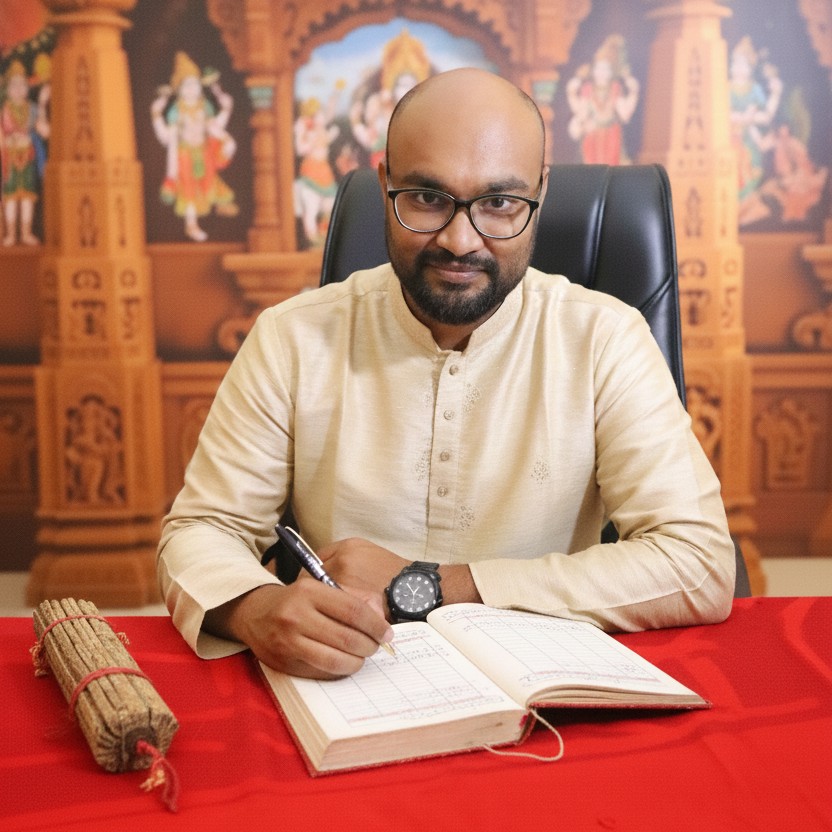
Jayanth Dev is an author writing on Hindu scriptures, Sanatana Dharma, and mythological narratives through books, long-form articles, and explanatory talks.
His work focuses on examining scriptural ideas in context—drawing from the Vedas, Upanishads, and Puranas to clarify commonly misunderstood concepts and traditions. Across both fiction and non-fiction, he approaches Sanatana thought as a living framework rather than a static belief system.
Jayanth is the author of I Met Parashurama, Escaping the Unknown, and the Dhantasura series.
Books · Articles · Videos · Speaking
Copyright © 2026 Jayanth Dev. Built with 💡 by Popupster.in — The Creative Marketing Company