I drink.
I smoke.
I eat non-vegetarian food.
I don’t go to temple.
I don’t follow rituals.
I don’t meditate.
I break every rule.
I think I am a sinner.
Stop that thinking right now.
Let me tell you why.
Because Sanātana Dharma does not describe Bhagavān (the Supreme Lord) as insecure.
It does not describe Him as waiting to punish.
It does not describe Him as keeping score.
The central teaching across scripture is:
Let me show you what the śāstra actually says.
Sanskrit (Devanāgarī):
अकामः सर्वकामो वा मोक्षकाम उदारधीः ।
तीव्रेण भक्तियोगेन यजेत पुरुषं परम् ॥
Sanskrit (IAST Transliteration):
akāmaḥ sarva-kāmo vā mokṣa-kāma udāra-dhīḥ
tīvreṇa bhakti-yogena yajeta puruṣaṁ param
Word-by-Word Breakdown:
Translation:
“Whether one has no desires, many desires, or desires liberation, one who is broad-minded should worship the Supreme Person with intense devotion.”
This verse is radical in its inclusiveness.
It divides all people into three categories:
1. Akāmaḥ (अकामः) — The Desireless
Who are they?
Characteristics:
These are the spiritual elite—the highest practitioners.
2. Sarva-kāmaḥ (सर्वकामः) — Full of All Desires
Who are they?
Characteristics:
This is most of humanity.
3. Mokṣa-kāmaḥ (मोक्षकामः) — Desiring Liberation
Who are they?
Characteristics:
These are serious spiritual aspirants.
Here’s what’s revolutionary:
The Bhāgavatam does NOT say:
❌ “Akāmaḥ people—you should worship the Supreme Lord.” ❌ “Sarva-kāmaḥ people—you’re too impure. Get your life together first.” ❌ “Mokṣa-kāmaḥ people—you should worship.”
The Bhāgavatam says:
✓ ALL THREE should worship the Supreme Person with INTENSE devotion (tīvreṇa bhakti-yogena).
No prerequisites. No waiting period. No “become perfect first.”
Just:
Approach with bhakti.
If you:
You are sarva-kāmaḥ—full of desires.
And the Bhāgavatam says:
✓ You too should worship the Supreme Person with intense devotion.
Not: ❌ “Clean up your act first” ❌ “Stop all your bad habits” ❌ “Become vegetarian” ❌ “Start following rituals” ❌ “Prove you’re serious”
But: ✓ Right now, as you are, approach with bhakti.
Udāra-dhīḥ (उदारधीः) = one with broad/generous intelligence
What does “broad-minded” mean here?
It means recognizing:
✓ That all paths eventually lead to the Supreme ✓ That demigods are limited in what they can give ✓ That material pursuits are temporary ✓ That the Supreme Lord is the ultimate source of everything
Even if you’re full of material desires—
If you have the intelligence to recognize that ultimately, everything comes from the Supreme, then you should worship Him directly.
You don’t have to be desire-free.
You just have to be intelligent enough to go to the source.
Tīvreṇa bhakti-yogena = with intense devotional service
Tīvra (तीव्र) literally means:
The commentary explains:
“As the unmixed sun ray is very forceful and is therefore called tīvra, similarly unmixed bhakti-yoga of hearing, chanting, etc., may be performed by one and all regardless of inner motive.”
Notice: “regardless of inner motive.”
You can have:
And still practice bhakti with intensity.
Intensity does NOT mean:
❌ Following all rituals perfectly ❌ Being vegetarian ❌ Going to temple daily ❌ Meditating for hours ❌ Living like a monk ❌ Renouncing everything
Intensity MEANS:
✓ Sincerity when you do remember ✓ Focus when you do chant ✓ Attention when you do think of the Divine ✓ Earnestness in your connection
Even if it’s just for a few moments.
Sanātana Dharma is not naïve.
It knows that:
That’s WHY the Bhāgavatam includes sarva-kāmaḥ (full of desires) in the verse.
It’s not saying: “If you’re perfect (akāmaḥ), worship the Lord.”
It’s saying: “Even if you’re full of desires (sarva-kāmaḥ), worship the Lord.”
The verse does NOT say:
“First become akāmaḥ (desireless), then worship.”
It says:
“Whether you’re akāmaḥ, sarva-kāmaḥ, or mokṣa-kāmaḥ—worship.”
Bhakti is the doorway.
What happens after?
Or:
But bhakti connects life to Bhagavān.
And that connection is what matters.
Many religious traditions describe God as:
❌ Jealous (demanding exclusive worship) ❌ Wrathful (punishing disobedience) ❌ Insecure (needing constant validation) ❌ Scorekeeping (tracking sins and merits)
Sanātana Dharma describes Bhagavān differently:
✓ Sat-Cit-Ānanda (Existence-Consciousness-Bliss) ✓ Pūrṇa (Complete, lacking nothing) ✓ Nirguṇa (Beyond qualities, including anger/jealousy) ✓ Karuṇā-maya (Ocean of compassion)
God is not waiting to punish.
God is waiting for you to remember.
The Bhagavad Gītā says (8.5):
“anta-kāle ca mām eva smaran muktvā kalevaram yaḥ prayāti sa mad-bhāvaṁ yāti nāsty atra saṁśayaḥ”
“And whoever, at the end of their life, quits their body remembering Me alone, at once attains My nature. Of this, there is no doubt.”
Notice:
✓ “Remembering Me” (mām eva smaran) ✓ Not: “Having lived a perfect life” ✓ Not: “Having followed all rituals” ✓ Not: “Having never sinned”
Just: Remembering.
If at the moment of death, you remember the Divine—
That remembrance matters more than a lifetime of “perfection.”
Bhakti (भक्ति) comes from the root bhaj (भज्) = to serve, to worship, to love
Bhakti is:
✓ Orientation toward the Divine ✓ Remembrance of the Supreme ✓ Relationship with Bhagavān ✓ Devotion expressed through thought, word, action
Bhakti is NOT:
❌ Ritual perfection ❌ Moral flawlessness ❌ Complete renunciation ❌ Achievement of spiritual powers ❌ Becoming desire-free first
The Bhāgavatam (Canto 6, Chapters 1-3) tells the story of Ajāmila:
His Life:
At Death:
Result:
The Teaching:
Even an unconscious utterance of the Lord’s name at death—motivated by calling his son, not devotion—was enough to save him.
This is bhakti’s power.
Not because Ajāmila was perfect.
Not because he lived a pure life.
But because at the crucial moment, the name of Nārāyaṇa crossed his lips—and that connection mattered.
Stop asking: ❌ “Am I good enough?” ❌ “Have I stopped all my bad habits?” ❌ “Do I follow all the rules?” ❌ “Am I worthy?”
Ask instead:
✓ “Am I closed to God, or do I remember Him?” ✓ “Do I reject the Divine, or do I think about Him—even with confusion and struggle?” ✓ “Is my heart turning toward Bhagavān, even a little?”
Bhakti is orientation.
Bhakti is remembering.
Bhakti is relationship.
You don’t have to be perfect to begin.
Bhakti doesn’t have to be grand:
✓ A moment of gratitude when you see beauty ✓ A thought of the Divine when you’re struggling ✓ Chanting “Om Namo Nārāyaṇa” once while stuck in traffic ✓ Listening to a bhajan (devotional song) once a week ✓ Reading one verse of the Gītā when you remember ✓ Offering a flower mentally to the Lord ✓ Saying “thank you” to the universe/Divine for something good
These count.
These are bhakti.
You can:
✓ Drink on weekends AND remember the Divine ✓ Smoke AND chant a mantra ✓ Eat non-veg AND feel devotion ✓ Skip temple for months AND still love God ✓ Break rules AND have a relationship with Bhagavān
Bhakti is not about external perfection.
Bhakti is about internal orientation.
Look at the verse again:
“akāmaḥ sarva-kāmo vā mokṣa-kāma udāra-dhīḥ tīvreṇa bhakti-yogena yajeta puruṣaṁ param”
Translation:
“Whether one has no desires, many desires, or desires liberation, one who is broad-minded should worship the Supreme Person with intense devotion.”
The word “vā” (वा) = “or” / “whether”
This is inclusive language.
It means:
You are INCLUDED.
The invitation is FOR YOU.
Many religious systems begin with:
❌ “You are a sinner” ❌ “You must repent” ❌ “You are unworthy” ❌ “You must prove yourself” ❌ “You must meet these standards first”
Sanātana Dharma begins with:
✓ “You are Divine in essence” (tat tvam asi — “That thou art”) ✓ “You are welcome” ✓ “Come as you are” ✓ “Approach with bhakti”
The Bhāgavatam doesn’t say:
“Become flawless first.”
It says:
“Approach with devotion.”
Drunk? Approach with bhakti.
Smoking? Approach with bhakti.
Eating meat? Approach with bhakti.
Breaking rules? Approach with bhakti.
Full of desires? Approach with bhakti.
Struggling with discipline? Approach with bhakti.
Confused? Approach with bhakti.
Imperfect? Approach with bhakti.
That is what scripture declares.
Bhakti works because:
1. God Responds to Sincerity, Not Perfection
Bhagavad Gītā 9.26:
“patraṁ puṣpaṁ phalaṁ toyaṁ yo me bhaktyā prayacchati tad ahaṁ bhakty-upahṛtam aśnāmi prayatātmanaḥ”
“If one offers Me with love and devotion a leaf, a flower, fruit, or water, I will accept it.”
Notice: “with love and devotion” (bhaktyā)
Not: “with perfect purity” or “with flawless observance”
The offering matters less than the DEVOTION.
2. Connection Transforms Naturally
When you maintain connection with the Divine—even imperfectly—transformation happens organically.
Not forced. Not through guilt. Not through shame.
But through love.
As you remember more, you naturally:
But this happens FROM connection, not as a prerequisite TO connection.
3. Bhakti Creates Merit That Karma Cannot
The Bhāgavatam explains that bhakti operates on a different plane than karma.
Karma (action/consequence) is mechanical:
Bhakti transcends karma:
Example:
Valmiki (author of the Rāmāyaṇa) was a highway robber who murdered travelers.
Through the instruction of Sage Narada, he began chanting “Rama, Rama, Rama…”
He didn’t stop being a robber first. He started chanting WHILE being a robber.
Gradually, the chanting transformed him into one of the greatest sages.
Bhakti’s power supersedes past karma.
If you:
Here’s what to do:
1. Stop the Self-Judgment
First: Stop thinking you’re a sinner unworthy of the Divine’s attention.
That thought itself is the obstacle.
The Divine doesn’t think of you as a sinner.
You do.
2. Begin Simple Remembrance
Pick ONE simple practice:
✓ Chant “Om Namo Nārāyaṇa” once in the morning ✓ Say “Hare Krishna” when you remember ✓ Think of the Divine once before sleep ✓ Listen to one bhajan per week ✓ Read one Gītā verse per day ✓ Mentally offer your food before eating
Just ONE.
Do it with sincerity.
That’s bhakti.
3. Don’t Force Change
Don’t say:
“I must stop drinking immediately” “I must become vegetarian now” “I must go to temple daily”
Instead, think:
“I will remember the Divine as much as I can, in my current state.”
Change will come—or it won’t.
Either way, bhakti continues.
4. Trust the Process
The Bhāgavatam promises:
When you worship the Supreme with intensity, He handles the rest.
You don’t have to figure it all out. You don’t have to become perfect. You don’t have to force transformation.
Just maintain the connection.
Everything else unfolds naturally.
Sanātana Dharma does not begin with rejection.
It begins with invitation.
The Bhāgavatam says:
“Whether you have no desires, many desires, or desire liberation—approach the Supreme Person with intense devotion.“
Whatever your current state…
Approach with bhakti.
That is what scripture declares.
You don’t have to:
❌ Stop drinking first ❌ Quit smoking first ❌ Become vegetarian first ❌ Master rituals first ❌ Achieve perfection first
You just have to:
✓ Remember ✓ Orient yourself toward the Divine ✓ Connect—however imperfectly
Bhakti is for the desireless saint.
Bhakti is for the liberation-seeker.
And bhakti is for YOU—full of desires, struggling, imperfect, human.
The door is open.
Approach.
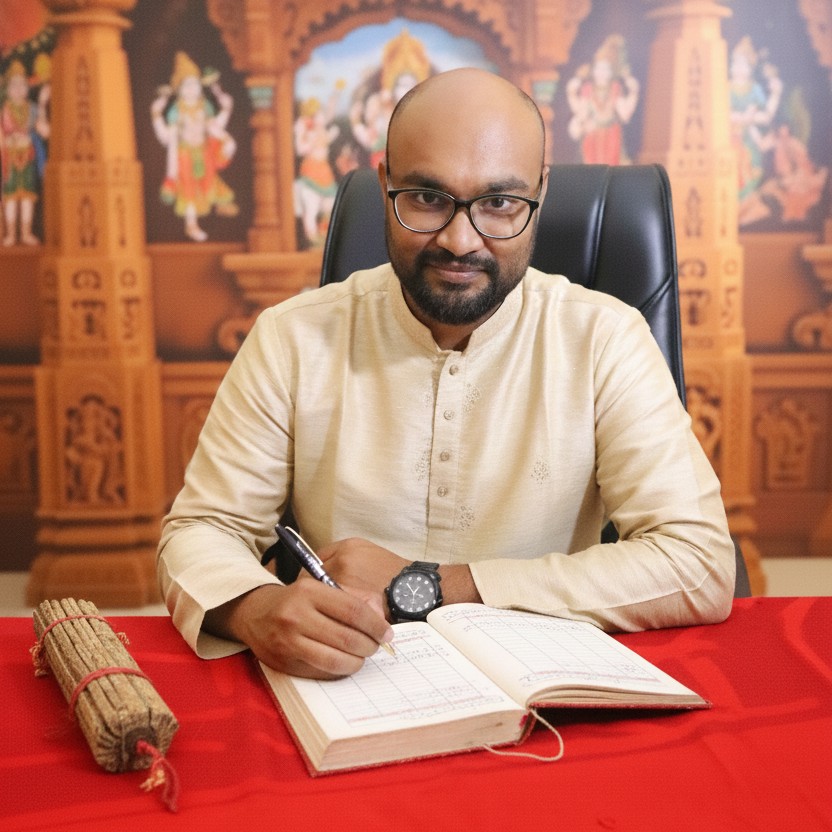
Jayanth Dev is an author writing on Hindu scriptures, Sanatana Dharma, and mythological narratives through books, long-form articles, and explanatory talks.
His work focuses on examining scriptural ideas in context—drawing from the Vedas, Upanishads, and Puranas to clarify commonly misunderstood concepts and traditions. Across both fiction and non-fiction, he approaches Sanatana thought as a living framework rather than a static belief system.
Jayanth is the author of I Met Parashurama, Escaping the Unknown, and the Dhantasura series.
Books · Articles · Videos · Speaking
Copyright © 2026 Jayanth Dev. Built with 💡 by Popupster.in — The Creative Marketing Company