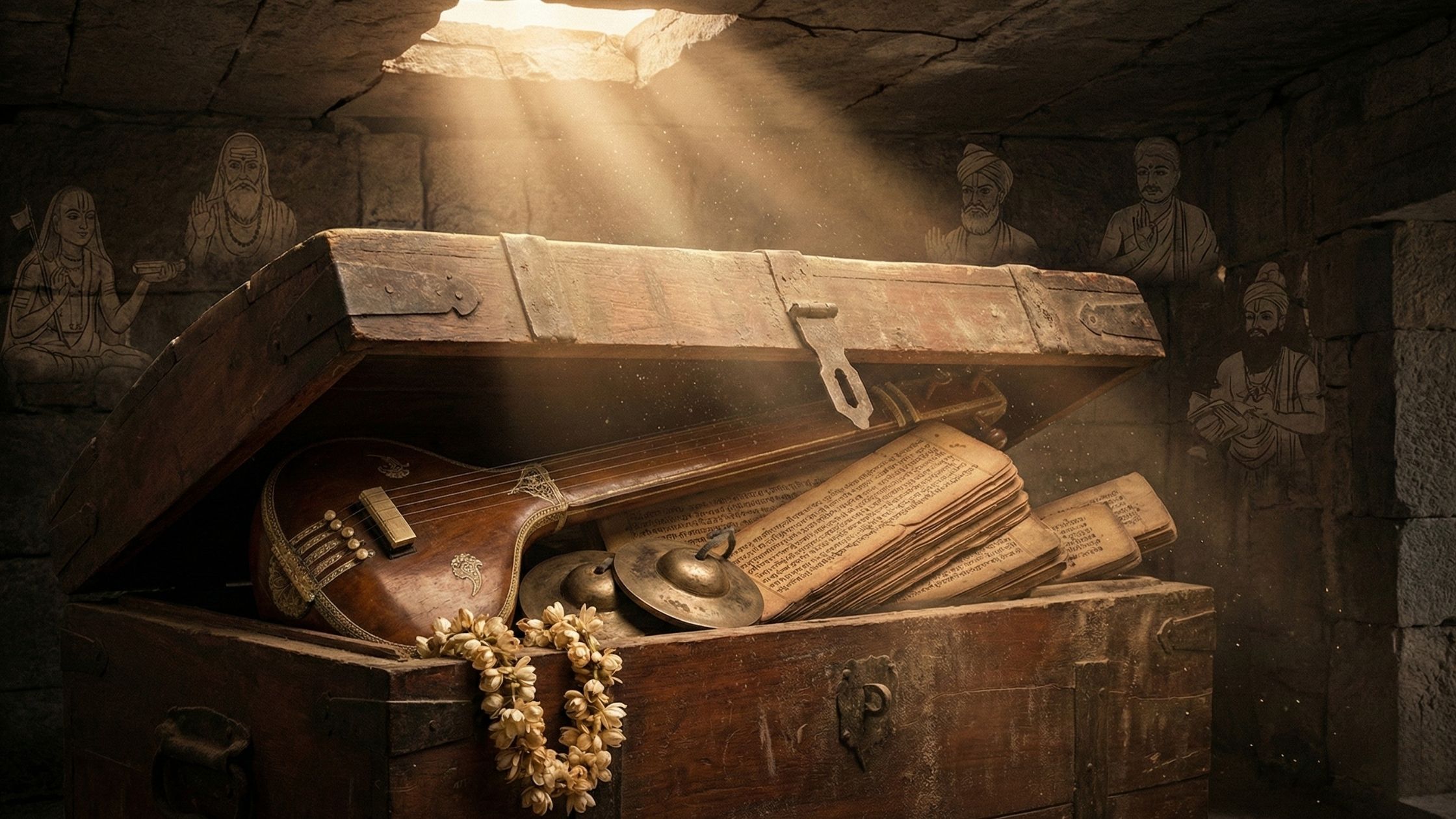
Forgotten Poet-Saints: India’s Hidden Bhakti Masters Revealed Watch the full video explanation Beyond Kabir: 4 Forgotten Indian Poet-Saints You Must Know Walk into any Indian school, and ask students to name a poet-saint. Most will instantly recall Tulsidas, Kabir, or Mirabai—names enshrined in textbooks, celebrated in curriculum, immortalized in collective memory. But here’s the uncomfortable truth: India’s Bhakti tradition produced hundreds of extraordinary poet-saints whose contributions rival or even surpass these familiar names—yet they remain virtually unknown outside their regional communities. Why? Because our education system, shaped by colonial-era standardization and post-independence centralization, created a narrow canon that privileged certain languages, regions, and traditions while systematically marginalizing others. Today, we’re recovering four such forgotten masters—saints whose devotional poetry transformed millions of lives, challenged oppressive social structures, and created musical and literary legacies that continue to resonate centuries later. The Problem: A Truncated Bhakti Canon The Bhakti movement (approximately 6th-17th centuries CE) was one of India’s most profound spiritual and social revolutions. It: Democratized worship by rejecting Brahminical monopoly over religious practice Elevated vernacular languages by composing in Tamil, Telugu, Kannada, Bengali, Hindi, Marathi (not just Sanskrit) Challenged caste hierarchy by proclaiming that devotion, not birth, determined spiritual worthiness Included women and marginalized castes as fully authorized spiritual authorities Yet when this vast, decentralized, multi-lingual movement was condensed into school textbooks, only a handful of saints survived the editorial process. The result? North Indian bias: Kabir, Tulsidas, Surdas, Mirabai dominate (all Hindi belt) South Indian erasure: Alwars, Nayanars, Kannada and Telugu saints largely absent Regional marginalization: Bengali, Assamese, Odia Bhakti traditions ignored Time period compression: Medieval saints favored over earlier or later figures This isn’t just historical amnesia—it’s cultural impoverishment. Let’s recover what was lost. 1. Kanakadasa (1509-1606): The Saint Who Made Krishna Turn Around The Warrior Who Became a Poet Born Veera Nayaka in the Kuruba community (traditionally shepherds and warriors) in Karnataka’s Baada village, Kanakadasa began life as a chieftain in the Vijayanagara Empire. After suffering defeat in battle and experiencing profound disillusionment with worldly glory, he underwent a spiritual transformation—abandoning military life to become a wandering devotee (dasa) singing songs of Krishna. His original name “Veera Nayaka” (Heroic Leader) was later changed to “Kanakadasa” (Servant of Gold) either because he discovered hidden treasure while digging and used it to build a temple, or because his compositions were considered golden in their devotional purity. The Udupi Incident: When Caste Met Divine Love The most famous episode in Kanakadasa’s life occurred when he visited the Udupi Krishna Temple, founded by the great Dvaita philosopher Madhvacharya in the 13th century. Despite being a renowned composer and devotee, Kanakadasa was denied entry to the temple due to his “lower” caste status. The Brahmin priests, clinging to notions of ritual purity, refused him darshan (visual communion) of the deity. Rather than protest or depart in anger, Kanakadasa stood outside the western wall of the temple and sang: “Bāgilanu teredu seveyanu kodu hariye”(“Open the door and please let me serve you, O Hari”) His composition continued, praising Krishna’s compassion toward devotees regardless of their social status, emphasizing that true purity lies in the heart, not in birth. The Miracle: Krishna Turns Westward According to tradition (documented by German scholar Hermann Friedrich Mogling in the 1860s, roughly 200 years after the events), the deity of Krishna—which had been facing east—miraculously turned to face west, toward Kanakadasa. The wall developed a crack (Kanakana Kindi – “Kanaka’s Window”), through which Kanakadasa received direct darshan of the Lord. To this day: The Krishna deity in Udupi faces west (unlike virtually all other Hindu temples where deities face east) Devotees receive darshan through the Kanakana Kindi before entering the temple proper The window stands as a testament to divine love transcending human prejudice His Literary Legacy Kanakadasa composed approximately 240 devotional songs (kirtanas) in Kannada, including: Ugabhogas (philosophical songs) Padas (devotional lyrics) Kirtanas (musical compositions) Major works: Narasimha Stotra – Hymns to Lord Narasimha Ramadhyana Mantra – Meditative verses on Rama Mohanatarangini – “Waves of Enchantment” Social Revolutionary in Verse Kanakadasa’s compositions contain powerful critiques of the caste system: “ಜಾತಿ! ಜಾತಿ! ಎಂದು ಕೂಗುತ್ತಾರೆ, ಭಕ್ತರಿಗೆ ಯಾವ ಜಾತಿ?”“They shout ‘caste! caste!’ but what caste is there for those who are pious?” In another composition, he writes: “ನಾವು ಕುರುಬರು ಮತ್ತು ನಮ್ಮ ದೇವರು ಬೀರಯ್ಯ”“We are Kurubas, and our God is Beerayya” This isn’t apologetic or supplicatory—it’s assertive pride in his community identity combined with confident devotion. Modern Recognition 1990: Government of India issued a postal stamp honoring Kanakadasa Kanakadasa Jayanti (his birthday) is celebrated annually in Karnataka Kaginele Kanaka Guru Peetha, a spiritual institution, perpetuates his teachings Bhakta Kanakadasa (1960 film) starring Dr. Rajkumar brought his story to millions 2. Annamacharya (1408-1503): The Grandfather of Telugu Song-Writing The Prodigious Composer Tallapaka Annamacharya (also known as Annamayya) was born in Tallapaka village, Kadapa district of present-day Andhra Pradesh. He lived an extraordinary 95 years, during which he accomplished something unprecedented in the history of devotional music: He composed approximately 32,000 devotional songs (sankirtanas) in praise of Lord Venkateswara (a form of Vishnu) at Tirumala-Tirupati. To put this in perspective: If you sang one Annamacharya composition every day, it would take 87 years to complete the entire collection He’s recorded in the Guinness Book as composing the most devotional songs to a single deity in history His output rivals the collected works of Shakespeare in volume The Vision That Changed Everything At age 16, Annamacharya had a profound spiritual vision of Lord Venkateswara that transformed his life. From that moment forward, he dedicated himself entirely to composing songs for the deity. His compositions weren’t mere literary exercises—they were offerings, considered “floral garlands” (pushpanjali) presented to the Lord with each verse. The Lost and Found Manuscripts Here’s the heartbreaking part: Of the original 32,000 compositions, only about 12,000-14,904 survive today. The rest were lost for over 300 years until a dramatic rediscovery in 1922. The Discovery: In a secret chamber (Sankirtana Bhandagaram) beside the hundi (donation box) in the main Tirupati temple, copper plates inscribed