

Why Śiva Rātri—and Not Śiva Prātaḥ or Sāyaṅkāla? Understanding Night as the Gateway to Dissolution Watch the full video explanation https://youtube.com/shorts/-CQhypBaBYo Why Shivaratri at Night? Understanding Time and Dissolution Introduction: The Question That Reveals Everything Why is it Śiva Rātri (शिव रात्रि)? Why not Śiva Prātaḥ (शिव प्रातः) — Shiva morning? Why not Śiva Sāyaṅkāla (शिव सायंकाल) — Shiva evening? Why is Shiva worshipped at night? This isn’t a trivial question about scheduling rituals for convenience. The timing—specifically the choice of night (rātri) rather than day—encodes a fundamental understanding of what Shiva represents and how consciousness operates. Most people assume Mahāśivarātri occurs at night simply because: It’s tradition Night creates a devotional atmosphere Staying awake is more challenging (and therefore more meritorious) But these are secondary effects. The primary reason is architectural—embedded in the very nature of what Shiva IS and what night represents. Part I: Time Is Not Neutral States of Consciousness Mapped to Time In Sanātana Dharma, time (kāla) is not a neutral container through which events pass equally. Different times of day correspond to different states of consciousness: 1. Prātaḥ (प्रातः) – Morning (Sunrise to ~9 AM) Consciousness state: Awakening, activation, outward movement Characteristics: Senses begin to activate Mind turns outward toward the world Energy mobilizes for engagement Rajas (activity) increases Associated with: Creation, beginning, action, expansion Deities naturally aligned: Brahma (Creator), Surya (Sun), Ganesha (remover of obstacles for new endeavors) Why morning is NOT for Shiva: Morning is about manifesting into the world. Shiva is about withdrawing from manifestation. 2. Sāyaṅkāla (सायंकाल) – Evening (Sunset to ~7 PM) Consciousness state: Transition, review, settling Characteristics: Activity begins to complete Mind reviews the day’s experiences Energy transitions from external to internal Tamas (inertia) begins to assert Associated with: Completion, transition, boundary states Deities naturally aligned: Vishnu (Sustainer completing the day’s preservation), evening forms of the Divine Mother Why evening is NOT for Shiva: Evening is still processing the world. Shiva is beyond processing—he is the state that remains when processing stops. 3. Rātri (रात्रि) – Night (Deep night, especially 12 AM-3 AM) Consciousness state: Withdrawal, dissolution, bare awareness Characteristics: Sound reduces to minimum Vision withdraws (external stimuli decrease) Movement stops Identities loosen What remains: bare awareness Associated with: Dissolution, rest, deep states, the formless Deity naturally aligned: Shiva Why night IS for Shiva: Night naturally supports the state Shiva represents—consciousness stripped of activity. Part II: What Rātri Actually Means Etymology and Function Rātri (रात्रि) comes from: Rā (रा) = “to give” Tra (त्रा) = “to protect” Primary meaning: That which gives (rest) and protects (through stillness) The night: Protects by removing stimulation Gives rest by dissolving engagement Nourishes through withdrawal The Scriptural Definition 📖 Śiva Purāṇa, Vidyeśvara Saṁhitā 2.13 Sanskrit (Devanāgarī): रात्रिः ज्ञानप्रदा प्रोक्ता अज्ञानहरणी शिवा ॥ Sanskrit (IAST Transliteration): rātriḥ jñāna-pradā proktā ajñāna-haraṇī śivā Word-by-Word Breakdown: rātriḥ (रात्रिः) = night (nominative singular) jñāna-pradā (ज्ञानप्रदा) = giver of knowledge (jñāna = knowledge, pradā = giver) proktā (प्रोक्ता) = is declared, is said ajñāna-haraṇī (अज्ञानहरणी) = remover of ignorance (a-jñāna = non-knowledge/ignorance, haraṇī = remover) śivā (शिवा) = auspicious, belonging to Shiva Translation: “Night is declared as the giver of knowledge and the remover of ignorance—and it belongs to Shiva.” This Is Not Metaphor Modern readers often interpret this as poetic symbolism: “Night” = metaphor for darkness of ignorance “Knowledge” = metaphor for spiritual awakening “Shiva” = metaphor for the enlightened state But the text is more precise: Night is LITERALLY defined as: the absence of sensory dominance. During the day: Eyes dominate consciousness (visual input floods awareness) Ears process constant sound Touch engages with activity Mind is pulled outward by stimuli During night: Visual input reduces drastically (darkness) Sound minimizes (silence) Movement ceases (stillness) Mind is no longer hijacked by constant external pulls What remains when sensory dominance withdraws? Bare awareness. And Shiva represents exactly that. Part III: What Shiva Actually Represents Not a Being—A State In philosophical Shaivism, Shiva is not primarily a deity with a biography. Shiva is Śiva-tattva (शिव-तत्त्व) — the Shiva principle. Shiva represents: 1. Pure Consciousness (Cit) Awareness as such The “knowing” that persists regardless of what is known The witness that remains when experiences come and go 2. The State of Dissolution (Laya) Not destruction as violence But dissolution as return to source The relaxation of differentiation back into unity 3. Withdrawal from Manifestation Shiva is not the world-builder (that’s Brahma) Shiva is not the world-sustainer (that’s Vishnu) Shiva is the substratum that remains when the world dissolves 4. The Formless Ground Beyond attributes (nirguṇa) Beyond form (nirākāra) What’s left when everything else is taken away Shiva as Non-Activity Consider the symbolic iconography of Shiva: Seated in meditation on Mount Kailash: Not building kingdoms Not engaging in cosmic battles Not administering the universe Simply BEING Covered in ash (vibhūti): Ash = what remains after fire consumes everything Symbolizes dissolution of all that is temporary The final residue when manifestation ends Third eye closed (most of the time): When open = dissolution of ignorance/illusion When closed = preservation of manifestation The third eye’s natural state is CLOSED (non-activity) Crescent moon on his head: Specifically the Chaturdaśī (14th lunar day) crescent The moon almost dissolved into darkness Symbolizing the mind dissolving back into awareness The Ganga flowing from his matted hair: He holds the descent of the cosmic river But does so effortlessly Static containment, not active manipulation Shiva is associated with WITHDRAWAL, not engagement. Part IV: Why Night Supports the Shiva State The Natural Alignment 📖 Śiva Purāṇa, Vāyavīya Saṁhitā 1.21 Sanskrit (Devanāgarī): निशायां शिवभावः स्यात् मनोलयः प्रजायते ॥ Sanskrit (IAST Transliteration): niśāyāṁ śiva-bhāvaḥ syāt mano-layaḥ prajāyate Word-by-Word Breakdown: niśāyām (निशायाम्) = at night, in the night (locative case) śiva-bhāvaḥ (शिवभावः) = the state/mood of Shiva syāt (स्यात्) = arises, comes to be (optative mood, 3rd person singular) mano-layaḥ (मनोलयः) = dissolution of mind (manas = mind, laya = dissolution/merging) prajāyate (प्रजायते) = is born, is produced Translation: “At night, the state of Shiva arises, and the mind
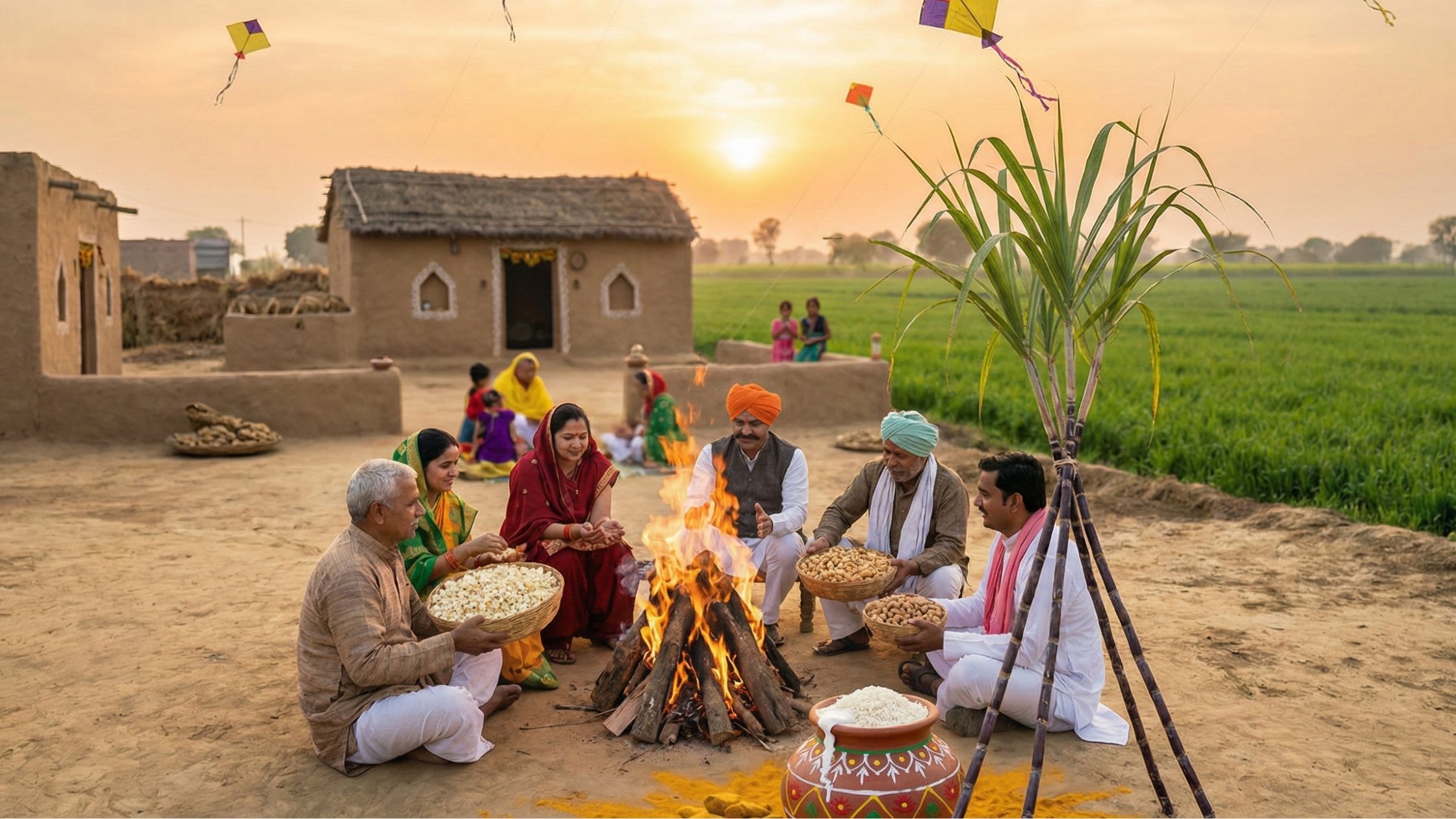
Makara Sankranti, Pongal & Lohri: The Cosmic Science Behind India’s Winter Celebrations
Makara Sankranti, Pongal & Lohri: The Cosmic Science Behind India’s Winter Celebrations Watch the full video explanation Makara Sankranti, Pongal & Lohri: The Science, Śāstra, and One Core Message Every mid-January, a remarkable phenomenon unfolds across India: millions celebrate what appears to be different festivals—Makara Sankranti in Maharashtra and Gujarat, Pongal in Tamil Nadu, Lohri in Punjab, Magh Bihu in Assam, Poush Sankranti in Bengal. The rituals differ, the foods vary, the names change. Yet all occur on the same astronomical date. Is this mere coincidence? Or does a deeper cosmic and biological science unite these seemingly disparate celebrations? Today, we’re embarking on a journey through ancient astronomy, Ayurvedic medicine, Vedic timekeeping, and cultural anthropology to uncover the profound unity underlying India’s mid-winter festivals. When A Warrior Chose His Moment To Die To understand the significance of Uttarayana—the astronomical event at the heart of these festivals—we must begin with one of the Mahabharata’s most powerful stories. Bhishma’s 58-Night Wait Bhishma Pitamaha, the grandsire of the Kuru dynasty, possessed a unique blessing: Icchha Mrityu—the power to choose the moment of his death. After falling on the 10th day of the Kurukshetra war, pierced by countless arrows forming a bed beneath him, he lay conscious for 58 days and nights. Why didn’t he simply choose to die immediately and end his agony? Because he was waiting for a specific astronomical moment. The Sacred Timing Mahabharata, Shanti Parva 47.3 records: शुक्लपक्षस्य चाष्टम्यां माघमासस्य पार्थिव । प्रजापतये च नक्षत्रे माध्यं प्राप्ते दिवाकरे ॥ निवृत्तमात्रे त्वयन उत्तरे वै दिवाकरे । समावेशयदात्मानमात्मन्येव समाहितः ॥ Translation: “On the eighth day of the bright fortnight of Magha month, when the sun was at midday and the moon in Rohini Nakshatra, when Uttarayana had finally begun, Bhishma, fully absorbed, merged his soul into the Supreme Soul.” Bhishma waited specifically for Uttarayana—the day the sun begins its northward journey. Why? Krishna’s Explanation: The Two Paths In Bhagavad Gita 8.24, Lord Krishna explains: अग्निर्ज्योतिरहः शुक्लः षण्मासा उत्तरायणम् । तत्र प्रयाता गच्छन्ति ब्रह्म ब्रह्मविदो जनाः ॥ Transliteration: Agnir jyotir ahaḥ śuklaḥ ṣaṇmāsā uttarāyaṇamTatra prayātā gacchanti brahma brahmavido janāḥ Translation: “Fire, light, day, the bright fortnight, the six months of Uttarayana—those who know Brahman and depart during this period attain the Supreme Brahman.” The next verse (8.25) describes the opposite path: धूमो रात्रिस्तथा कृष्णः षण्मासा दक्षिणायनम् । तत्र चान्द्रमसं ज्योतिर्योगी प्राप्य निवर्तते ॥ Translation: “Smoke, night, the dark fortnight, the six months of Dakshinayana—the yogi departing during this period attains the lunar light and returns [to the cycle of rebirth].” Uttarayana represents the path to liberation; Dakshinayana represents the path of return. Bhishma’s wait wasn’t superstition—it was based on a sophisticated understanding of cosmic timing and spiritual science. The Astronomical Foundation: What Is Uttarayana? The Solar Movement The earth’s tilted axis (23.5 degrees) creates the appearance that the sun “moves” northward and southward throughout the year. Uttarayana (uttara = north, ayana = movement) marks the period when the sun begins its apparent northward journey from the Tropic of Capricorn toward the Tropic of Cancer. Dakshinayana (dakshina = south) is the opposite—when the sun moves southward. Surya Siddhanta: The Ancient Astronomical Text The Surya Siddhanta, one of the earliest Indian astronomical treatises (composed approximately 400-500 CE, though containing knowledge from earlier periods), defines sankranti: मेषादिषु यदा सूर्यः संक्रान्तिं कुरुते द्विज । तदा संक्रान्तिरित्युक्ता सर्वकर्मप्रसाधिका ॥ Transliteration: Meṣādiṣu yadā sūryaḥ saṅkrāntiṁ kurute dvijaTadā saṅkrāntir ityuktā sarva-karma-prasādhikā Translation: “When the Sun transitions from one zodiac sign to another, O twice-born one, that moment is called Sankranti, and it is auspicious for all sacred actions.” Makara Sankranti specifically refers to the sun’s transition into Makara Rashi (Capricorn)—marking the beginning of Uttarayana. The Calendar Anomaly Here’s an interesting historical fact: Makara Sankranti was once synonymous with the Winter Solstice (shortest day, around December 21-22). Due to the precession of the equinoxes (a gradual shift in Earth’s rotational axis), these dates have drifted apart over millennia. Ancient texts reference Uttarayana as the Winter Solstice itself. Today, we celebrate Makara Sankranti on January 14-15 based on Sayana (tropical) calculations, while the actual solstice occurs in late December. This explains why Bhishma Ashtami (his death anniversary) falls in Magha month (January-February), several weeks after the modern Sankranti date—he likely departed on the actual Winter Solstice of his era. The Biological Science: Why Winter’s End Matters Ayurveda’s Seasonal Framework: Ritucharya Ancient Indian medicine didn’t view the body as independent from nature—it understood humans as deeply embedded in seasonal rhythms. Ritucharya (ritu = season, charya = regimen) is Ayurveda’s science of seasonal adaptation. The Six Seasons and Two Kalas Ashtanga Hridaya, Sutrasthana Chapter 3 divides the year into: Adana Kala (Northern Solstice) – Sun takes strength: Shishira (Late Winter: Mid-January to Mid-March) Vasanta (Spring: Mid-March to Mid-May) Grishma (Summer: Mid-May to Mid-July) Visarga Kala (Southern Solstice) – Sun releases strength: 4. Varsha (Monsoon: Mid-July to Mid-September) 5. Sharad (Autumn: Mid-September to Mid-November) 6. Hemanta (Early Winter: Mid-November to Mid-January) Why Hemanta-Shishira Transition Matters Charaka Samhita notes that during Hemanta and Shishira, human beings possess Pravara Bala—supreme strength. Why? The Physiological Mechanism When external temperature drops: Vasoconstriction occurs (blood vessels narrow in extremities) Blood circulates more to the core body and digestive system Jatharagni (digestive fire) intensifies significantly Hunger increases Body demands more nourishment Metabolic rate elevates to generate internal heat Makara Sankranti marks the transition from Hemanta to Shishira—the peak period of digestive strength, when the body can efficiently process heavy, nourishing foods. The Traditional Foods: Biological Intelligence Now the traditional foods make scientific sense: Sesame (Til) and Jaggery (Gud) Charaka Samhita, Sutrasthana states: तिलाः स्निग्धा उष्णा बल्याः कफवातहराः स्मृताः ॥ Transliteration: Tilāḥ snigdhā uṣṇā balyāḥKapha-vāta-harāḥ smṛtāḥ Translation: “Sesame seeds are unctuous, warming, strength-giving, and balance Vata and Kapha doshas.” Scientific Benefits: Sesame seeds provide: Healthy fats (46-63% oil content) Internal warmth (ushna virya) Calcium (975 mg per 100g) Magnesium, zinc, iron Lignans with antioxidant properties Jaggery provides: Immediate energy (glucose) Iron (11 mg per 100g) Minerals (potassium, magnesium) Warmth and blood purification Together, they support: Thermal regulation in cold weather Bone