On the blood-soaked battlefield of Lanka, surrounded by fallen warriors and the stench of death, Lord Rama stood frozen—not from fear, but from exhaustion. His muscles ached from days of relentless combat. His mind, burdened by the weight of dharma and the sight of countless casualties, struggled to maintain clarity. Before him stood Ravana, the ten-headed demon king, fresh and ready for another round of combat.
This was the darkest moment before dawn.
And it was precisely at this moment of complete physical depletion and mental fatigue that Sage Agastya appeared with a solution that would not only restore Rama’s strength within minutes but would encode one of the most sophisticated psycho-physiological technologies in human spiritual history.
The Aditya Hridaya Stotra appears in Valmiki Ramayana, Yuddha Kanda, Sarga 105 (Chapter 105). This placement is critical—it’s not a devotional hymn composed for philosophical meditation or religious ritual. It’s a battlefield intervention prescribed at the apex of physiological stress.
Valmiki Ramayana, Yuddha Kanda 6.105.1-2:
ततो युद्धपरिश्रान्तं समरे चिन्तया स्थितम्।
रावणं चाग्रतो दृष्ट्वा युद्धाय समुपस्थितम्॥१॥

दैवतैश्च समागम्य द्रष्टुमभ्यागतो रणम्।
उपागम्याब्रवीद्रामं अगस्त्यो भगवान् ऋषिः॥२॥
Transliteration: Tato yuddha-pariśrāntaṁ samare cintayā sthitam
Rāvaṇaṁ cāgrato dṛṣṭvā yuddhāya samupasthitam
Daivataiśca samāgamya draṣṭum abhyāgato raṇam
Upāgamyābravīd rāmaṁ agastyo bhagavān ṛṣiḥ
Translation: “Then, seeing Rama exhausted from battle (yuddha-pariśrāntam), standing absorbed in thought (cintayā sthitam) on the battlefield, and Ravana ready before him for combat—
The blessed sage Agastya, who had come with the gods to witness the battle, approached Rama and spoke.”
The Sanskrit terms are medically precise:
This is a crisis of:
And Agastya’s response? Not a weapon. Not a military strategy. A hymn.
Valmiki Ramayana, Yuddha Kanda 6.105.3-4:
राम राम महाबाहो शृणु गुह्यं सनातनम्।
येन सर्वानरीन् वत्स समरे विजयिष्यसि॥३॥

आदित्यहृदयं पुण्यं सर्वशत्रुविनाशनम्।
जयावहं जपेन्नित्यं अक्षय्यं परमं शिवम्॥४॥
Transliteration: Rāma rāma mahābāho śṛṇu guhyaṁ sanātanam
Yena sarvān arīn vatsa samare vijayiṣyasi
Āditya-hṛdayaṁ puṇyaṁ sarva-śatru-vināśanam
Jayāvahaṁ japen nityaṁ akṣayyaṁ paramaṁ śivam
Translation: “O Rama, O mighty-armed one, listen to this eternal secret (guhyaṁ sanātanam) by which, O dear one, you shall conquer all enemies in battle.
The Aditya Hridayam is sacred (puṇyam), destroys all obstacles (sarva-śatru-vināśanam), brings victory when chanted (jayāvaham). It is inexhaustible (akṣayyam), supremely auspicious (paramaṁ śivam).”
आदित्यहृदयम् (Āditya-hṛdayam) breaks down as:
आदित्य (Āditya) =
हृदयम् (Hṛdayam) =
Complete Translation: “The Heart-Essence of the Sun” or “That which brings the Sun’s power to the heart“
This isn’t merely “a hymn to the sun.” It’s a technology for internalizing solar power—bringing the sun’s vitality, clarity, and life-giving energy directly into the practitioner’s physiological and energetic system.
The Aditya Hridaya contains 31 ślokas divided into six functional sections:
Now let’s examine the mechanisms through which the Aditya Hridaya operates—mechanisms that modern neuroscience is only beginning to understand.
The Aditya Hridaya’s meter (chandas) is Anuṣṭubh (8 syllables per quarter, 32 syllables total per verse). This creates a specific breathing pattern.
Scientific Finding: A 2011 fMRI study published in the International Journal of Yoga demonstrated that chanting “Om” activates the vagus nerve through vibrations in the larynx and auricular (ear) regions.
The Vagus Nerve:
When chanting activates the vagus nerve:
Study Reference: Kalyani et al. (2011). Neurohemodynamic correlates of ‘OM’ chanting: A pilot functional magnetic resonance imaging study. International Journal of Yoga, 4(1), 3-6.
Key Finding: “The neurohemodynamic correlates of ‘OM’ chanting indicate limbic deactivation. As similar observations have been recorded with vagus nerve stimulation treatment used in depression and epilepsy, the study findings argue for a potential role of this ‘OM’ chanting in clinical practice.”
The same study found that chanting produced significant deactivation in:
What This Means in Battle: When Rama chanted the Aditya Hridaya:
This is why the text says:
एतच्छ्रुत्वा महातेजा नष्टशोकोऽभवत्तदा।
धारयामास सुप्रीतो राघवः प्रयतात्मवान्॥२८॥
“Hearing this, that great warrior (Rama) became free from sorrow (naṣṭa-śoka). Raghava, of focused mind (prayata-ātmavān), held it with great joy.”
The transformation wasn’t metaphorical—it was neurophysiological.
Heart Rate Variability measures the variation in time between consecutive heartbeats. Counter-intuitively, higher variability indicates better health—it shows the nervous system can flexibly adapt.
Research Finding: A 2009 study published in BMC Complementary and Alternative Medicine found that chanting increases the HF (High Frequency) component of HRV—a direct marker of parasympathetic (vagal) activity.
Practical Implication: When HRV is high:
Study Reference: Telles et al. (2016). Effect of yoga on heart rate variability. In Principles and Practice of Stress Management (3rd ed.).
Connection to Rama: After chanting, the text describes Rama as:
त्रिराचम्य शुचिर्भूत्वा धनुरादाय वीर्यवान्।
रावणं प्रेक्ष्य हृष्टात्मा युद्धाय समुपागमत्॥२९-३०॥
“Sipping water thrice, becoming purified, taking up his bow, the valiant one (vīryavān), seeing Ravana, with delighted mind (hṛṣṭa-ātmā) advanced for battle.”
He didn’t just regain composure—he experienced physiological rejuvenation.
Humans evolved under the sun’s rhythm. Our biology is fundamentally solar-entrained.
The Suprachiasmatic Nucleus (SCN):
When Circadian Rhythms Align:
The Aditya Hridaya invokes Surya as:
एष सुप्तेषु जागर्ति भूतेषु परिनिष्ठितः।
एष एवाग्निहोत्रं च फलं चैवाग्निहोत्रिणाम्॥
“He (Surya) remains awake when all beings sleep, established within them. He alone is the Agnihotra (sacred fire) and its fruits for the sacrificer.”
Interpretation: Surya represents the internal biological clock that runs continuously. By consciously invoking this solar rhythm through the stotra, Rama re-entrained his disrupted circadian system.
After sleepless nights of battle, his cortisol-melatonin axis was likely dysregulated. The Aditya Hridaya recalibrated it.
Default Mode Network (DMN):
Problem in Battle: DMN activation creates:
Mantra Chanting Deactivates the DMN: A 2014 study in Frontiers in Psychology showed that mantra meditation suppresses DMN activity, leading to:
Study Reference: Ganesan et al. (2014). Default mode network connectivity patterns during task-free resting state fMRI. Frontiers in Psychology.
Application to Rama: The Aditya Hridaya demanded complete attentional focus:
This forced his mind out of rumination and into present-centered action-readiness.
Sanskrit is a phonetically engineered language. Each sound (phoneme) is classified by its:
The Aditya Hridaya contains specific phonetic patterns:
Heavy use of:
Scientific Basis: A 2018 study in Applied Psychophysiology and Biofeedback demonstrated that different phonemes activate different vagal pathways.
Longer ‘M’ sounds (as in “Om” or “Mmmm”):
Study Reference: Gerritsen & Band (2018). Breath of Life: The Respiratory Vagal Stimulation Model of Contemplative Activity. Frontiers in Human Neuroscience.
The Aditya Hridaya isn’t praising an external deity—it’s invoking an internal biological principle.
Ayurvedic and Yogic Physiology:
Maṇipūra Chakra (Solar Plexus):
When maṇipūra is activated:
The Aditya Hridaya states:
एष देवासुरगणाँल्लोकान् पाति गभस्तिभिः।
एष एव ऋग्यजुःसामाथर्वाङ्गिरसां पिता॥
“He protects the worlds of gods and demons with his rays. He alone is the father of the Rig, Yajur, Sama, and Atharva Vedas.”
Rays (gabhasti) = prāṇic energy flows that sustain all life functions.
By chanting, Rama wasn’t asking for external help—he was reactivating his own internal solar power.
The text provides precise before-and-after documentation:
युद्धपरिश्रान्तम्। समरे चिन्तया स्थितम्॥धारयामास सुप्रीतो राघवः प्रयतात्मवान्॥आदित्यं प्रेक्ष्य जप्त्वा तु परं हर्षमवाप्तवान्।
त्रिराचम्य शुचिर्भूत्वा धनुरादाय वीर्यवान्॥
रावणं प्रेक्ष्य हृष्टात्मा युद्धाय समुपागमत्।
सर्वयत्नेन महता वधे तस्य धृतोऽभवत्॥Translation: “Looking at the sun and chanting, (Rama) obtained supreme joy (param harṣam). Sipping water thrice, becoming purified, the valiant one (vīryavān) took up his bow.
Seeing Ravana, with delighted mind (hṛṣṭa-ātmā), he advanced for battle. With all effort and great determination (sarva-yatnena mahatā), he became resolved to slay him.”
| State | Before | After |
|---|---|---|
| Physical | Exhausted (pariśrānta) | Vigorous (vīryavān) |
| Mental | Anxious thought (cintayā) | Focused determination (dhṛta) |
| Emotional | Burdened | Delighted (hṛṣṭa-ātmā) |
| Energetic | Depleted | Full of effort (sarva-yatnena) |
Time elapsed? Minutes. Not hours. Not days. MINUTES.
The Aditya Hridaya wasn’t just for ancient warriors. Its mechanisms apply to any high-stress, high-stakes situation:
Valmiki Ramayana 6.105.22-23:
तं च विद्वांसं उपासीनो व्यवसायं समाश्रितः।
तथा त्रिकाल पाठी त्वं यत्नवान् भवसि यदि॥

अरिष्टः पश्यमानः सर्वत्रसंग्रामेषु च विजयी।
Translation: “If you worship that wise one (Surya) with determination, and chant this three times daily with effort, you will be victorious everywhere, witnessing no harm in battles.”
Optimal Timing:
Physical Setup:
Mental Preparation:
Chanting Method:
Post-Chanting:
Recommended Pattern:
This creates approximately 6 breaths per minute—the optimal rate for Heart Rate Variability enhancement.
A: Understanding enhances effects, but phonetic vibration works even without comprehension. The neurophysiological effects (vagal activation, rhythmic breathing) occur from sound production itself.
However, knowing meanings adds:
A: Yes, but with different effects.
Recommendation: Begin with audible for physiological benefits, progress to mental for advanced practice.
A: Start with the core invocation (verses 3-6) which takes only 2-3 minutes.
Even minimal engagement activates the mechanisms. Consistency matters more than completeness.
A: The Aditya Hridaya is both spiritual practice and applied neuroscience.
Non-religious approach:
Religious approach:
Both approaches produce measurable benefits.
The Aditya Hridaya Stotra represents something extraordinary: a technology for consciousness developed in antiquity that modern neuroscience is only now beginning to validate.
When Sage Agastya called it guhyaṁ sanātanam (eternal secret), he wasn’t being metaphorical. This is a precisely calibrated psycho-physiological intervention that:
All within minutes. All without drugs. All without equipment.
The text doesn’t say Rama was magically healed by divine intervention. It says:
नष्टशोकोऽभवत्तदा“He became free from sorrow AT THAT MOMENT.”
Not eventually. Not gradually. Immediately.
Because the mechanisms are biological, not mythological.
The next time you face your own battlefield—whether it’s a board meeting, an exam, a difficult conversation, or a moment of existential overwhelm—remember:
You have within you the same solar fire that enabled Rama to face Ravana.
And you have the same technology to activate it.
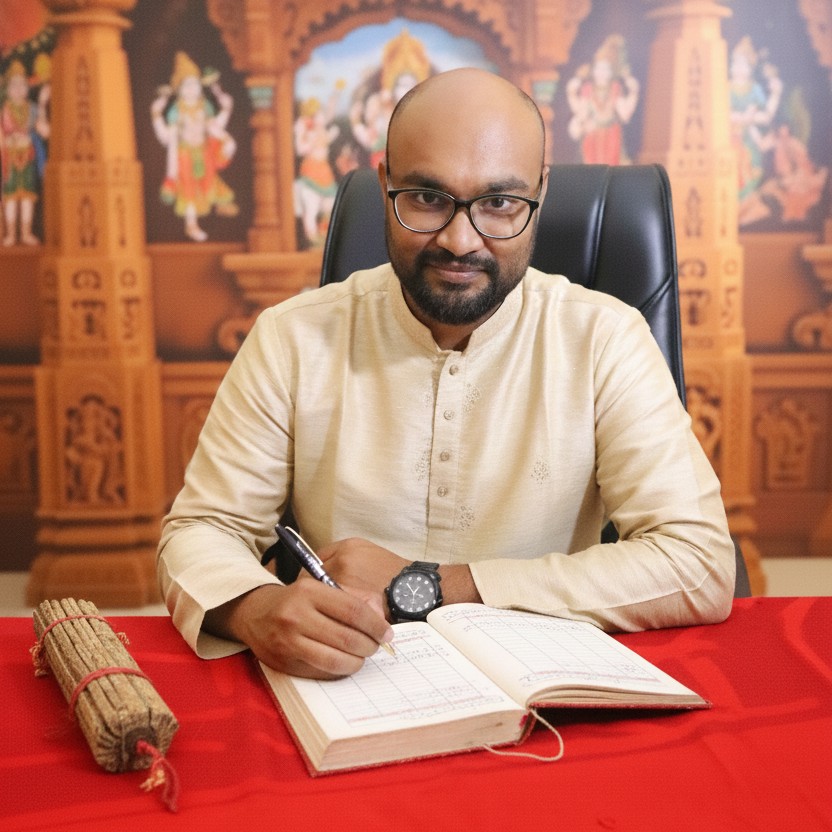
Jayanth Dev is an author writing on Hindu scriptures, Sanatana Dharma, and mythological narratives through books, long-form articles, and explanatory talks.
His work focuses on examining scriptural ideas in context—drawing from the Vedas, Upanishads, and Puranas to clarify commonly misunderstood concepts and traditions. Across both fiction and non-fiction, he approaches Sanatana thought as a living framework rather than a static belief system.
Jayanth is the author of I Met Parashurama, Escaping the Unknown, and the Dhantasura series.
Copyright © 2026 Jayanth Dev. Built with 💡 by Popupster.in — The Creative Marketing Company