
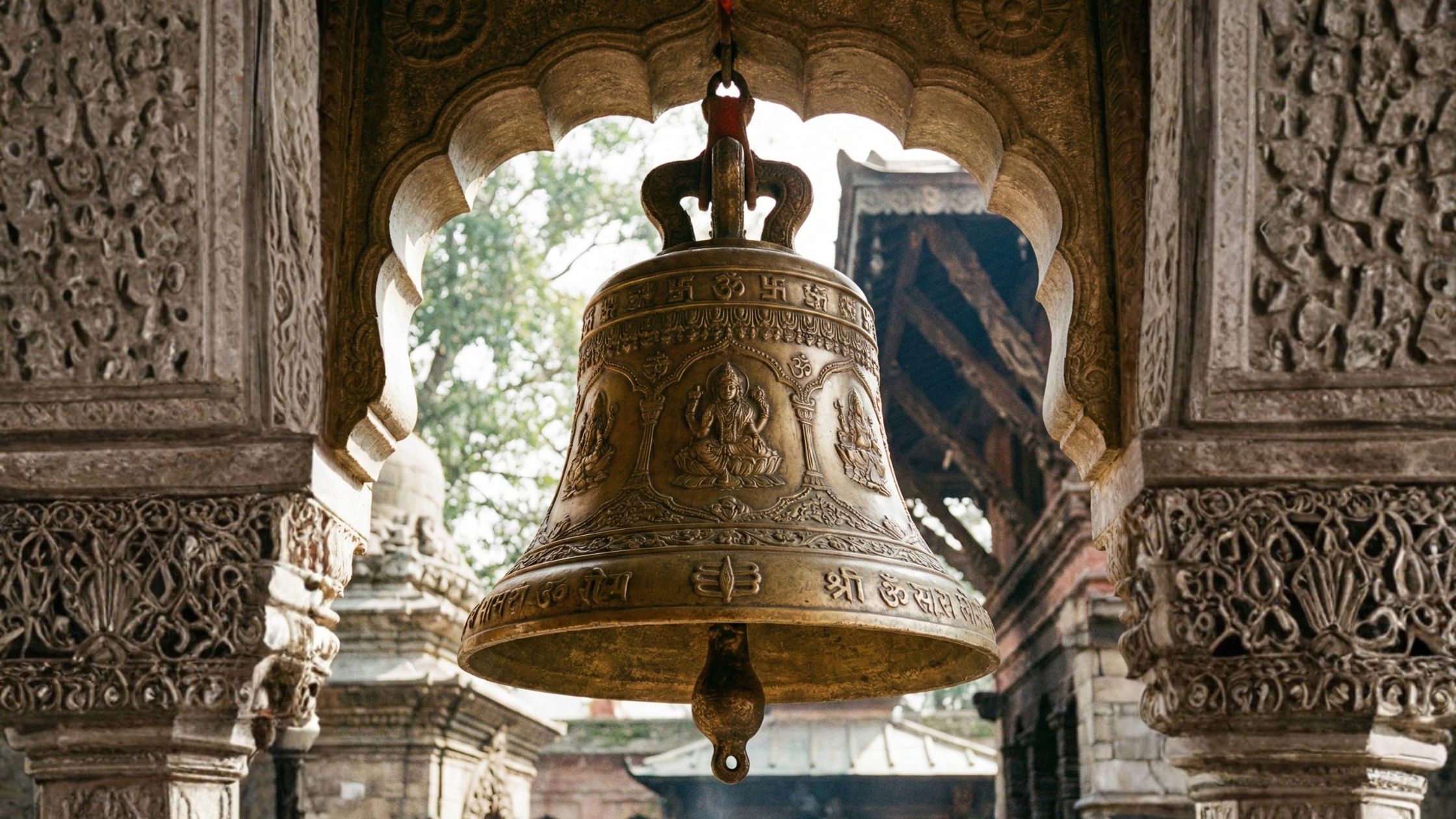
Why Do We Ring the Temple Bell? Watch the full video explanation https://youtube.com/shorts/BYZUy3WW5qU The Ancient Science of Sound, Silence, and Sacred Preparation The Sound That Begins Everything You have heard it thousands of times. A single, clear, metallic ring — sometimes deep and resonant, sometimes high and sharp — that cuts through the air the moment you step into a temple corridor. Your hand reaches up almost automatically. You strike the bell once, perhaps twice, and walk on. What just happened? Most people would answer: you announced yourself to the deity. You performed the prescribed greeting. You followed tradition. All of these are true in the most surface sense. But the ghanta — the temple bell — in classical Hindu understanding, is not a greeting mechanism. It is a precision instrument designed to achieve a specific transformation in the human mind. And the transformation it is designed to achieve is the one thing no deity can grant you on your behalf: the cessation of inner noise. Nada Brahma: Sound as the First Principle of Creation To understand why Hindu temple architecture placed so much importance on the specific resonance of a bell struck at the threshold of sacred space, you need to understand the Hindu cosmological view of sound. The concept of Nada Brahma — sound as Brahman, or the ultimate reality — is not a metaphor. It is a philosophical position stated explicitly across the Upanishads, the Agama texts, and the Natya Shastra. The universe, in this view, did not begin with a big bang in the sense of an explosion. It began with a vibration — the primal sound Aum — which differentiated itself into the spectrum of frequency that we experience as the manifest world. The Katha Upanishad declares that OM is the goal toward which all Vedas point, toward which all austerities travel. Sound, in this cosmology, is not a secondary phenomenon produced by material objects. Sound — or more precisely, vibration — is the primary stratum of reality out of which material objects emerge. If this is the underlying metaphysics of the tradition, then the ritual use of sound in temple worship is not decorative. It is therapeutic. It is corrective. The bell does not exist to make the temple feel more mystical. It exists to interact with the vibrational state of the human nervous system and shift it toward something closer to stillness. The Architecture of the Ghanta The traditional Hindu temple bell — the ghanta or ghanti — is not a casually designed object. Its specifications are laid out in meticulous detail in the Agama texts, particularly in the Shaiva Agamas and the ritual manuals (puja paddhati) used by temple priests across different regional traditions. The bell is typically made from an alloy of five metals: copper, zinc, tin, lead, and a small proportion of gold or silver. These five metals — panchaloha — are the same alloy used for deity installation, and their combination is believed to produce a sound with a specific vibrational quality that resonates with the energy field of a properly consecrated temple. The shape of the bell — wider at the base, tapering toward the top, with a handle often cast in the form of Nandi (Shiva’s bull) or a Garuda or a simple lotus — is acoustically engineered. When struck correctly, the bell produces not a single note but a complex harmonic chord containing multiple overtones simultaneously. It is this chord — this cluster of simultaneous frequencies — that constitutes the bell’s real function. Modern acoustic research confirms what temple builders understood empirically: a complex harmonic sound struck in a reflective stone enclosure produces a standing wave pattern that fills the space with what physicists call acoustic resonance. In plain language: the sound of a temple bell, rung in a stone temple, fills the space with vibration in a way that interacts with and affects the listener’s brainwave activity. Invite the Devas, Dispel the Rakshasas The traditional verse from temple Agama practice says: ring the bell to invite the devas and to drive away the rakshasas. This is often read as a purely liturgical statement — invite the gods, drive away the demons. But a more sophisticated reading, consistent with the Agamic tradition’s approach to symbol, understands ‘devas’ and ‘rakshasas’ as functional states of the human mind. Deva — from the root div, meaning light or to shine — refers in the psychological sense to the luminous, sattvic qualities of the mind: clarity, discernment, calm attention, openness to the subtle. Rakshasa — from the root raks, meaning to obstruct or to seize — refers to the turbulent, tamasic and rajasic qualities: anxiety, agitation, distraction, the internal noise of unprocessed emotion and undirected thought. When you ring the bell at the temple threshold, you are performing a sonic clearing of the inner landscape. You are inviting the qualities of attention, clarity, and stillness — the conditions under which genuine encounter with the divine is possible — and you are actively expelling the competing demands of the ordinary mind: the grocery list, the work email, the unresolved conversation, the ambient worry. The bell does not wake God. God does not need waking. The bell wakes you. The Neuroscience of a Single Bell Stroke Modern neuroscience has begun to map what the Agamic tradition described functionally. The human brain operates in different frequency bands: beta waves (14-30 Hz) characterize ordinary waking thought — the rapid, fragmented, problem-solving mode in which most of us spend most of our day. Alpha waves (8-13 Hz) are associated with relaxed attention, creative reception, and the early stages of meditative states. Theta waves (4-7 Hz) correspond to deep meditation and the threshold of sleep — states associated with profound insight and inner quiet. A sharp, complex harmonic sound — like a well-made temple bell — produces what psychoacousticians call an orienting response: the brain stops its current processing loop, widens its attention, and briefly enters a state closer to alpha. In the second or
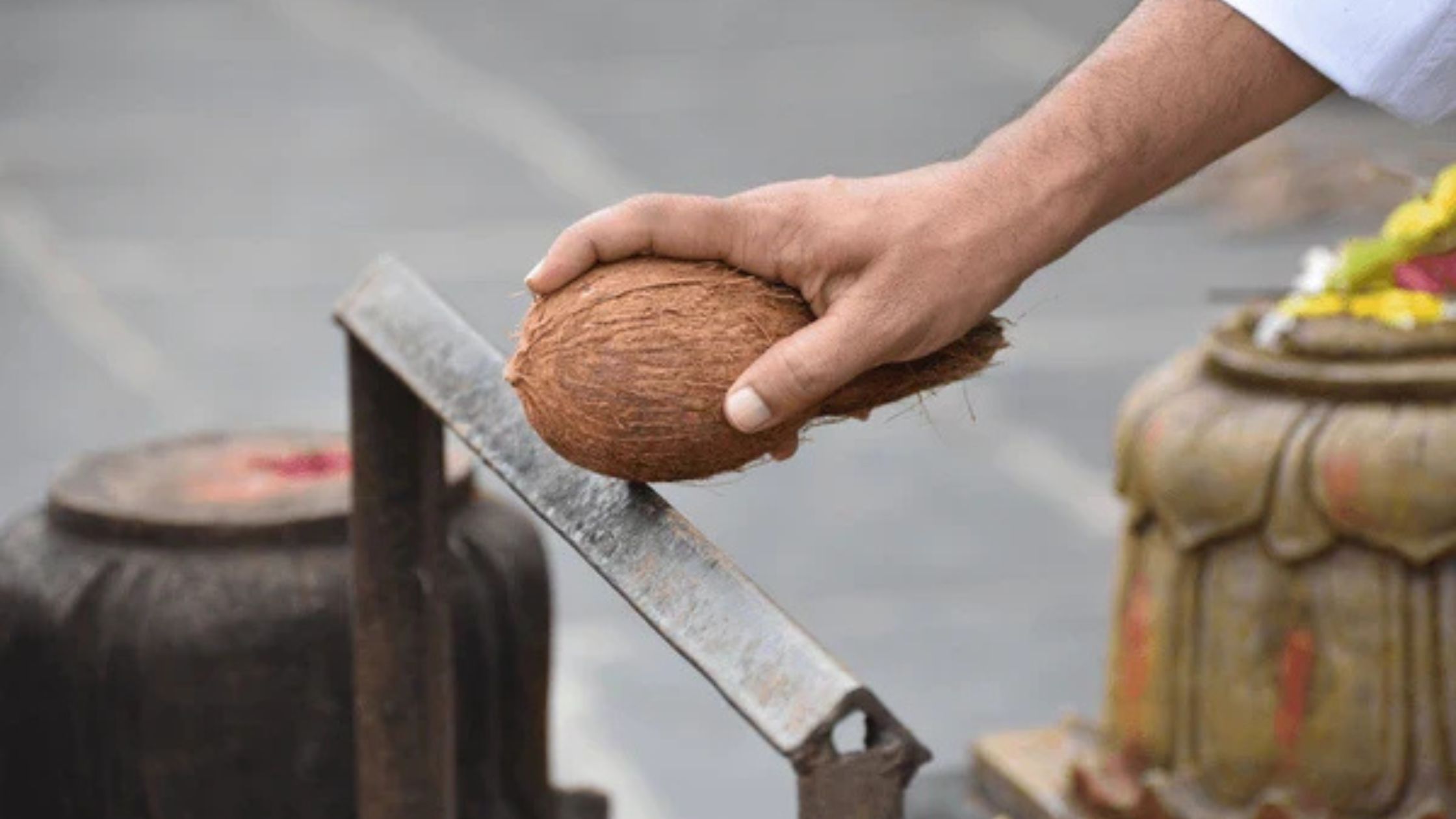
Why Do We Break a Coconut Before Pooja? The Hidden Science of Ego, Surrender, and Sacred Symbolism
Why Do We Break a Coconut Before Pooja? Watch the full video explanation https://youtube.com/shorts/c-V7DCLVK9w The Hidden Science of Ego, Surrender, and Sacred Symbolism The Act Everyone Sees — And Almost Nobody Understands Walk into any Hindu ritual — a grihapravesham, a car puja, the beginning of a temple festival, the first day of a new business — and somewhere in the proceedings, a coconut will be raised and brought down hard against a stone floor or a sharp edge. It splits apart. Everyone moves on. The priest sprinkles the water. The flesh is distributed as prasad. The action is complete in seconds. But what has just happened? Most people, if you asked them, would say: it is an offering. Some might say it drives away negative energy. A few would recall hearing something about the three eyes resembling Shiva. These answers are not wrong. But they are surface readings of a text written in the language of symbol — and the actual meaning runs far deeper than any of these fragments. The breaking of the coconut, in classical Hindu understanding, is a reenactment of the single most important psychological event in spiritual life: the dissolution of ego. It is not something performed for the deity’s benefit. It is performed for yours. The Coconut in the Ancient World The Sanskrit name for the coconut is shrir-phala — the auspicious fruit, or the fruit of Shri (Lakshmi). It is also called narikela. Ayurvedic texts and Puranic literature consistently identify the coconut as the most complete offering available to a householder — because it contains everything. It has an outer shell, a layer of fibrous husk, cool water inside, and sweet flesh within. In botanical terms, the coconut is a three-layered drupe. In Vedic symbolic terms, this three-layered structure maps precisely onto the three-layered human being. The outer husk represents the gross physical body — the sthula sharira — the part of us most visible, most defended, and most easily mistaken for the self. The shell — the hard brown casing beneath — represents ahankara, the ego, the I-sense that insists on its own importance, its own separateness, its own centrality. The water within represents vasana — desire, the accumulated impressions and longings that flood the interior of the ego-self and make it feel alive. And the white flesh, hidden beneath all of this — that is the atman. The inner self. Pure, bright, nourishing, and completely invisible until everything else is removed. This is not a post-hoc interpretation. The Samkhya darshana — one of the six classical schools of Hindu philosophy — explicitly describes the human personality as layered in precisely this way, with the ego-self (ahankara) forming the protective but obstructive casing around the deeper self. The Three Eyes — And Why They Matter Look at a whole coconut before it is broken. At the top, you will always find three small markings — two dark spots and one slightly lighter depression. These are called the eyes of the coconut, and their theological resonance in the Hindu tradition is deliberate. The three eyes are consistently read as the three eyes of Shiva. The first two are ordinary sight — the eyes that see the world as it appears, filtered through desire and attachment. The third eye — placed at the center of Shiva’s forehead — is the eye of jnana, the eye of direct knowing. When Shiva opens his third eye, it burns not the world but the illusion overlaid on the world. The opening of the third eye represents the moment of transcendence from conditioned seeing to unconditioned awareness. When you hold the coconut before breaking it, you are holding a symbolic Shiva — an entity with the capacity for ordinary and transcendent perception simultaneously. The act of breaking it is, symbolically, the opening of the third eye. The explosion of the hard shell into pieces is the explosion of the conditioned ego-self into its component illusions, which then scatter and dissolve. This is extraordinary ritual theology, embedded inside an object small enough to hold in two hands. Ahankara: The Philosophical Precision of the Symbolism The word ahankara comes from two Sanskrit roots: aham — I — and kara — maker or doer. Ahankara literally means the maker of I. It is the part of the mind-apparatus that generates the sense of personal selfhood, the narrative of ‘me’ that runs continuously through every waking moment. In Vedantic philosophy, ahankara is not evil. It is necessary for embodied life. Without it, you cannot function — you cannot protect yourself, make decisions, or navigate relationships. But it becomes the primary obstacle to spiritual realization when it mistakes itself for the ultimate self. When the ego-self forgets it is a function and believes it is the source, it generates suffering — because everything built on mistaken identity must eventually collapse. The coconut ritual enacts the correct relationship between the ego and the self. The ego does not dissolve and cease to exist — the coconut, after all, does not vanish. Its components are received, distributed, consumed. But its hard, opaque enclosure — the thing that kept the light of the atman from shining through — is shattered deliberately, as an act of willingness. This is the genius of the gesture: it is not passive. The coconut does not crack by accident. Someone raises it and brings it down with force and intention. The ego does not surrender on its own. The aspirant must choose to break it — must raise their own constructed self and deliberately bring it into contact with something harder than pride. Water Within: The Vasana Teaching When the coconut breaks, the water inside — the coconut milk — spills out and is carefully collected. In ritual usage, this water is offered to the deity and sometimes sprinkled as purification. Its symbolic meaning is equally precise. Vasana in Sanskrit means ‘that which dwells within’ — specifically, the subtle impressions of desire, memory, and habit that accumulate through experience and
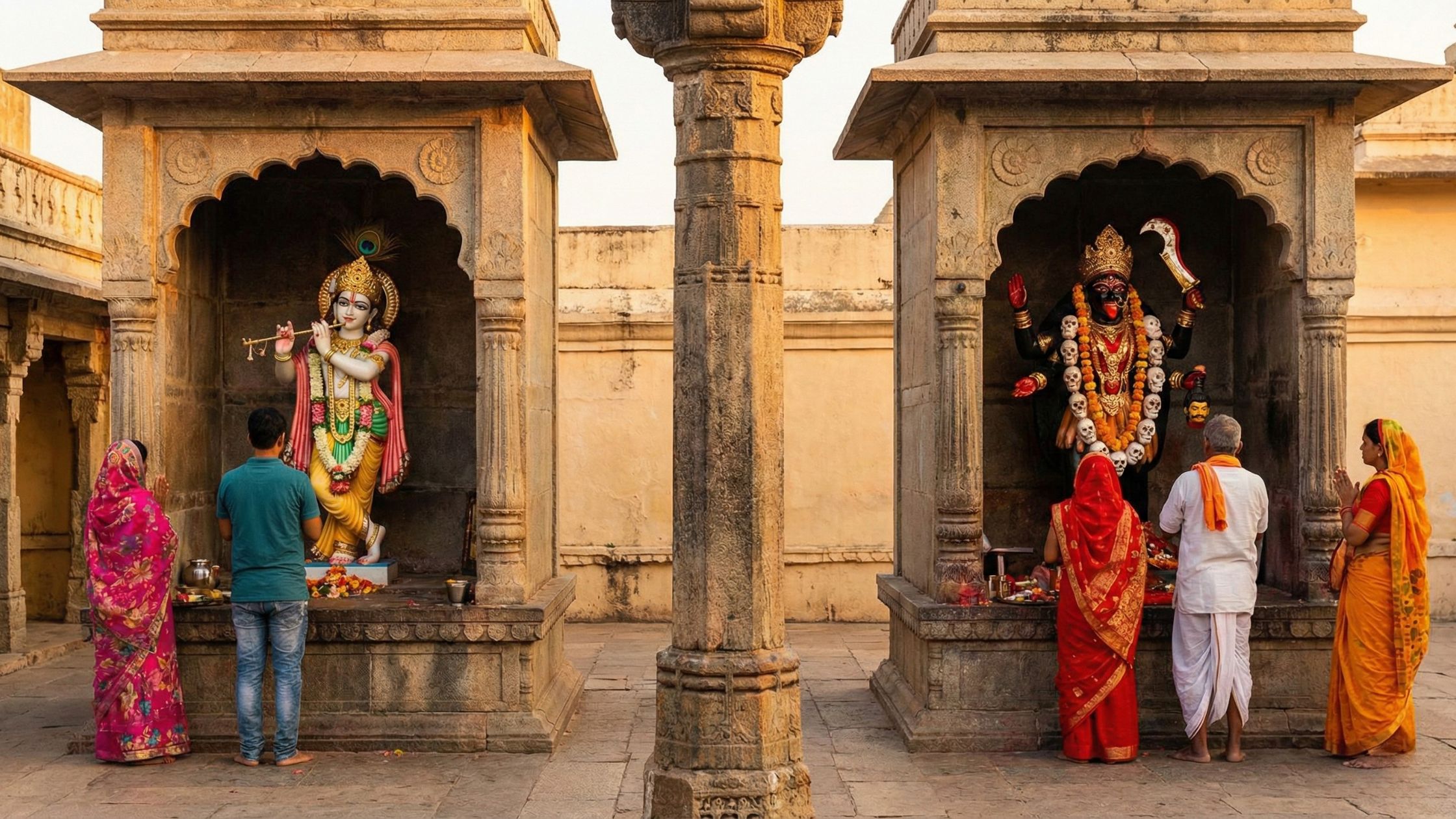
“Kali Is Actually Śrī Krishna?” — Let’s Open the Śāstra: Understanding Theological Frameworks in Sanātana Dharma
“Kālī Is Actually Śrī Krishna?” — Let’s Open the Śāstra: Understanding Theological Frameworks in Sanātana Dharma Watch the full video explanation https://youtube.com/shorts/YBtUDs6o6JQ Kālī Is Not Krishna? — Theological Frameworks Explained “Kālī is Krishna.” I keep hearing this. On Instagram reels. In WhatsApp forwards. In casual conversations about Hinduism. Before you share the next viral post claiming this equivalence—let’s actually open the śāstra. Because this statement, made carelessly without context, reveals something deeper than theological confusion. It reveals a fundamental misunderstanding of how Sanātana Dharma actually works—how it holds multiple valid theological frameworks simultaneously without collapsing them into simplistic uniformity. My name is Jayanth Dev, Author of Dhantasura. And today we’re examining what the texts actually say. The Problem: Theological Precision Matters Sanātana Dharma allows theological depth. It accommodates diverse approaches to the Divine. There are rich traditions that speak eloquently of the unity of Ultimate Reality—the non-dual Brahman beyond all names and forms. But there are also distinct tattvas (principles) described in Purāṇa and Itihāsa. Specific deity forms with specific functions, specific līlās (divine play), and specific relationships to cosmic order. If we are going to make a statement like “Kālī is Krishna,” we must ask: What do the texts actually say? Which sampradāya (theological tradition) are we speaking from? Are we discussing ultimate non-dual reality (where all distinctions dissolve)? Or are we discussing relative manifestations (where deity forms have specific identities and functions)? Conflating these levels creates confusion, not clarity. Let’s examine what the primary scriptures say about Krishna, what they say about Kālī, and where—if anywhere—they establish direct equivalence. Part I: Krishna’s Position in Vaiṣṇava Theology The Foundational Verse: Śrīmad Bhāgavatam 1.3.28 The Śrīmad Bhāgavatam, composed by Sage Vyāsa, is considered the mahā-purāṇa (great Purāṇa) by Vaiṣṇava traditions. It’s often called the “ripened fruit of the Vedic tree” (nigama-kalpa-taror galitaṁ phalam). In Canto 1, Chapter 3, Sage Śuka is describing the various avatāras (incarnations) of Viṣṇu: Matsya, Kūrma, Varāha, Narasiṁha, Vāmana, Paraśurāma, Rāma, Buddha, Kalki, and others. Then comes verse 28—one of the most significant theological statements in Purāṇic literature: Sanskrit (Devanāgarī): एते चांशकलाः पुंसः कृष्णस्तु भगवान् स्वयम् । इन्द्रारिव्याकुलं लोकं मृडयन्ति युगे युगे ॥ Sanskrit (IAST Transliteration): ete cāṁśa-kalāḥ puṁsaḥ kṛṣṇas tu bhagavān svayam indrāri-vyākulaṁ lokaṁ mṛḍayanti yuge yuge Word-by-Word Breakdown: ete (एते) = all these ca (च) = and aṁśa (अंश) = portions, direct expansions kalāḥ (कलाः) = portions of portions, secondary expansions puṁsaḥ (पुंसः) = of the Supreme Person kṛṣṇaḥ (कृष्णः) = Krishna tu (तु) = but (emphatic contrast) bhagavān (भगवान्) = the Supreme Personality possessing six opulences svayam (स्वयम्) = Himself, in person, the original indrāri (इन्द्रारि) = enemies of Indra (demons) vyākulam (व्याकुलम्) = disturbed lokam (लोकम्) = world mṛḍayanti (मृडयन्ति) = they mitigate, they protect yuge yuge (युगे युगे) = age after age Translation: “All of the above-mentioned incarnations are either direct portions (aṁśa) or portions of portions (kalā) of the Supreme Person, but Krishna is Bhagavān Himself (svayam). All of them appear in different ages to protect the world when it is disturbed by demons.” What This Establishes in Vaiṣṇava Theology This verse is doctrinally foundational for Gauḍīya, Vallabha, and other Krishna-centered Vaiṣṇava sampradāyas. Key theological claims: 1. Krishna is Svayam Bhagavān The term svayam means “Himself”—the original, complete form of the Supreme Lord, not a derivative or partial manifestation. All other avatāras—including Viṣṇu, Nārāyaṇa, Rāma—are described as aṁśa (direct expansions) or kalā (portions of expansions) emanating from Krishna. 2. Krishna is the Source, Not Derived Commentators like Śrīla Jīva Gosvāmī, Śrīdhara Svāmī, and Viśvanātha Cakravartī Ṭhākura extensively analyzed this verse. They emphasize: Krishna doesn’t come FROM Viṣṇu (the common Hindu understanding) Viṣṇu comes FROM Krishna Krishna is pūrṇa-brahma (complete Brahman), possessing all six opulences (aiśvarya) in full: wealth, strength, fame, beauty, knowledge, renunciation 3. This is a Specific Sampradāya Position This theological position is specific to Krishna-centered Vaiṣṇava theology. Other Vaiṣṇava sampradāyas (like Śrī Vaiṣṇava, founded by Rāmānuja) may interpret this differently—some seeing Nārāyaṇa as supreme and Krishna as an avatāra of Nārāyaṇa. The point: Even within Vaiṣṇava traditions, there are variations in how this verse is understood. Part II: Kālī’s Position in Śākta Theology The Goddess as Supreme Śakti: Devī Māhātmyam Now let’s examine what śāstra says about the Goddess and specifically Kālī. The primary text is the Devī Māhātmyam (देवी माहात्म्यम्), also called Durgā Saptaśatī (700 verses) or Caṇḍī Pāṭha. This text, found in the Mārkaṇḍeya Purāṇa (chapters 81-93), is the foundational scripture of Śākta (Goddess-centered) theology. Historical Context: Composed approximately 400-600 CE Describes the Goddess (Devī/Durgā) as supreme ultimate reality Presents her victory over the buffalo demon Mahiṣāsura Introduces forms like Kālī and the Saptamātṛkā (Seven Mothers) into mainstream Hindu worship The Key Verse: Yā Devī Sarva-Bhūteṣu One of the most famous verses from Devī Māhātmyam (Chapter 5, verses 12-27) is the Yā Devī Sarva-Bhūteṣu hymn: Sanskrit (Devanāgarī): या देवी सर्वभूतेषु शक्तिरूपेण संस्थिता । नमस्तस्यै नमस्तस्यै नमस्तस्यै नमो नमः ॥ Sanskrit (IAST Transliteration): yā devī sarva-bhūteṣu śakti-rūpeṇa saṁsthitā namas tasyai namas tasyai namas tasyai namo namaḥ Translation: “To that Goddess who abides in all beings in the form of power (śakti)—salutations to Her, salutations to Her, salutations to Her, salutations again and again.” This hymn continues with 32 verses, each describing the Goddess as residing in all beings as: Buddhi (intelligence) Nidrā (sleep) Kṣudhā (hunger) Chāyā (shadow/reflection) Śakti (power) Tṛṣṇā (thirst) Kṣānti (forbearance) Jāti (species-nature) Lajjā (modesty) Śānti (peace) Śraddhā (faith) Kānti (beauty) And many more… What This Establishes in Śākta Theology 1. The Goddess is Supreme Śakti In Śākta traditions, the Goddess (Devī/Śakti) is ultimate reality. She is: Ādya Śakti (primordial power) Brahma-svarūpiṇī (identical with Brahman) Jagad-ambā (Mother of the Universe) Prakṛti (Nature, the creative principle) 2. Kālī as Supreme Form Within Śākta theology, Kālī is often considered the supreme, most powerful form of the Goddess. Kālī Upaniṣad and Mahākāla Saṁhitā describe Kālī as: Mahākāla-svarūpiṇī (embodiment of Time itself) Brahma-rūpiṇī (form of Brahman) Beyond creation, sustenance, and destruction 3. This is a Specific Sampradāya Position Just as Krishna-centered theology is specific to certain Vaiṣṇava sampradāyas,
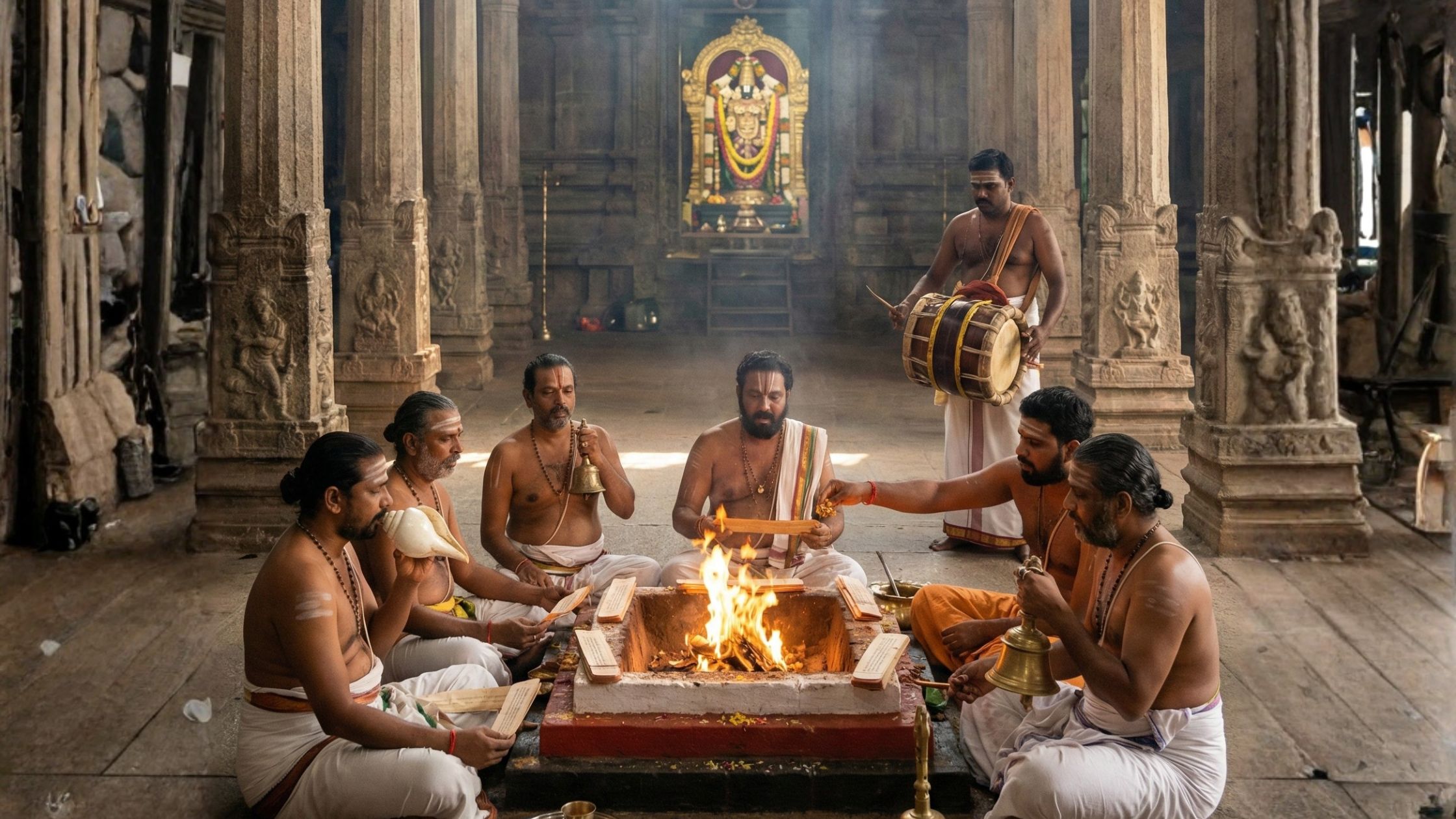
Why Do We Ring the Bell During Pūjā? The Sacred Science of Ghaṇṭā-Nāda
Why Ring Bell During Puja? Temple Bell Science & Skanda Purana Verse – Ghanta Nada Explained Watch the full video explanation https://youtube.com/shorts/XBYHSas57V4 Why Do We Ring the Bell During Pūjā? The Sacred Science of Ghaṇṭā-Nāda Why do we ring that small bell during ārati? Why does every temple begin worship with that sound? Walk into any Hindu temple—from the towering gopurams of Tamil Nadu to the marble mandirs of North India—and the first thing you encounter, even before darśana (sacred viewing), is the sound of a bell. The sharp, resonant clang that echoes through the sanctum sanctorum is so integral to temple worship that we’ve stopped questioning it. It feels natural, almost automatic. Ring the bell. Enter. Bow. Pray. But is it just ritual habit? A cultural artifact we’ve inherited without understanding? Or is something deeper happening—something rooted in ancient wisdom, codified in scriptures, and validated by both spiritual insight and modern science? The answer transforms a simple gesture into a profound act of sacred invocation. The Scriptural Foundation: What the Purāṇas Say Sanātana Dharma treats sound as sacred. The Vedas themselves were preserved through sound—śruti (श्रुति), meaning “that which is heard.” Mantras operate through sound vibration. Temple rituals are structured around acoustic precision. The ringing of the bell—ghaṇṭā-nāda (घण्टानाद)—is not decorative background noise. It is ritualized sound with scriptural mandate. The Skanda Purāṇa, one of the eighteen major Purāṇas and among the largest, contains specific instructions about bell-ringing during worship. In the section on Mārgaśīrṣa-māhātmya, Chapter 6, verses 1-30 describe the importance of bells in Viṣṇu worship. The text includes this powerful declaration: Sanskrit: घण्टानादं करोत्येव यः पूजाकर्मणि मानवः । सर्वपापविनिर्मुक्तो विष्णुलोकं स गच्छति ॥ Transliteration: Ghaṇṭā-nādaṁ karoty eva yaḥ pūjā-karmaṇi mānavaḥ sarva-pāpa-vinirmukto viṣṇu-lokaṁ sa gacchati Translation: “One who rings the bell during worship becomes freed from sins and attains the realm of Vishnu.” This is not metaphorical language. The Purāṇic tradition explicitly connects bell-ringing with pāpa-vimukti (liberation from sin) and spiritual elevation. The act of producing ghaṇṭā-nāda—the specific sound of the sacred bell—during pūjā-karma (worship action) generates purifying effects that extend beyond the immediate ritual moment. The Āgamic System: When and Why the Bell Is Rung Hindu temple worship follows precise protocols codified in Āgama śāstras—the ritual manuals governing temple construction, deity installation, and worship procedures. These texts, particularly the Pāñcarātra and Vaikhānasa Āgamas, specify exactly when the bell must be rung: 1. During Āvāhana (Invocation) When the deity is formally invited to be present in the mūrti (sacred form), the bell marks the transition from ordinary to sacred time. The sound announces: “Worship has begun. Divine presence is being invoked.” 2. During Upacāra Offerings The bell rings as each offering is made: While applying gandha (sandalwood paste) While offering puṣpa (flowers) While presenting dhūpa (incense) While waving dīpa (lamp) While offering naivedya (food) Each ring punctuates the ritual sequence, maintaining focus and marking transitions. 3. During Ārati (Lamp Waving Ceremony) The bell rings continuously during ārati, creating a sustained acoustic field that: Maintains devotional intensity Prevents mental wandering Synchronizes the worshippers’ attention Amplifies the collective energy The Āgamas make clear: The bell is not optional decoration. It is structural requirement. The Three Purposes: Why Sound Matters 1. Marks the Formal Beginning of Worship In daily life, we move through mundane activities—eating, working, talking, scrolling. Consciousness remains diffuse, scattered across multiple thoughts and sensory inputs. How do you signal to yourself that sacred time has begun? The bell does exactly this. Its sound creates a temporal boundary—a clear demarcation between ordinary time (laukika-kāla) and sacred time (daivika-kāla). The moment the bell rings, the mind receives a signal: “Stop. Shift. Attend.” This is why temples have large bells at the entrance. Devotees ring them upon entering not as superstition but as self-preparation—announcing to their own consciousness: “I am crossing from the worldly into the sacred.” 2. Focuses the Mind by Cutting Through Distraction The human mind is, by default, a wandering instrument. Ancient texts describe it as capala (चपल)—restless, monkey-like. Even during prayer, thoughts drift: What’s for dinner? Did I lock the door? That person looked at me strangely… The bell’s sharp sound acts as an acoustic anchor. When the bell rings, the brain’s auditory cortex is stimulated. The sudden, clear sound interrupts thought patterns. For a moment—even just a moment—mental chatter stops. That moment of silence is the opening where devotion can enter. Traditional bell design ensures this effect is sustained. Temple bells are crafted to produce prolonged resonance—the sound doesn’t immediately die but lingers, creating waves of vibration that continue for several seconds. This extended resonance keeps the mind tethered to the present, preventing it from slipping back into distraction. 3. Creates Sacred Acoustic Space Sound is not just heard—it transforms space. When a bell rings in an enclosed temple chamber, the sound waves bounce off stone walls, creating complex patterns of interference and resonance. The entire space becomes saturated with vibration. In traditional thought, this acoustic saturation is understood as purification. Just as incense (dhūpa) purifies the air and visual environment, the bell’s sound purifies the subtle atmosphere—removing stagnant energies, dispelling negative thought-forms, and establishing a field conducive to divine presence. The Skanda Purāṇa explicitly states: “Where a bell with my [Vishnu’s] name inscribed therein is kept in front, and where the idol of Viṣṇu is worshipped, know that I am present there.” The bell doesn’t just accompany worship—it enables divine presence. The Science of Temple Bells: Metallurgy Meets Metaphysics A temple bell is not just “any metal.” Traditional ghaṇṭās are crafted using pañcaloha (पञ्चलोह)—the five-metal alloy—or saptaloha (सप्तलोह)—the seven-metal alloy. The metals correspond to planets and their associated qualities: Metal Planet Quality Gold Sun Vitality, consciousness Silver Moon Emotional clarity, calm Copper Venus Beauty, harmony Iron Mars Strength, courage Tin Jupiter Wisdom, expansion Lead Saturn Discipline, grounding Mercury Mercury Intelligence, communication The precise ratios are traditional secrets passed down through generations of bell-makers. When these metals are combined and cast in specific proportions, the resulting bell produces a sound with unique characteristics: 1. Harmonic
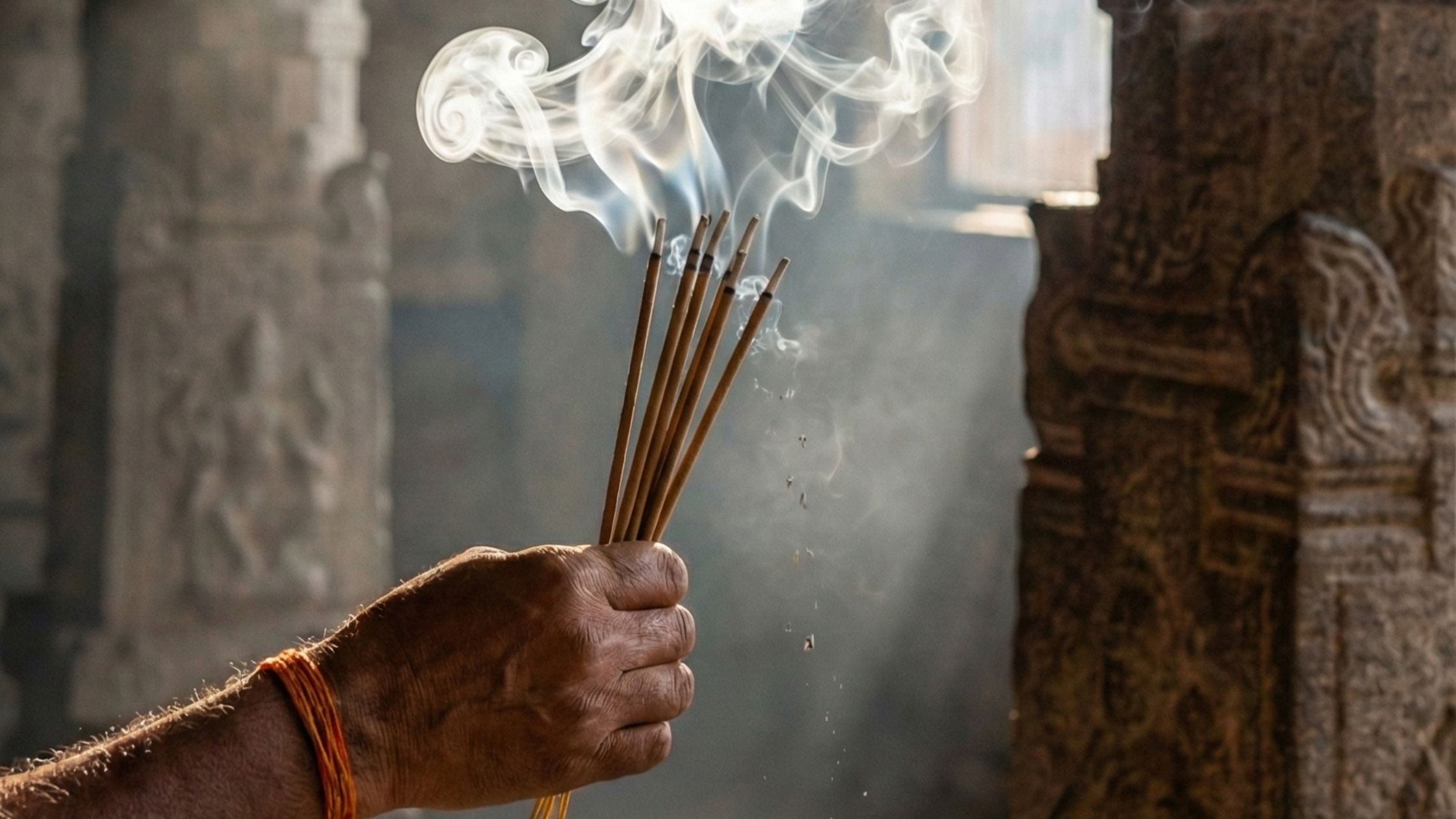
Why Do We Use Agarbatti During Ārati? The Ancient Science of Upacāra Worship
Why Do We Use Agarbatti During Ārati? The Ancient Upacāra System Explained Watch the full video explanation https://youtube.com/shorts/d4CLwKDakns Why Agarbatti in Puja? The Ancient Upacāra System | Dhūpa Explained Introduction: The Question Why do we light agarbatti in front of deities? Is it just fragrance? Is it ritual habit? Is it decoration? Or does it have a deeper meaning? Because in Sanātana Dharma, worship follows structure. Temple rituals were never random. They were codified. Every offering has meaning. Incense—dhūpa—is not decorative. It is part of a formal system of worship described in Purāṇic and Āgamic traditions. Let me show you the structure. Part I: The Scriptural Foundation Viṣṇu Purāṇa on Worship Sequence Sanskrit: गन्धं पुष्पं धूपदीपं नैवेद्यं च निवेदयेत् । IAST Transliteration: Gandhaṁ puṣpaṁ dhūpa-dīpaṁ naivedyaṁ ca nivedayet Word-by-Word Breakdown: gandham (गन्धम्) = fragrance, sandalwood paste puṣpam (पुष्पम्) = flowers dhūpa (धूप) = incense dīpam (दीपम्) = lamp, light naivedyam (नैवेद्यम्) = food offering ca (च) = and nivedayet (निवेदयेत्) = one should offer Translation: “One should offer fragrance, flowers, incense, lamp, and food.” What This Establishes This verse from the Viṣṇu Purāṇa lists dhūpa (incense) as a formal offering in deity worship. It’s not optional decoration. It’s not cultural habit. It’s part of the prescribed upacāra sequence. Part II: The Upacāra System—Structured Worship What Is Upacāra? Upacāra (उपचार) comes from: Upa (उप) = near, towards Cara (चर) = to move, to go Meaning: “Service,” “Attendance,” “Offering” In worship context: Upacāras are specific acts of service performed to honor the deity, treating the mūrti (sacred form) as a living presence requiring care, attention, and hospitality. The Three Main Systems Hindu worship codifies upacāras in three standard sequences: 1. Pañcopacāra (पञ्चोपचार) — Five Offerings Simplest form, suitable for daily home worship: Gandha (गन्ध) — Sandalwood paste or fragrant substance Puṣpa (पुष्प) — Flowers Dhūpa (धूप) — Incense Dīpa (दीप) — Lamp Naivedya (नैवेद्य) — Food offering Mantras used: “Gandham samarpayāmi” (I offer fragrance) “Puṣpam samarpayāmi” (I offer flowers) “Dhūpam samarpayāmi” (I offer incense) “Dīpam darśayāmi” (I show the lamp) “Naivedyam nivedayāmi” (I offer food) 2. Daśopacāra (दशोपचार) — Ten Offerings Intermediate form, common in temples: Expands the five into ten, adding: Āsana (seat) Svāgata (welcom) Pādya (water for feet) Arghya (water for hands) Ācamana (water for sipping) 3. Ṣoḍaśopacāra (षोडशोपचार) — Sixteen Offerings Most elaborate form, performed in major temples: The complete sequence includes: Āvāhana (आवाहन) — Invocation Āsana (आसन) — Offering seat Pādya (पाद्य) — Water for washing feet Arghya (अर्घ्य) — Water for hands Ācamana (आचमन) — Water for sipping Snāna (स्नान) — Bathing Vastra (वस्त्र) — Clothing Yajñopavīta (यज्ञोपवीत) — Sacred thread Gandha (गन्ध) — Fragrance Puṣpa (पुष्प) — Flowers Dhūpa (धूप) — Incense ✓ Dīpa (दीप) — Lamp Naivedya (नैवेद्य) — Food Tāmbūla (ताम्बूल) — Betel leaves/nuts Pradakṣiṇa (प्रदक्षिणा) — Circumambulation Namaskāra (नमस्कार) — Prostration/salutation Notice the Pattern In ALL three systems—5, 10, or 16 offerings—dhūpa (incense) appears consistently. This is not coincidence. This is structural. Part III: Why Dhūpa Specifically? The Three Dimensions 1. Sanctifies Space Dhūpa purifies the environment. When incense burns, the smoke: Spreads fragrant molecules throughout the space Displaces stagnant air Creates a fresh, elevated atmosphere Symbolically “cleanses” the area of negative energies Āgamic texts explain: “Dhūpa removes doṣa (impurities) from the environment, making it fit for divine presence.” Practical effect: The space feels different after incense is lit. The air becomes perfumed. The atmosphere shifts from mundane to sacred. This is environmental transformation. 2. Engages the Sense of Smell in Devotion Worship is multi-sensory engagement. Traditional upacāra systematically involves all five senses: Sense Upacāra How It’s Engaged Touch Gandha (paste applied), Vastra (cloth offered) Tactile contact with sacred substances Sight Dīpa (lamp), Puṣpa (colorful flowers) Visual beauty, radiant light Hearing Mantras, bells, chanting Sacred sound vibrations Taste Naivedya (food offered, then taken as prasāda) Consuming blessed food Smell Dhūpa (incense), Gandha (sandalwood paste) Aromatic engagement Why smell matters: Olfactory memory is the strongest form of memory Scent triggers emotional and spiritual states Fragrance creates association: “This smell = sacred space” Regular incense use conditions the mind to enter devotional mode When you smell incense: Your mind knows: “I am in worship mode.” This is sensory conditioning for spiritual practice. 3. Symbolizes Subtle Offering Rising Upward Dhūpa carries symbolic meaning. The rising smoke represents: ✓ Prayers ascending to the Divine ✓ The subtle body (sūkṣma śarīra) beyond the gross ✓ The movement from material to spiritual ✓ Devotion becoming refined and elevated Vedic parallel: In Vedic yajña (fire rituals), aromatic substances like: Ghee (clarified butter) Samidha (sacred wood) Guggulu (resin) Candana (sandalwood) …were offered into the fire. The smoke rising from the flames symbolized offerings reaching the devas (celestial beings) in higher realms. Temple dhūpa is the refined, controlled continuation of this Vedic practice. Instead of a large fire with billowing smoke (impractical in homes/temples), we use: Incense sticks (agarbatti) Incense cones Incense powder (dhūpa-cūrṇa) Resin incense (loban, benzoin, frankincense) Same principle. Adapted form. Part IV: Historical Development—From Yajna to Agarbatti Vedic Period: Yajña with Aromatic Substances In Vedic times (1500-500 BCE): Worship centered on yajña—fire rituals performed outdoors. Aromatic offerings into fire: Candana (sandalwood chips) Agaru (agarwood/oud) Guggulu (bdellium resin) Kuṅkuma (saffron) Karpūra (camphor) Purpose: Pleasing fragrance for devas Symbolic ascent of prayers Purification of ritual space The smoke was massive, thick, and visible from afar. Purāṇic Period: Temple Worship Emerges As temple worship developed (500 BCE onwards): Large outdoor yajñas became less common. Temple pūjā (worship of mūrtis in enclosed spaces) became dominant. Problem: You can’t light a massive fire inside a temple. Solution: Controlled incense offerings. Āgamic texts (temple manuals like Pāñcarātra Āgama, Vaikhānasa Āgama) codified how to offer dhūpa: Methods: Dhūpa-pātra (धूपपात्र) — Incense vessel A small clay or metal pot Filled with burning charcoal or embers Aromatic powders/resins sprinkled on top Smoke rises gently Dhūpa-daṇḍa (धूपदण्ड) — Incense stick Thin bamboo stick coated with aromatic paste Lit at one end Burns slowly, releasing fragrance This is the ancestor of modern agarbatti Modern Period: Agarbatti Becomes

Why We Don’t Eat Grains on Ekadashi: The Authentic Puranic Explanation
Why We Don’t Eat Grains on Ekadashi: The Authentic Puranic Explanation Watch the full video explanation https://youtube.com/shorts/QZb1IbnigIY Ekadashi Fasting Rules: Why Grains Are Forbidden (Purana Story) Ask anyone observing Ekadashi why they avoid grains, and you’ll likely get vague answers: “It’s tradition,” “My grandmother did it,” “Everyone does it.” But few know the actual scriptural reasoning behind this ancient practice. Today, we’re diving deep into the Padma Purana, Skanda Purana, and other authoritative texts to uncover the fascinating story of how sin personified came to reside in grains on Ekadashi—and why this makes the 11th lunar day the most powerful fasting day in the Vedic calendar. What IS Ekadashi? Ekadashi (एकादशी) literally means “the eleventh” in Sanskrit. It refers to the 11th tithi (lunar day) in both the waxing (Shukla Paksha) and waning (Krishna Paksha) phases of the moon. Frequency: Occurs twice per month 24 Ekadashis per year (26 in leap years) Each Ekadashi has a specific name and significance Why the 11th day? The number 11 is significant in Vedic cosmology: Humans have 11 indriyas (sense organs): 5 organs of perception + 5 organs of action + 1 mind The 11th represents transcendence beyond the 10 material senses Ekadashi Devi is said to have emerged from Vishnu’s 11 senses The Origin Story: When Vishnu Fought the Demon Mura To understand why grains are forbidden on Ekadashi, we must journey to Satya Yuga (the first cosmic age) and witness an epic battle described in Padma Purana, Uttara Khanda, Chapter 38. The Demon Who Terrorized the Universe During Satya Yuga, a powerful demon named Mura (मुर) arose. He was the son of Taaljangh and surpassed even his father in strength and cruelty. Mura’s Reign of Terror: Defeated Indra (king of gods) and conquered Swargaloka (heaven) Drove all the Devas (celestial beings) into exile Terrorized the three worlds with his demonic army None could stand against his might The dispossessed Devas wandered in despair until they finally approached Lord Vishnu for help. The Thousand-Year Battle Lord Vishnu, moved by the Devas’ plight, agreed to confront Mura. Padma Purana describes: सहस्रं दिव्यं वर्षाणां युद्धं तेन कृतं प्रभो। “For one thousand divine years, the Lord battled with him.” The battle was ferocious. Vishnu’s divine weapons destroyed Mura’s vast army, but the demon himself proved extraordinarily resilient. After a thousand celestial years of continuous combat (equivalent to 360,000 human years), Lord Vishnu grew fatigued. Vishnu’s Strategic Rest Exhausted from the prolonged battle, Vishnu traveled to Badarikashrama (modern-day Badrinath in the Himalayas) and entered a beautiful cave called Himavati to rest in Yoga Nidra (divine yogic sleep). Mura, seething with rage, tracked Vishnu to the cave. Seeing his enemy sleeping, the demon thought: “Today I will kill this slayer of demons! He is vulnerable!” The Birth of Ekadashi Devi As Mura prepared to strike the sleeping Vishnu, something extraordinary happened. From Lord Vishnu’s transcendental body—specifically from his 11 senses—emerged a radiant divine feminine energy. Padma Purana describes her: तस्याः शरीरात् उद्भूता देवी दिव्यास्त्रधारिणी। तेजसा दिव्यरूपेण शोभमाना महाबला॥ “From His body emerged a goddess bearing divine weapons,Resplendent with divine radiance, possessing great power.” This magnificent goddess, armed with celestial weapons, stood between Mura and the sleeping Vishnu. The Battle: Ekadashi vs. Mura Mura, arrogant and lustful, saw the beautiful maiden and proposed marriage. She responded: “If you can defeat me in battle, I shall marry you. But if you lose, you forfeit your life.” The ensuing battle was swift and decisive. The goddess shattered all of Mura’s weapons with her divine power. She destroyed his chariot, killed his army, and finally—with one devastating blow—beheaded the demon Mura. Vishnu’s Blessing: The Creation of Ekadashi Vrata When Lord Vishnu awakened, He saw the slain demon and the victorious maiden standing before Him. Their conversation (Padma Purana): Vishnu: “Who are you, and how did you slay this terrible demon?” Goddess: “O Lord, I am Maha Shakti (Great Power), your internal potency, manifested from your eleven senses (ekadasha indriyas). I am your eternal servitor, and I have slain Mura to protect you.” Pleased beyond measure, Vishnu asked her to choose any boon. Her request: यदि तुष्टोऽसि मे स्वामिन् वरं देहि महाप्रभो। यो जनः मम वासरे उपवासं करिष्यति॥ स पापेभ्यो विमुच्येत मोक्षं च लभते परम्। “O Lord, if you are pleased with me, grant me this boon:Whoever fasts on my day (Ekadashi)Shall be freed from all sinsAnd attain supreme liberation (moksha).” Vishnu joyfully granted her wish and proclaimed: त्वां नामतः एकादशी इति ख्याता भविष्यति। एकादश्यां उपवासेन मम लोकं गमिष्यति॥ “You shall be known by the name Ekadashi (born from the eleventh).By fasting on Ekadashi, one shall attain My supreme abode.” From that day forward, Ekadashi became the most sacred fasting day, blessed by Vishnu Himself. Papa Purusha: Why Grains Are Forbidden The story doesn’t end with Mura’s death. There’s a crucial second chapter that explains why grains specifically are avoided on Ekadashi. The Personification of Sin According to Padma Purana (as narrated by Sage Vyasa to Jaimini Rishi), at the time of creation, Lord Brahma created Papa Purusha—the personification of all sins. Papa Purusha’s purpose: To punish sinful humans To create consequences for unrighteous actions To maintain karmic balance To control Papa Purusha and administer karmic justice, Yamaraja (god of death) and various hellish planetary systems were also created where sinful souls suffer. Papa Purusha’s Fear When Ekadashi Devi was created and blessed with the power to absolve all sins of those who fast on her day, Papa Purusha became terrified. His reasoning: “If people observe Ekadashi fasting, all their sins will be destroyed! My very existence will become meaningless! Where can I hide?” In desperation, Papa Purusha approached Lord Vishnu, fell at His feet, and pleaded: त्वत्कृतोऽहं महाभाग निवासं न लभे क्वचित्। एकादश्याः प्रभावेन जीवाः मुच्यन्ते सर्वतः॥ कुत्रापि तिष्ठामि तत्र न स्थातुं शक्नुवे प्रभो। “O Lord, I am Your creation, yet I find no place to reside.By the power of Ekadashi, souls are being liberated everywhere.Wherever I try to stay, I cannot remain there.Ekadashi’s power drives me away!” Vishnu’s Solution: