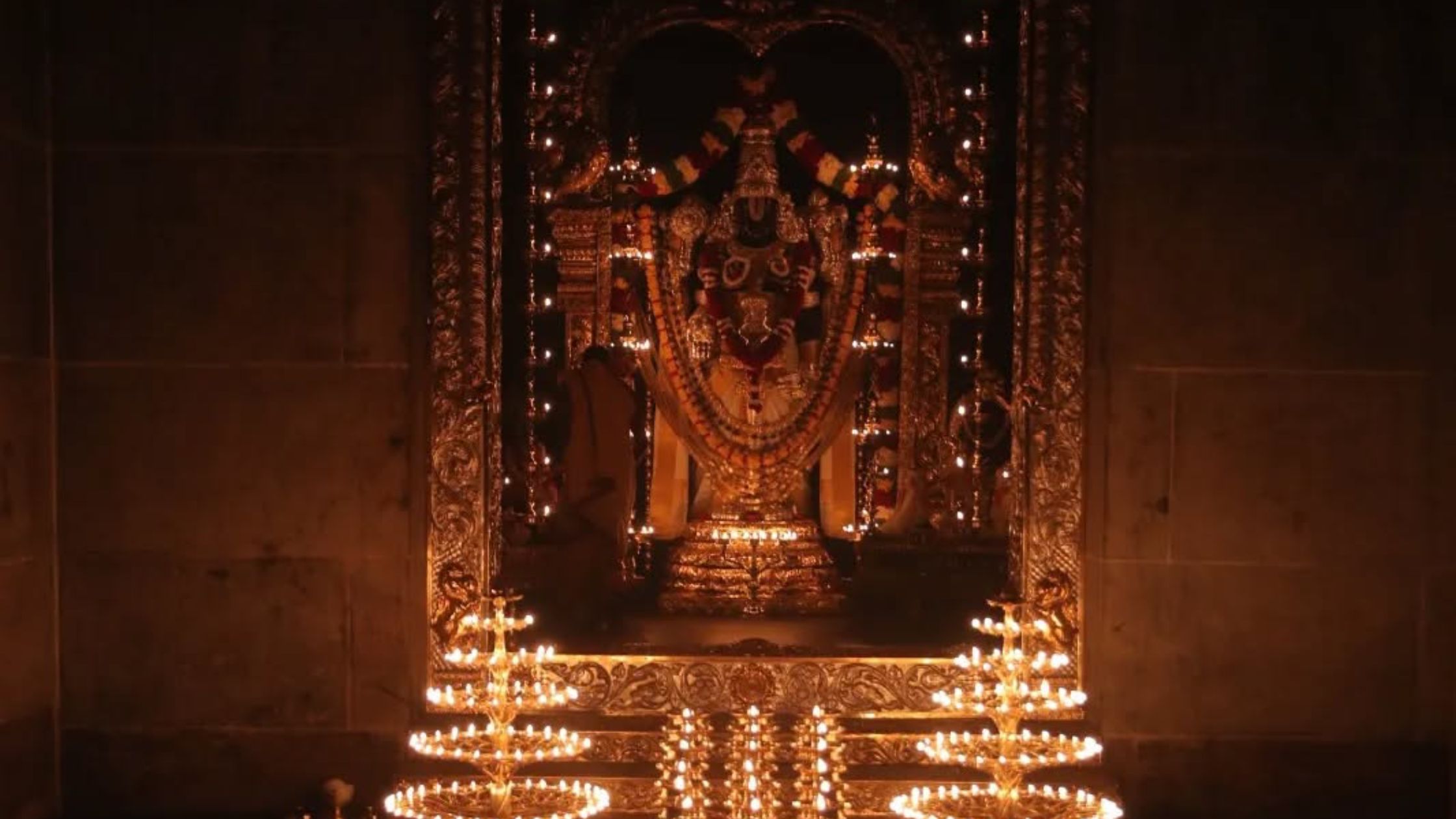
Why a Temple Form Is Called a Deity, Not an Idol: Understanding Sacred Consecration in Sanātana Dharma Watch the full video explanation https://youtube.com/shorts/VTabKXsHxGY Deity vs Idol: Why Hindu Temple Forms Are NOT Idols Explained Introduction: The Power of a Single Word Language shapes reality. The words we use to describe sacred practices reveal—or conceal—depths of civilizational understanding that have been preserved for millennia. In modern discourse, the terms “idol” and “deity” are often used interchangeably when discussing Hindu temple worship. But this linguistic conflation obscures a profound philosophical and theological distinction that lies at the heart of Sanātana Dharma’s approach to the Divine. When we call a consecrated temple form an “idol,” we reduce it to crafted material—stone, bronze, or wood shaped by human hands. When we call it a “deity,” we acknowledge something far more profound: a living seat of divine consciousness, ritually invoked and permanently established through ancient Vedic protocols. This distinction is not merely semantic. It reflects an entire cosmology, a sophisticated understanding of consciousness and energy, and a living tradition that has sustained billions of devotees across millennia. The Scriptural Foundation: What the Bhāgavata Purāṇa Reveals To understand this distinction at its source, we must turn to one of Hinduism’s most authoritative texts—the Śrīmad Bhāgavatam (Bhāgavata Purāṇa), composed between the 4th-7th centuries CE and attributed to Sage Vyāsa himself. The Foundational Śloka Bhāgavata Purāṇa 11.2.47 provides the scriptural cornerstone for understanding deity worship: Sanskrit (Devanāgarī): अर्चायामेव हरये पूजां यः श्रद्धयेहते । न तद्भक्तेषु चान्येषु स भक्तः प्राकृतः स्मृतः ॥ Sanskrit (Transliteration): arcāyām eva haraye pūjāṁ yaḥ śraddhayehate na tad-bhakteṣu cānyeṣu sa bhaktaḥ prākṛtaḥ smṛtaḥ Translation: A devotee who faithfully engages in the worship of the Deity in the temple but does not behave properly toward other devotees or people in general is called a prākṛta-bhakta, a materialistic devotee, and is considered to be in the lowest position. Breaking Down the Verse: arcāyām (अर्चायाम्) = in the arcā form / deity form eva (एव) = certainly, indeed haraye (हरये) = to Lord Hari (Viṣṇu) pūjām (पूजां) = worship yaḥ (यः) = who śraddhayā (श्रद्धया) = with faith īhate (ईहते) = engages na (न) = not tad-bhakteṣu (तद्भक्तेषु) = toward the devotees cānyeṣu (चान्येषु) = and toward others sa (स) = he bhaktaḥ (भक्तः) = devotee prākṛtaḥ (प्राकृतः) = materialistic smṛtaḥ (स्मृतः) = is considered The Critical Insight The verse uses the term arcā (अर्चा)—not “idol” (pratimā) or “image” (mūrti in its mundane sense). The arcā form is specifically the consecrated deity form in which the Supreme Lord chooses to make Himself accessible. The arcā form is worshipped as Hari Himself. This is not symbolic worship—it is understood as direct worship of the Divine Presence that has been ritually invoked and established in the form. The verse doesn’t warn against worshipping idols—it addresses the incomplete understanding of a devotee who recognizes the Lord in the arcā form but fails to see the same Divine Presence in devotees and all living beings. Prāṇa Pratiṣṭhā: The Science of Consecration The transformation from material form to divine seat occurs through Prāṇa Pratiṣṭhā (प्राण प्रतिष्ठा)—the ancient Vedic ceremony of consecration. Etymology and Meaning Prāṇa (प्राण) derives from the root pra (forth) + an (to breathe), meaning: Life force Vital energy The breath that animates all living beings Consciousness itself Pratiṣṭhā (प्रतिष्ठा) derives from prati (toward) + sthā (to stand/establish), meaning: To be established To be installed permanently To be consecrated in place Prana pratishtha is the rite or ceremony by which a murti (devotional image of a deity) is consecrated in a Hindu temple, following detailed steps outlined in the Vedic scriptures, where verses (mantras) are recited to invite the deity to reside in the murti. The Ritual Process The consecration ceremony is not a simple blessing—it’s an elaborate, multi-day (sometimes multi-week) ritual protocol governed by Āgama Śāstras (temple manuals), following these key stages: 1. Karmakutir (कर्मकुटीर) – Purification from Creation: The idol is touched with Darba grass to remove any negative influences, the pujari closes the eyes of the Murthi by applying a layer of honey and ghee along with specific mantras. 2. Adhivāsa Rituals – Preparatory Immersions: Jalādhivāsa (जलाधिवास) = Immersion in sacred waters for purification Dhanyādhivāsa (धन्याधिवास) = Burial in grains (rice/wheat) for earth’s blessings Gṛtādhivāsa (घृताधिवास) = Immersion in clarified butter (ghee) 3. Snapana/Abhiṣeka (स्नापन/अभिषेक) – Sacred Bathing: The form is bathed with sacred substances including: Pañcāmṛta (five nectars: milk, yogurt, ghee, honey, sugar) Holy river waters Herbal infusions Fragrant oils 4. Mantra Invocation – The Moment of Transformation: At the exact astrologically calculated auspicious time (muhūrta), priests chant specific Vedic mantras to: Invoke the deity’s presence Request the Divine to take residence Transfer consciousness through ritual technology 5. Netra Ānvāraṇa (नेत्र आन्वारण) – Opening of the Eyes: The Purohit performs Netra Anvaran or the opening of the eyes during Pran Pratishta, after which the idol becomes an auspicious deity. This is the climactic moment—when the eyes of the form are ritually opened for the first time, the Divine is understood to begin actively “seeing” through the form. 6. Prāṇa Transfer – Infusion of Life Force: Through specialized techniques preserved in lineages, priests facilitate the transfer of: Prāṇa (life-breath) Jīva (individual consciousness) Daśa Indriyāṇi (ten sense faculties) Through Nayas, the divine shakti from the Purohit enters Murthi including Prana or life-breath, Jiva or soul, and the ten Indriyas. The Philosophical Foundation Consecration is a live process like transforming mud into food through agriculture, or food into flesh and bone through digestion—if you can make flesh or even a stone or an empty space into a divine possibility, that is called consecration. This isn’t superstition—it’s sophisticated philosophical technology based on the understanding that: Everything is Energy: Modern science is telling you that everything is the same energy manifesting itself in a million different ways—what you call as divine, what you call a stone, what you call a man or a woman, are all the same energy functioning in different ways. Technology Makes the Difference: Just as

The Mysterious Yali: The Forgotten Story Behind South India’s Most Enigmatic Temple Guardian
The Mysterious Yali: The Forgotten Story Behind South India’s Most Enigmatic Temple Guardian Watch the full video explanation Yali: The Forgotten Temple Guardian and Its Lost Connection Across the Ocean Have you ever noticed them? Those fierce creatures carved into temple pillars across South India—beings with bulging eyes, sharp claws, curved tusks, and bodies that seem to defy nature itself. Some have lion faces roaring in eternal vigilance. Others sport elephant heads with magnificent trunks. A few bear horse-like features that seem to gallop through stone. You’ve walked past them your entire life. You’ve photographed them, admired their artistry, perhaps even touched their weathered surfaces for blessings. But do you know their story? This is Yali—one of the most mysterious and misunderstood figures in Indian temple architecture. And what if I told you that this guardian carved in South Indian temples has a forgotten connection to a kingdom thousands of kilometers away across the ocean? What Exactly Is Yali? Yali is not just one creature—it’s a family of hybrid guardians that embody the ultimate protective force. Ancient texts and temple architecture describe various forms: Simhayali – Lion-bodied Yali, the most ferocious form Gajayali – Elephant-headed Yali with a powerful trunk Ashwayali – Horse-faced Yali representing speed and power Vyaghrayali – Tiger-bodied Yali for aggressive protection The Samaranga Sutradhara, a comprehensive architectural treatise written by King Bhoja in the 11th century CE, meticulously lists approximately 16 different types of Yali. Each variation serves a specific purpose in temple iconography and spiritual symbolism. But Yali is far older than the 11th century. The Ancient Texts Speak: Sangam Literature’s Super Predator The oldest and clearest descriptions of Yali come from Sangam literature—the classical Tamil texts composed between 300 BCE and 300 CE. These aren’t mythological fantasies written by priests in ivory towers. These are verses composed by poets, warriors, and observers who wrote about the world as they understood it. Consider this powerful verse from Narinai 205: “Aali Nanman…” This line is crucial. “Aali” is the ancient Tamil word for Yali, and this verse describes it explicitly as a super predator—a creature that stands above all others in the food chain. The text doesn’t speak of it as a mythological symbol or artistic imagination. It speaks of it as something known, something feared, something real. But this isn’t the only reference. Yali appears repeatedly across Sangam literature: Akanaanuru 78 – Describes Yali’s hunting prowess Akanaanuru 252 – References Yali in battle contexts Akanaanuru 301 – Mentions Yali’s territorial dominance Puranaanuru 207 – Compares warriors to Yali’s strength The consistency of these references is striking. Ancient Tamil poets mention Yali not as a one-off fantasy, but as a creature integrated into their understanding of the natural and supernatural world. They describe it killing tigers, dragging elephants, dominating forests—a being of supreme power. The Pallava Connection: When Indian Kings Sailed East Here’s where history takes a fascinating turn. During the Pallava period (3rd to 9th centuries CE), the Yali motif absolutely exploded across South Indian temple architecture. Suddenly, every major temple featured elaborate Yali carvings. Why this sudden proliferation? Because the Pallavas were among the earliest Indian dynasties to systematically explore Southeast Asia. Ancient Indian kingdoms didn’t just trade spices and silk—they traded ideas, stories, architectural techniques, and spiritual practices. And in their voyages across the Bay of Bengal, Pallava envoys encountered a remarkable kingdom called Kutai Martadipura in present-day Indonesia. The Yupa Stones: Evidence Written in Stone How do we know this connection is real and not mere speculation? Because of the Yupa stones—standing stone inscriptions that serve as irrefutable archaeological evidence of contact between Indian and Southeast Asian civilizations. These stones, found in the Kutai region of East Kalimantan, Indonesia, are inscribed in Sanskrit using early Brahmin Pallava script. One inscription reads: “Sri Mata Sri Narendrasya Kudungasya MahatmanaPutro Svavarmo Vikyataha Vansakrita Yatatsuman…” Translation: “The illustrious and righteous son of the great king Kudungga, Svavarman, famous for his noble lineage…” These Yupa stones prove beyond doubt that there was real, documented contact between Indian kings (specifically those using Pallava script) and the Kutai dynasty during the 4th-5th centuries CE. And this is where our story becomes extraordinary. Enter Lembuswana: Indonesia’s Elephant Guardian The Kutai kingdom had its own powerful guardian figure called Lembuswana (also known as Gajamina in some traditions). This wasn’t a minor folkloric creature—it was a central guardian figure in Indonesian royal and spiritual iconography. What did Lembuswana look like? Elephant head with a magnificent trunk Buffalo horns curving from its temples Lion’s mane flowing majestically Lion’s body muscled and powerful Huge eagle wings capable of flight Is Lembuswana identical to Yali? No. But is it unmistakably connected? Absolutely. The Theory: What the Pallava Envoys Saw Imagine this scenario: Pallava ambassadors, traders, and explorers arrive in Kutai. They’re welcomed to royal courts, taken to sacred sites, shown the kingdom’s treasures and guardian figures. They see Lembuswana—carved in wood, cast in bronze, described in local legends as an unstoppable protector stronger than any single animal. The Pallava visitors recognize something familiar yet foreign. They have their own traditions of composite creatures. But this Indonesian guardian adds new dimensions to their understanding. When they return to India, they carry these impressions home. And gradually, these influences merge with existing Indian traditions of hybrid creatures, resulting in the evolution and proliferation of Yali carvings across Pallava temples. Consider the parallels: Yali in Indian Tradition: Kills tigers effortlessly Drags elephants from waterholes Guards temple entrances and pillars Represents ultimate protective power Associated with royal authority Lembuswana in Kutai Tradition: Guards rivers and kingdoms Possesses unstoppable strength Protects against all threats Represents sovereign power Associated with royal dynasties Both are hybrid predators. Both transcend natural animal hierarchies. Both appear in contexts of royal and sacred power. Two Cultures, One Guardian: Coincidence or Connection? Here’s what makes this theory compelling: Two cultures separated by thousands of kilometers of ocean both describe remarkably similar guardian beasts. Both are explicitly described as being stronger than lions and stronger than