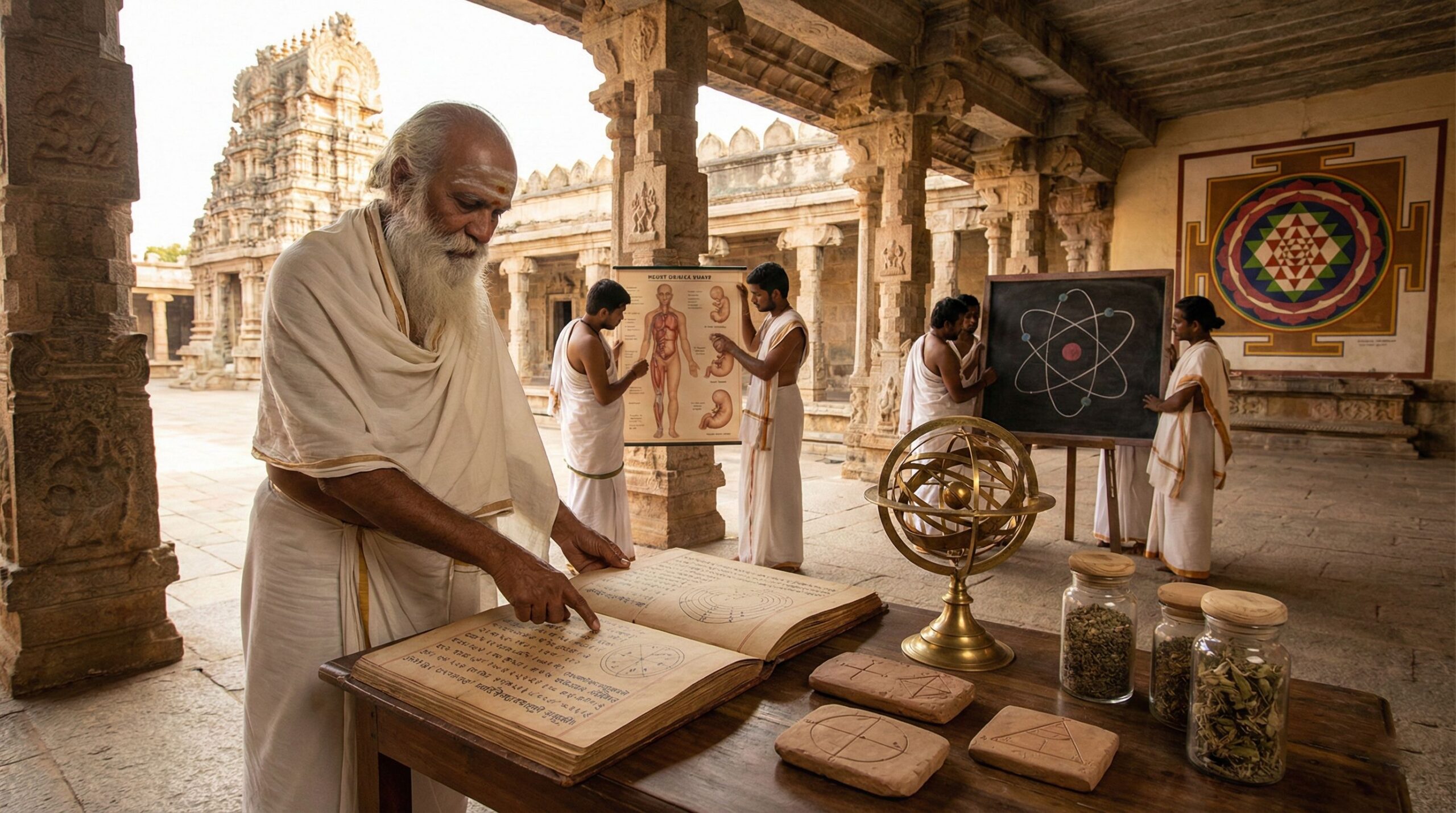
You Were Given an Incomplete Timeline: Hindu Civilisation’s Lost Scientific LegacyAryabhata, Zero, Atomic Theory, and Ancient India’s Knowledge Systems Watch the full video explanation You Were Given an Incomplete Timeline: Hindu Civilisation’s Lost Intellectual Legacy They removed this from your history books. Hindu civilisation gave the world mathematics, astronomy, embryology, atomic theory, gravitational concepts, linguistic analysis, surgical techniques, and philosophical systems—and nobody told you. Walk into any classroom today, open any standard history textbook, and you’ll find the same sanitized narrative: Ancient India was a land of spirituality, mythology, and social hierarchy. The Vedas were religious texts. The Puranas were stories. The temples were places of worship. End of story. But that’s not the complete story. That’s not even half the story. This is not about myth. This is not about metaphysics divorced from observation. This is about a knowledge civilization whose intellectual achievements were systematically excluded from the narrative you were taught in school—a civilization that developed sophisticated scientific models, mathematical systems, and philosophical frameworks that would not be “discovered” in Europe for another thousand years. Today, we open the complete record. Today, we restore what was deliberately deleted. The Classroom Version vs. The Historical Record: What They Taught You In most modern educational systems—whether in India itself or globally—the story of Hindu civilization follows a predictable, reductive pattern: What you were taught: Ancient India had a rich tradition of colorful mythology and religious stories Numerous gods and goddesses with elaborate rituals The caste system dominated social organization Spiritual and mystical traditions focused on the afterlife Philosophical texts dealt primarily with abstract metaphysics Society was largely agrarian and pre-scientific What you were NOT taught: Mathematical innovations that form the foundation of modern computing Astronomical models that accurately described Earth’s rotation and planetary motion—predating European discoveries by a millennium Detailed embryological observations documenting fetal development month by month without the aid of microscopes Atomic philosophy that proposed indivisible particles millennia before John Dalton Gravitational concepts articulated centuries before Isaac Newton Linguistic analysis that created the world’s most sophisticated grammatical framework Surgical procedures including cataract operations, rhinoplasty, and cesarean sections Philosophical systems that developed formal logic, epistemology, and consciousness studies The textbooks presented half a civilization—the cultural, religious, and social aspects—while conveniently omitting or minimizing the scientific, mathematical, and intellectual infrastructure that supported and enabled this civilization to thrive for millennia. This wasn’t accidental oversight. This wasn’t innocent omission due to limited space in textbooks. This was selective erasure—a deliberate construction of a narrative that portrayed non-Western civilizations as pre-scientific, mystical, and intellectually inferior. Let’s restore what was deleted. Let’s examine the evidence that changes everything. 1. EARTH IN MOTION: Aryabhata’s Revolutionary Astronomy (5th Century CE) The Discovery That Predated Copernicus by 1,000 Years In 499 CE, when the dominant cosmological model across most of the world placed Earth as a stationary sphere at the center of the universe with celestial bodies revolving around it, a 23-year-old Indian mathematician-astronomer named Āryabhaṭa (आर्यभट) composed the Āryabhaṭīya—a compact Sanskrit treatise of just 121 verses that would revolutionize astronomy. What Aryabhata stated—in the 5th century CE: In the Gola-pāda (Sphere section), Chapter 4, Verse 9 of the Āryabhaṭīya, Aryabhata made a declaration that would not be accepted in Europe for another thousand years: Sanskrit: अनुलोमगतिर्नौस्थः पश्यत्यचलं विलोमगं यद्वत् । अचलानि भानि तद्वल्लङ्कायां स्थितो यद्वत् पश्यति ॥ Translation: “Just as a person in a boat moving forward sees stationary objects (on the shore) as moving backward, just so are the stationary stars seen by people at Lanka (on Earth) as moving exactly towards the west (due to the eastward motion of the Earth).” Modern interpretation: ✓ Earth rotates on its axis from west to east ✓ Day and night occur due to this axial rotation ✓ The apparent westward motion of stars and celestial bodies is relative motion—caused not by their movement but by Earth’s rotation ✓ The stars are actually stationary (relative to Earth’s daily motion) Why This Discovery Was Revolutionary This was 1,044 years before Nicolaus Copernicus published De revolutionibus orbium coelestium (On the Revolutions of the Heavenly Spheres) in 1543 CE, which is traditionally credited as the beginning of the heliocentric revolution in European astronomy. But Aryabhata went even further. His achievements include: 1. Accurate Calculation of π (Pi): Aryabhata calculated π as 3.1416, accurate to four decimal places—a remarkable achievement for the 5th century. 2. Scientific Explanation of Eclipses: He explained that: Lunar eclipses occur when Earth’s shadow falls on the Moon Solar eclipses occur when the Moon passes between Earth and the Sun, blocking sunlight This was a revolutionary departure from mythological explanations (such as the demon Rahu swallowing celestial bodies). 3. Recognition of Reflected Light: Aryabhata stated that planets and the Moon shine by reflected sunlight—they are not self-luminous. This contradicted prevailing beliefs. 4. Trigonometric Tables: He developed detailed sine tables (called jyā in Sanskrit), which were foundational for astronomical calculations. 5. Place-Value System: His mathematical notation implicitly used zero and the decimal place-value system, which would later revolutionize mathematics globally. The Transmission and Impact The Āryabhaṭīya was translated into Arabic in the 8th century as Zij al-Arjabhar by the scholar Al-Khwarizmi, who himself is often (incorrectly) credited as the “father of algebra.” Through Arabic translations, Aryabhata’s astronomical models, trigonometric methods, and mathematical techniques profoundly influenced Islamic astronomy and, eventually, European Renaissance science. Yet his name appears nowhere in standard world history curricula. 2. EMBRYOLOGY IN PURĀṆA: The Bhāgavatam’s Detailed Developmental Stages Ancient Observation Without Modern Tools One of the most stunning examples of systematic observation in ancient Hindu texts appears in the Śrīmad Bhāgavatam, specifically in Canto 3, Chapter 31, titled “Lord Kapila’s Instructions on the Movements of the Living Entities.” This chapter provides a month-by-month description of embryological development that aligns remarkably with modern scientific understanding—all without the benefit of microscopes, ultrasound, or any modern medical technology. The Text: A Timeline of Development Verse 3.31.2: कलालं त्वेकरात्रेण पञ्चरात्रेण बुद्बुदम् । दशाहेन तु कर्कन्धूः पेश्यण्डं वा ततः परम् ॥ Translation: “On the first night, the sperm and
Has Hindu Dharma Lost Its Core? Where Is Bhakti? — A Reality Check
Has Hindu Dharma Lost Its Core? Where Is Bhakti? — A Reality Check Watch the full video explanation https://youtube.com/shorts/VIOUsm2ciGs Has Hindu Dharma Lost Its Core? Where Is Bhakti? | A Reality Check Introduction: The Uncomfortable Question We put our Devas on posters. We cheer when sacred ślokas play behind random violence to glorify a hero. We blast vulgar film songs in front of Gaṇeśa. Festivals turn into political rallies. Temples become photo-op locations. Dharma gets reduced to WhatsApp forwards. And then we claim to be protecting the Dharma. In the midst of all this noise, performative displays, and cultural theater— Where is Bhakti? Let me give you a reality check. Because Sanātana Dharma did not survive for millennia because of noise. It survived because of devotion. Temples were preserved through devotion. Saints revived society through devotion. Civilization was sustained through devotion. Not through slogans. Not through political mobilization. Not through cultural performance. Through Bhakti. And śāstra defines what the highest Dharma actually is. Part I: What Śāstra Says—The Supreme Dharma Śrīmad Bhāgavatam 1.2.6 Sanskrit (Devanāgarī): स वै पुंसां परो धर्मो यतो भक्तिरधोक्षजे । अहैतुकी अप्रतिहता ययाऽत्मा सुप्रसीदति ॥ Sanskrit (IAST Transliteration): sa vai puṁsāṁ paro dharmo yato bhaktir adhokṣaje ahaitukī apratihatā yayātmā suprasīdati Word-by-Word Breakdown: sa (स) = that vai (वै) = certainly, indeed puṁsām (पुंसाम्) = for mankind, for all people paraḥ (परः) = supreme, highest dharmaḥ (धर्मः) = occupation, duty, religion yataḥ (यतः) = by which bhaktiḥ (भक्तिः) = devotional service, devotion adhokṣaje (अधोक्षजे) = unto the Transcendent Lord (one beyond sensory perception) ahaitukī (अहैतुकी) = without selfish motive, causeless apratihatā (अप्रतिहता) = uninterrupted, unbroken yayā (यया) = by which ātmā (आत्मा) = the self, the soul suprasīdati (सुप्रसीदति) = becomes completely satisfied Translation: “The supreme Dharma for humanity is that by which devotion to the Transcendent Lord is cultivated — devotion that is causeless and uninterrupted — by which the soul becomes fully satisfied.” The Critical Phrase: “Paro Dharmaḥ” Paro dharmaḥ (परो धर्मः) = supreme Dharma The Bhāgavatam does NOT say: ❌ Ritual is the supreme Dharma ❌ Display is the supreme Dharma ❌ Political mobilization is the supreme Dharma ❌ Cultural performance is the supreme Dharma ❌ Temple construction is the supreme Dharma ❌ Festivals are the supreme Dharma The Bhāgavatam says: ✓ Bhakti is the supreme Dharma That which cultivates devotion to the Transcendent Lord—that is paro dharma. Everything else is secondary. Part II: What Is Bhakti According to Śāstra? The Two Qualities: Ahaitukī & Apratihatā The verse defines bhakti with two essential characteristics: 1. Ahaitukī (अहैतुकी) — Without Selfish Motive / Causeless Etymology: A (अ) = without Hetu (हेतु) = cause, motive, reason Meaning: Bhakti that is ahaitukī is not performed for: Material gain Social status Political power Cultural identity Community belonging Show or display Ahaitukī bhakti means: “I worship not to GET something. I worship because I LOVE.” Contrast with modern practice: Modern “devotion” is often transactional: “I do puja so business succeeds” “I visit temple so my exam goes well” “I perform rituals so my marriage happens” “I celebrate festival to show I’m a good Hindu” This is NOT ahaitukī bhakti. This is motivated religion—using God as a means to material ends. 2. Apratihatā (अप्रतिहता) — Uninterrupted / Unbroken Etymology: A (अ) = not Pratihata (प्रतिहत) = obstructed, checked, stopped Meaning: Bhakti that is apratihatā is: Continuous Not dependent on circumstances Not conditional on mood Not seasonal (only during festivals) Not social (only in public gatherings) Apratihatā bhakti means: “My remembrance of the Divine continues regardless of external conditions.” Contrast with modern practice: Modern “devotion” is event-based: Bhakti during Navratri, forgotten rest of the year Devotion on Diwali, absent otherwise Temple visit once a month, no daily remembrance Performative display at festivals, private life disconnected This is NOT apratihatā bhakti. This is seasonal religion—wearing devotion like festival clothing. Part III: The Modern Reality Check What We Actually Do 1. We Put Devas on Posters The scene: Truck drivers paste posters of Hanuman on their vehicles. Political parties print Rama’s image on flags. WhatsApp groups forward Ganesha GIFs on Wednesdays. The question: Is there remembrance? Or is there decoration? Is there devotion? Or is there cultural performance? Putting a deity’s image somewhere without internal connection is not bhakti. It’s aesthetic Hinduism—using sacred imagery for cultural identity, not spiritual transformation. 2. We Cheer When Ślokas Play Behind Violence The scene: A film hero massacres dozens of enemies while Hanuman Chalisa plays in the background. The audience erupts in applause. Sacred verses become background score for bloodshed. The question: Do we honor the śloka? Or do we weaponize it? Do we contemplate its meaning? Or do we use it for emotional manipulation? When sacred sound becomes entertainment enhancement, we’ve lost the core. The Hanuman Chalisa is not a battle anthem. It is a devotional hymn of surrender. Using it to glorify violence is sacrilege disguised as devotion. 3. We Blast Vulgar Songs in Front of Ganesha The scene: Gaṇeśa Chaturthi pandals with loudspeakers blaring: Film songs Item numbers DJ remixes Vulgar lyrics Right in front of Ganesha’s mūrti. The question: If we truly felt the presence of the Divine, would we behave this way? If we believed Ganesha is actually there, would we blast obscenity at Him? The answer is obvious: We don’t actually believe He’s there. We treat the mūrti as a cultural prop. The noise, the vulgarity, the disrespect—all of it reveals: We are performing a cultural festival. We are not practicing bhakti. 4. Festivals Turn Into Political Rallies The scene: Rām Navami processions with: Political party flags Slogans against “the other” Weaponry on display Provocative routes through minority neighborhoods The purpose: Not devotion. Mobilization. Not remembrance. Demonstration of power. The question: Has the festival honored Rama? Or has it used Rama? Has it cultivated bhakti? Or has it generated political energy? When a festival’s primary function is political messaging, the spiritual core has been hollowed out. 5. Temples Become Photo-Op Locations The scene: People at temples: Taking selfies in
“I Drink. I Smoke. I Don’t Follow Ritual. I Think I’m a Sinner.” — Stop That Thinking. Bhakti Is For You.
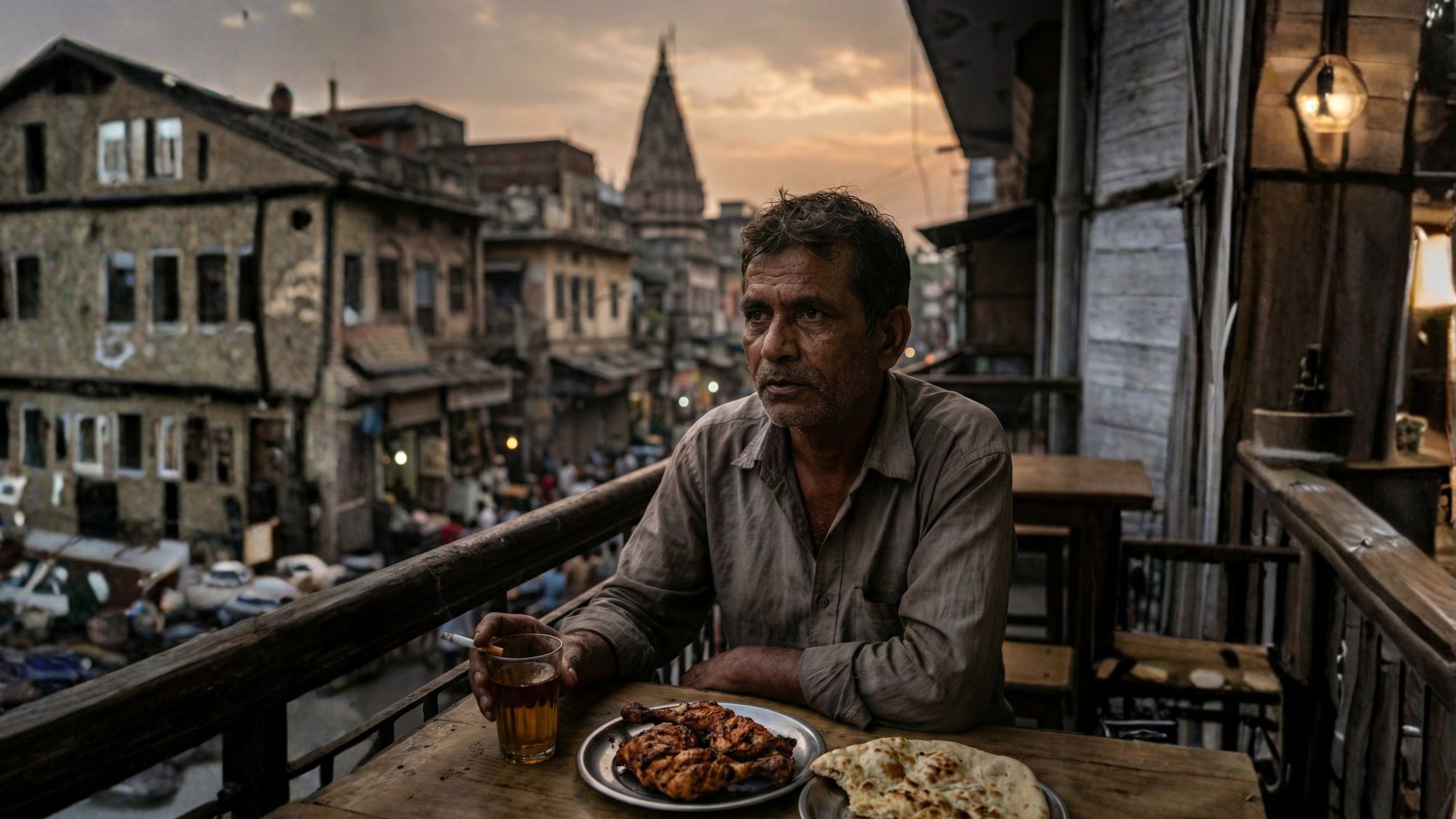
“I Drink. I Smoke. I Don’t Follow Ritual. I Think I’m a Sinner.” — Stop That Thinking. Bhakti Is For You. Watch the full video explanation https://youtube.com/shorts/SDu9NYoGNz0 “I Think I’m a Sinner” — Stop That Thinking. Bhakti Is For You | Bhāgavatam 2.3.10 Introduction: The Confession I drink. I smoke. I eat non-vegetarian food. I don’t go to temple. I don’t follow rituals. I don’t meditate. I break every rule. I think I am a sinner. Stop that thinking right now. Let me tell you why. Because Sanātana Dharma does not describe Bhagavān (the Supreme Lord) as insecure. It does not describe Him as waiting to punish. It does not describe Him as keeping score. The central teaching across scripture is: Remembrance (smaraṇa) Orientation toward the Divine Bhakti (devotion) Let me show you what the śāstra actually says. Part I: The Radical Verse Śrīmad Bhāgavatam 2.3.10 Sanskrit (Devanāgarī): अकामः सर्वकामो वा मोक्षकाम उदारधीः । तीव्रेण भक्तियोगेन यजेत पुरुषं परम् ॥ Sanskrit (IAST Transliteration): akāmaḥ sarva-kāmo vā mokṣa-kāma udāra-dhīḥ tīvreṇa bhakti-yogena yajeta puruṣaṁ param Word-by-Word Breakdown: akāmaḥ (अकामः) = one without desires (desireless) sarva-kāmaḥ (सर्वकामः) = one with all desires (full of material wants) vā (वा) = or, either mokṣa-kāmaḥ (मोक्षकामः) = one desiring liberation udāra-dhīḥ (उदारधीः) = one with broad/generous intelligence tīvreṇa (तीव्रेण) = with intensity, with great force bhakti-yogena (भक्तियोगेन) = through devotional service yajeta (यजेत) = should worship puruṣam (पुरुषम्) = the Supreme Person param (परम्) = the Supreme, the ultimate Translation: “Whether one has no desires, many desires, or desires liberation, one who is broad-minded should worship the Supreme Person with intense devotion.” Part II: The Radical Inclusiveness Three Categories—ALL Invited This verse is radical in its inclusiveness. It divides all people into three categories: 1. Akāmaḥ (अकामः) — The Desireless Who are they? Pure devotees Those who want nothing for themselves Those who only seek the happiness of the Lord Example: The gopīs of Vrindavan Characteristics: No personal agenda Complete surrender Love without expectation of return These are the spiritual elite—the highest practitioners. 2. Sarva-kāmaḥ (सर्वकामः) — Full of All Desires Who are they? People wanting material success Those seeking wealth, health, relationships Those with worldly ambitions People pursuing pleasure, comfort, security Characteristics: Full of wants Driven by desires Engaged in worldly pursuits This is most of humanity. 3. Mokṣa-kāmaḥ (मोक्षकामः) — Desiring Liberation Who are they? Yogis seeking freedom from rebirth Jñānīs (knowledge-seekers) wanting to merge with Brahman Those tired of material existence Characteristics: Spiritual ambition Desire to escape suffering Seeking ultimate freedom These are serious spiritual aspirants. The Instruction Is the Same for ALL Three Here’s what’s revolutionary: The Bhāgavatam does NOT say: ❌ “Akāmaḥ people—you should worship the Supreme Lord.” ❌ “Sarva-kāmaḥ people—you’re too impure. Get your life together first.” ❌ “Mokṣa-kāmaḥ people—you should worship.” The Bhāgavatam says: ✓ ALL THREE should worship the Supreme Person with INTENSE devotion (tīvreṇa bhakti-yogena). No prerequisites. No waiting period. No “become perfect first.” Just: Approach with bhakti. Part III: What This Means for You You Don’t Have to Be Perfect If you: Drink alcohol Smoke cigarettes Eat non-vegetarian food Don’t visit temples Don’t follow rituals Break traditional rules Have messy habits Struggle with discipline You are sarva-kāmaḥ—full of desires. And the Bhāgavatam says: ✓ You too should worship the Supreme Person with intense devotion. Not: ❌ “Clean up your act first” ❌ “Stop all your bad habits” ❌ “Become vegetarian” ❌ “Start following rituals” ❌ “Prove you’re serious” But: ✓ Right now, as you are, approach with bhakti. The Term: Udāra-Dhīḥ (Broad-Minded) Udāra-dhīḥ (उदारधीः) = one with broad/generous intelligence What does “broad-minded” mean here? It means recognizing: ✓ That all paths eventually lead to the Supreme ✓ That demigods are limited in what they can give ✓ That material pursuits are temporary ✓ That the Supreme Lord is the ultimate source of everything Even if you’re full of material desires— If you have the intelligence to recognize that ultimately, everything comes from the Supreme, then you should worship Him directly. You don’t have to be desire-free. You just have to be intelligent enough to go to the source. Part IV: The One Requirement—Tīvreṇa (With Intensity) What Does “Intense Devotion” Mean? Tīvreṇa bhakti-yogena = with intense devotional service Tīvra (तीव्र) literally means: Fierce Strong Forceful Concentrated Like unmixed sunlight (very powerful) The commentary explains: “As the unmixed sun ray is very forceful and is therefore called tīvra, similarly unmixed bhakti-yoga of hearing, chanting, etc., may be performed by one and all regardless of inner motive.” Notice: “regardless of inner motive.” You can have: Material desires Impure motives Mixed intentions Worldly goals And still practice bhakti with intensity. What Intensity Does NOT Mean Intensity does NOT mean: ❌ Following all rituals perfectly ❌ Being vegetarian ❌ Going to temple daily ❌ Meditating for hours ❌ Living like a monk ❌ Renouncing everything Intensity MEANS: ✓ Sincerity when you do remember ✓ Focus when you do chant ✓ Attention when you do think of the Divine ✓ Earnestness in your connection Even if it’s just for a few moments. Part V: Bhakti Recognizes Human Imperfection The Tradition Knows You’re Not Perfect Sanātana Dharma is not naïve. It knows that: People have desires People struggle with discipline People make mistakes People are imperfect That’s WHY the Bhāgavatam includes sarva-kāmaḥ (full of desires) in the verse. It’s not saying: “If you’re perfect (akāmaḥ), worship the Lord.” It’s saying: “Even if you’re full of desires (sarva-kāmaḥ), worship the Lord.” Discipline May Come Later—Or Not The verse does NOT say: “First become akāmaḥ (desireless), then worship.” It says: “Whether you’re akāmaḥ, sarva-kāmaḥ, or mokṣa-kāmaḥ—worship.” Bhakti is the doorway. What happens after? Discipline may refine your life (you might naturally reduce harmful habits) Rituals may structure your life (you might find value in temple visits) Ethics may elevate your life (you might become more compassionate) Or: You might remain messy You might struggle for years You might never become “perfect” But bhakti connects life to Bhagavān. And that connection is what
Don’t Confuse Guru with God: Krishna’s Teaching on Action, Not Worship
Don’t Confuse Guru with God: Krishna’s Teaching on Action, Not Worship Watch the full video explanation https://youtube.com/shorts/ZhYTEegjWtw Don’t Confuse Guru with God: Krishna’s Teaching on Action Over Personality Worship Introduction: The Problem Some “gurus” say: “Do abhiṣeka to me.” “Wear this ring and your karma will change.” “Keep this stone and your destiny will shift.” “Join my ashram. Dedicate your life to me.” “I am your only path.” “Without me, you are lost.” “Serve me, and you will be saved.” Remember: If someone tells you enlightenment comes from a paid course or personality worship, measure it against the Gītā. Because Sanātana Dharma has Guru–Śiṣya paramparā (teacher-disciple tradition). But it also has śāstra as authority. The ultimate Guru in the Mahābhārata is Krishna. When Arjuna collapsed and refused to fight, Krishna had the perfect opportunity to say: “Leave everything. Stay with me. Serve me. Worship me.” He did not. Let’s go to the text. Part I: The Moment of Crisis Arjuna’s Collapse Mahābhārata, Bhagavad Gītā 1.28-47 Standing on the battlefield of Kurukṣetra, facing his own relatives, teachers, and friends arrayed in the opposing army, Arjuna breaks down completely. His symptoms: Bodily weakness (śarīram mama sīdati) Trembling (vepathu) Mouth drying (mukhaṁ ca pariśuṣyati) Body hair standing on end (romāharṣa) Bow slipping from his hand (gāṇḍīvaṁ sraṁsate hastāt) Skin burning (tvak caiva paridahyate) Mind whirling (na ca śaknomy avasthātum bhra) Inability to stand (bhramīva ca me manaḥ) His statement: “I do not desire victory, nor kingdom, nor pleasures. Of what use is kingship to me, O Govinda? Of what use are pleasures or even life?” (BG 1.32) “Better to live in this world by begging than to kill these noble teachers. Though they are my teachers, they are intent on their own selfish ends—and were I to kill them, my enjoyment of wealth and pleasures would be tainted with blood.” (BG 2.5) Final declaration: “I will not fight.” (BG 2.9) Then Arjuna falls silent, sitting on the chariot with his bow cast aside. The Perfect Opportunity This is the perfect opportunity for a personality cult. Arjuna is: Broken (psychologically shattered) Confused (morally disoriented) Helpless (unable to act) Vulnerable (open to suggestion) Dependent (looking for external authority to tell him what to do) A modern “guru” in this situation would say: “Arjuna, you are in such pain because you are separated from me. Leave this battlefield. Renounce this world. Come to my ashram. Serve me. Dedicate your life to me. Only through me can you find peace.” Or: “Arjuna, wear this sacred amulet. It will protect you. Chant my name 108 times daily. Send money to my foundation. Your karma will change.” Krishna had the perfect setup for creating: Dependency Blind devotion Lifelong servitude Personality cult Financial extraction He chose differently. Part II: What Krishna Actually Said The Foundational Teaching 📖 Bhagavad Gītā 3.8 Sanskrit (Devanāgarī): नियतं कुरु कर्म त्वं कर्म ज्यायो ह्यकर्मणः । शरीरयात्रापि च ते न प्रसिद्ध्येदकर्मणः ॥ Sanskrit (IAST Transliteration): niyataṁ kuru karma tvaṁ karma jyāyo hy akarmaṇaḥ śarīra-yātrāpi ca te na prasiddhyed akarmaṇaḥ Word-by-Word Breakdown: niyatam (नियतम्) = prescribed, obligatory kuru (कुरु) = perform, do (imperative) karma (कर्म) = action, duty tvam (त्वम्) = you karma (कर्म) = action (repeated for emphasis) jyāyaḥ (ज्यायः) = superior, better hi (हि) = certainly, indeed akarmaṇaḥ (अकर्मणः) = than inaction śarīra-yātrā (शरीरयात्रा) = bodily maintenance, physical survival api (अपि) = even ca (च) = and te (ते) = your na (न) = not prasiddhyet (प्रसिद्ध्येत्) = would be possible, would succeed akarmaṇaḥ (अकर्मणः) = through inaction Translation: “Perform your prescribed duty, for action is superior to inaction. By ceasing activity, even your bodily maintenance will not be possible.” What Krishna Did NOT Say Krishna did NOT say: ❌ “Leave everything and follow me” ❌ “Worship me and you will be saved” ❌ “Only through me can you reach liberation” ❌ “Renounce the world and join my ashram” ❌ “Send me offerings and your karma will change” ❌ “Wear this ring blessed by me” ❌ “Chant my name and all your problems will disappear” What Krishna DID Say Krishna said: ✓ “Perform your prescribed duty” (niyataṁ kuru karma) ✓ “Action is superior to inaction” (karma jyāyo hy akarmaṇaḥ) ✓ “You cannot even maintain your body without action” (śarīra-yātrāpi ca te na prasiddhyed akarmaṇaḥ) The message: Act according to your dharma. Don’t escape into renunciation. Don’t create dependency on me. Stand on your own feet. Engage with the world responsibly. Part III: The Pattern Throughout the Gītā Krishna Consistently Redirects to Action and Responsibility Throughout the Bhagavad Gītā, Krishna never builds dependency. Instead, he consistently: 1. Clarifies Dharma Bhagavad Gītā 2.31: “Considering your specific duty as a kṣatriya, you should not waver. For a kṣatriya, there is no better engagement than fighting on behalf of dharma.” Message: Your duty is specific to your role. Fulfill it. Don’t escape it. 2. Emphasizes Self-Effort Bhagavad Gītā 6.5: “uddhared ātmanātmānaṁ nātmānam avasādayet ātmaiva hyātmano bandhur ātmaiva ripurātmanaḥ” “One must elevate oneself by one’s own mind, not degrade oneself. The mind alone is one’s friend as well as one’s enemy.” Message: You must elevate yourself. You are responsible. Not me. Not external objects. You. 3. Encourages Discernment Bhagavad Gītā 2.41: “vyavasāyātmikā buddhir ekeha kuru-nandana bahu-śākhā hyanantāśca buddhayo’vyavasāyinām” “Those who are on this path are resolute in purpose, and their aim is one. O beloved child of the Kurus, the intelligence of those who are irresolute is many-branched.” Message: Develop firm discernment. Don’t scatter your mind following every teacher or teaching. 4. Warns Against Blind Rituals Bhagavad Gītā 2.42-43: “yām imāṁ puṣpitāṁ vācaṁ pravadanty avipaścitaḥ veda-vāda-ratāḥ pārtha nānyad astīti vādinaḥ” “Men of small knowledge are very much attached to the flowery words of the Vedas, which recommend various fruitive activities for elevation to heavenly planets, resultant good birth, power, and so forth.” Message: Don’t get lost in ritual mechanics without understanding. Don’t chase external rewards through ceremony. 5. Grants Final Freedom of Choice Bhagavad Gītā 18.63: “iti te jñānam ākhyātaṁ guhyād guhyataraṁ mayā vimṛśyaitad aśeṣeṇa yathecchasi tathā
When Knowledge Claims Totality: Questioning the Completeness of Vedic Transmission
When Knowledge Claims Totality: Questioning the Completeness of Vedic Transmission Watch the full video explanation https://youtube.com/shorts/QO-0Yj2_79A What Happened to the Original Vedic Branches? I’m going to say something uncomfortable. I question whether the Vedas we have today represent the complete Vedic transmission. Before you close this tab, understand: this question doesn’t come from skepticism. It comes from śāstra itself—from the very texts we revere. My name is Jayanth Dev, and if this question makes you uncomfortable, stay with me. Because the discomfort itself is worth examining. What Does “Veda” Actually Mean? The word Veda (वेद) derives from the Sanskrit root √vid (विद्), meaning “to know.” But this isn’t casual knowledge. When the ancient rishis used the term “Veda,” they were pointing to something absolute: comprehensive knowledge addressing the totality of existence. Veda, by definition, must be complete. It must speak to origins and dissolution, mind and matter, cosmic order and ultimate reality. When a text carries the title “Veda,” it inherits this expectation of comprehensiveness. This is where my question begins. Because if Veda signifies complete knowledge, and if what we possess today is demonstrably fragmentary, then we must ask: What are we actually holding in our hands? The Textual Anchor—Śvetāśvatara Upaniṣad 6.18 Let me ground this inquiry in śāstra—in a verse from one of the principal Upanishads. Sanskrit (IAST): यो ब्रह्माणं विदधाति पूर्वं यो वै वेदांश्च प्रहिणोति तस्मै। तं ह देवमात्मबुद्धिप्रकाशं मुमुक्षुर्वै शरणमहं प्रपद्ये॥ Yo brahmāṇaṁ vidadhāti pūrvaṁ yo vai vedāṁś ca prahiṇoti tasmai | Taṁ ha devam ātmabuddhiprakāśaṁ mumukṣur vai śaraṇam ahaṁ prapadye || Translation: “To that effulgent One who in the beginning created Brahmā and who indeed delivered the Vedas to him—to that God who illuminates Himself by His own intelligence, I, desiring liberation, take refuge.” The Śvetāśvatara Upaniṣad locates the origin of the Vedas in a transcendental dimension—before creation itself, before even Brahmā, the cosmic creator. What This Verse Establishes 1. The Vedas precede creation. They are not products of human thought. They exist in a pre-cosmic state—apauruṣeya (not of human origin), eternal, self-existent. 2. The Vedas are transmitted, not composed. Brahmā receives them. The rishis perceive them. Humans preserve them. But no one creates them. 3. The source transcends any manifestation. That “effulgent One” who is the source of the Vedas is beyond all forms, beyond Brahmā himself. The tension: If the Vedas are pre-cosmic, eternal, and comprehensive, then they cannot, by definition, be limited to what has been transmitted through specific lineages or preserved in particular manuscripts. The verse itself invites us to distinguish between: The transcendental Veda (eternal, complete, pre-cosmic knowledge) The transmitted Vedas (historical texts, subject to preservation, loss, variation) The Historical Reality We Cannot Ignore Let’s move from philosophy to facts. According to Patañjali’s Mahābhāṣya and the Caraṇa-vyūha, the original Vedic corpus was divided into approximately 1,131 śākhās or branches across the four Vedas. Here’s what existed versus what survives: Rigveda: Original śākhās: 21 Surviving śākhās: 2 (Śākala and Bāṣkala) Loss: Over 90% Yajurveda: Original śākhās: 101 Surviving śākhās: 5-6 Loss: Over 94% Sāmaveda: Original śākhās: 1,000 Surviving śākhās: 3 (Kauthuma, Rāṇāyanīya, Jaiminīya) Loss: Over 99% Atharvaveda: Original śākhās: 9 Surviving śākhās: 1-2 (primarily Śaunakīya) Loss: Over 88% Total loss: Over 99% of original Vedic branches have disappeared. Why the Loss of a Śākhā Matters When we speak of a “lost śākhā,” we’re not talking about a slightly different version of the same hymn. A complete śākhā included: The Saṁhitā (Hymn collection) The Brāhmaṇa (Ritual explanations) The Āraṇyaka (Forest meditations) The Upaniṣad (Philosophical teachings) Kalpa Sūtras (Ritual manuals) Prātiśākhya texts (Linguistic analyses) Living interpretive traditions When a śākhā went extinct, all of this disappeared—entire knowledge systems, ritual applications, interpretive frameworks, philosophical elaborations. Consider the Śaṅkhāyana śākhā of the Rigveda. Until recently, only two elderly practitioners in Banswada, Rajasthan, were the last surviving transmitters. An entire recension hanging by the thread of two septuagenarians. When they pass, if the transmission hasn’t been successfully continued, that śākhā becomes extinct—not theoretically, but actually. The Philosophical Question This Raises If we accept that: The Vedas signify complete, comprehensive knowledge This knowledge is described in śāstra as pre-cosmic and transcendental Yet what we possess is demonstrably a fraction of what once existed Then we must ask: What does it mean to claim “Vedic authority” when we’re working with fragments? The Honest Response “The transcendental Veda is complete and eternal. The transmitted texts are historical manifestations—precious, invaluable, but incomplete.” The Śvetāśvatara Upaniṣad’s verse gives us this framework: The Transcendental Veda: Pre-cosmic, eternal, self-existent Complete by definition Not bound by time, language, or lineage The Transmitted Texts: Historical artifacts Subject to preservation, loss, corruption Fragmentary due to time’s attrition The gap between these two is not a crisis—it’s a reality. What This Means for Practice and Study Acknowledging this gap doesn’t weaken the tradition—it strengthens it through intellectual honesty. 1. Humility in claims: Be cautious about absolutist statements like “the Vedas say this definitively” when we’re working with a surviving fraction. Different śākhās may have offered different perspectives. 2. Urgency in preservation: Recognizing the fragility of what remains should motivate extraordinary care in preservation, documentation, and transmission. 3. Openness to living realization: If the Vedas are ultimately transcendental, then authentic spiritual realization remains possible even when texts are incomplete. The rishis accessed this knowledge through inner perception; the texts are records, not the source itself. 4. Rigorous scholarship: Study what we have with precision, compare śākhās where possible, acknowledge textual variations, and resist conflating “what one recension says” with “what the Veda says universally.” Why This Matters Beyond Academia 1. Honest Faith is Stronger Than Blind Faith When you know the historical realities and still choose to engage deeply with the tradition, your faith becomes more robust, not weaker. 2. It Prevents Fundamentalism Fundamentalism thrives on the illusion of absolute textual completeness. Recognizing that we’re working with fragments makes us less dogmatic and more discerning. 3. It Honors the Tradition’s Own Values The Vedic tradition values viveka (discriminative wisdom), vicāra (inquiry), and satya (truth). Pretending we have
Why Southeast Asia Honors Our Gods While We Debate Them: The Forgotten Hindu Heritage Across Asia
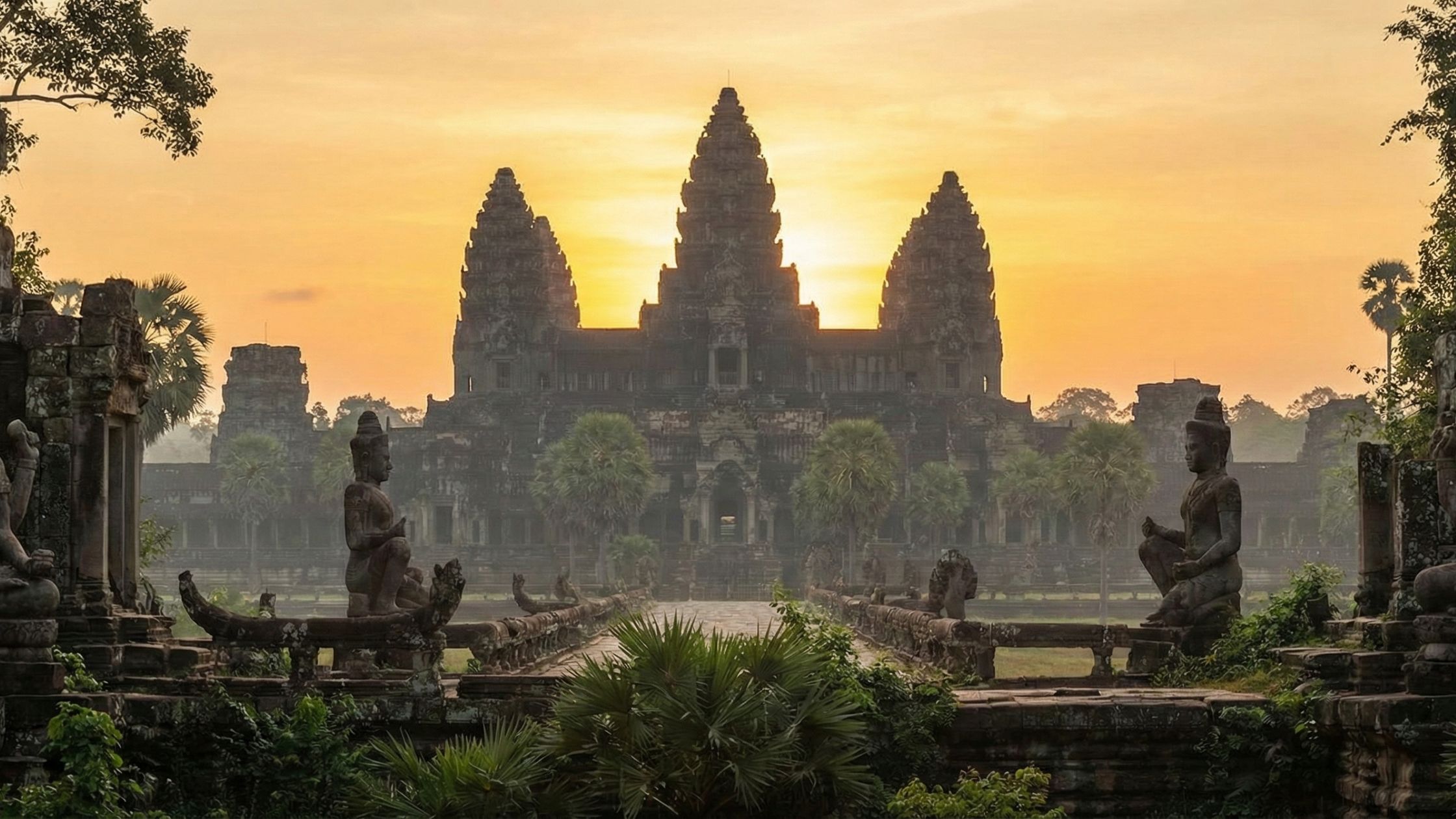
Why Southeast Asia Honors Our Gods While We Debate Them: The Forgotten Hindu Heritage Across Asia Watch the full video explanation Angkor Wat to Bali: Hindu Culture Thrives Outside India Stand in Cambodia’s Angkor Wat and you’ll find Ramayana carvings stretching across 400 acres of sacred stone—the world’s largest religious monument, dedicated to Lord Vishnu. Fly to Bali and watch Balinese Hindus chant Sanskrit mantras in daily prayers—in a country where 87% are Muslim. Visit Thailand and discover that their kings are ceremonially called “Rama”—Rama I through Rama X—honoring an Indian epic as the foundation of royal legitimacy. Board a flight in Indonesia and you’re traveling on Garuda Indonesia—named after Lord Vishnu’s divine eagle mount—in the world’s largest Muslim-majority nation. Yet back in India—the birthplace of these traditions—Ramayana is debated as mythology, Shiva dismissed as metaphor, Krishna questioned as unhistorical, and our temples controlled while other religions operate freely. How did this reversal happen? Why do nations thousands of kilometers away preserve our heritage with more pride than we do? Today, we’re uncovering the forgotten story of Sanatana Dharma’s organic spread across Asia—and the colonial project that made Indians ashamed of what the world still respects. Part I: The Evidence They Can’t Erase Angkor Wat: When Vishnu Became a World Wonder Location: Siem Reap, CambodiaBuilt: 1113-1150 CE (almost 900 years ago)Commissioned by: King Suryavarman II (whose name means “Protector of the Sun”)Dedicated to: Lord VishnuSize: 162.6 hectares (402 acres) – four times the size of Vatican City Angkor Wat isn’t just “a temple”—it’s the largest religious monument ever built by humanity. Its construction required: 50,000 workers laboring for 30 years 1.5 million cubic meters of sandstone A 190-meter-wide moat with 5.5 km perimeter symbolizing the cosmic ocean Five central towers representing the peaks of Mount Meru (the abode of gods in Hindu cosmology) What’s carved on its walls? Every square meter tells our stories: Samudra Manthan (Churning of the Cosmic Ocean) – the most famous bas-relief Scenes from the Ramayana – Rama’s journey, Hanuman’s heroism Episodes from the Mahabharata – the great war, Krishna’s teachings Depictions of Vishnu and his avatars The Original Name: According to scholars, Angkor Wat’s original name was likely “Vrah Viṣhṇuloka” (वृह विष्णुलोक) – “The Sacred Dwelling of Vishnu.” The Irony: Today, Angkor Wat appears on the Cambodian national flag. An entire nation—Buddhist-majority Cambodia—proudly displays a Hindu temple as their supreme national symbol. Meanwhile in India, textbooks teach children that Ramayana and Mahabharata are “mythology,” and archaeological evidence for Dwaraka, Ram Setu, and Kurukshetra is marginalized or debated endlessly. Indonesia: Where 87% Muslims Honor Hindu Symbols Indonesia is the world’s largest Muslim-majority country (87.2% Muslim population, ~240 million Muslims). Yet: 1. National Emblem: Garuda Pancasila The Indonesian coat of arms features Garuda—the divine eagle mount (vahana) of Lord Vishnu. Key Facts: Garuda (गरुड) is a Sanskrit word meaning the mythical king of birds Designed in 1950 by Sultan Hamid II (a descendant of Prophet Muhammad!) The Garuda holds in its talons the national motto: “Bhinneka Tunggal Ika” (Unity in Diversity) – a phrase from the Old Javanese poem Kakawin Sutasoma (14th century), based on Hindu-Buddhist philosophy On the Garuda’s chest is a shield with five symbols representing Pancasila (Indonesia’s state philosophy): Star – Belief in One God Chain – Just and civilized humanity Banyan tree – Unity of Indonesia Bull’s head – Democracy Rice and cotton – Social justice 2. Garuda Indonesia: The National Airline Founded January 26, 1949, Indonesia’s flag carrier was named Garuda on the suggestion of President Sukarno. From the airline’s founding documents: “The name Garuda is taken from the Hindu tradition: it is the name of Lord Vishnu’s mount (vahana).” Modern fleet: 140+ aircraft serving 96 destinations 5-star Skytrax rating Named “World’s Best Cabin Crew” multiple times Every plane bears the Garuda logo—Hindu mythology displayed proudly worldwide Think about this: When was the last time you saw an Indian airline or institution prominently featuring Vedic symbols with such pride? 3. Indonesian Currency Features Ganesha Various Indonesian banknotes and coins have featured Lord Ganesha, Hanuman, and scenes from the Ramayana and Mahabharata—despite being a Muslim-majority nation. 4. Bali: The Last Hindu Kingdom Bali (83% Hindu) preserves Sanatan Dharma more authentically than many parts of India: Daily Rituals: Sanskrit mantras chanted in homes and temples Nyepi (Day of Silence) – Hindu New Year based on the Saka calendar Galungan festival celebrating dharma’s victory over adharma Daily offerings (canang sari) at home shrines Major Monuments: Garuda Wisnu Kencana statue – 75-meter (246-foot) statue of Lord Vishnu riding Garuda Tanah Lot Temple – sea temple to Lord Baruna Besakih Temple – the “Mother Temple,” dedicated to Trimurti Shadow Puppetry (Wayang Kulit): Indonesia’s UNESCO-recognized traditional art form tells stories exclusively from the Ramayana and Mahabharata. Performances in Java and Bali feature: Rama and Sita’s story Krishna’s life and teachings Bhima’s adventures Arjuna’s dilemmas Muslim-majority Java watches these Hindu epics performed regularly—no one questions whether Rama existed or Krishna was real. They simply honor the wisdom. Thailand: Where Kings Are Called Rama Thailand (93% Theravada Buddhist) has preserved Hindu culture with extraordinary devotion: 1. Royal Names Based on Ramayana Since the founding of the Chakri Dynasty in 1782, every Thai king has taken the title “Rama”: Rama I (1782-1809) – Founded Bangkok, commissioned Thai Ramakien Rama II (1809-1824) – Poet-king, refined Ramakien literature Rama III through Rama IX (King Bhumibol – the beloved modern king) Rama X (Current king – Maha Vajiralongkorn) This isn’t symbolic—it’s constitutional. Thai kings are considered manifestations of Vishnu, upholding dharma in the modern world. 2. The Ramakien: Thailand’s National Epic The Ramakien (รามเกียรติ์) is Thailand’s version of Valmiki’s Ramayana. Commissioned by: Rama I in 1797-1798Verses: Approximately 60,000 (longer than the original Valmiki Ramayana!)Status: Thailand’s national epic, taught in schools, performed in dance Key Adaptations: Setting moved to Thailand Characters given Thai names (Rama = Phra Ram, Sita = Nang Sida, Hanuman = Hanuman) Local cultural elements integrated But the core story and dharmic values remain identical 3. Bangkok’s Grand Palace: A Temple

Why Are Indian Epics Called “Mythology”? Reclaiming Itihasa from Colonial Frameworks
Why Are Indian Epics Called “Mythology”? Reclaiming Itihasa from Colonial Frameworks Watch the full video explanation Ramayana Not Myth: Archaeology Proves Itihasa Real “Greek mythology.” “Roman mythology.” “Norse mythology.” Now try: “Hindu mythology.” Notice anything? The first three refer to dead civilizations whose gods no one worships anymore. But Hinduism has over 1.2 billion living practitioners. Yet their epics, traditions, and sacred histories are routinely classified alongside Zeus and Thor—as “mythology.” Mythology: Stories that are fictional, legendary, or unproven.History: Events that actually happened, backed by evidence. When we accept the label “Hindu mythology,” we unconsciously accept that our civilizational memory is fictional—that Rama, Krishna, Hanuman, and the events of the Ramayana and Mahabharata never existed. This wasn’t accidental. It was intellectual colonization—a systematic project to delegitimize Indian civilization by reframing its foundational texts as “myths” while European and Abrahamic traditions were upheld as “history.” Today, we’re deconstructing this framework, examining its origins, presenting archaeological evidence, and reclaiming the Sanskrit concept of Itihasa (इतिहास) – “thus it happened.” Part I: The Power of Words – Why “Mythology” Matters Etymology Reveals Intent The word “mythology” comes from Greek: Mythos (μῦθος) = “story, speech, plot” Logos (λόγος) = “word, study” Original meaning: “Study of stories.” Modern connotation: “Study of fictional stories, legends, and folklore.” When “mythology” is applied to Greco-Roman traditions, it’s understood that these were once religions but are now historical curiosities. No one worships Zeus or Jupiter anymore, so calling them “mythology” is factually accurate—these are stories about gods no longer believed in. But when the same term is applied to living Hindu traditions, it carries an implicit judgment: “These aren’t real either.” The Double Standard Consider how different civilizations’ foundational texts are treated academically and educationally: Civilization Term Used Implication Greek/Roman “Classical Mythology” Dead religion, studied for literary/historical value Norse/Celtic “Norse/Celtic Mythology” Dead religion, pagan folklore Judeo-Christian “The Bible,” “Sacred Scripture,” “Biblical History” Living tradition, treated seriously Islamic “Quranic History,” “Islamic Tradition” Living tradition, respected as historical/theological Hindu “Hindu Mythology,” “Indian Myths” Living tradition treated as folklore The hypocrisy is stark: Abraham, Moses, Jesus = Historical figures (despite limited archaeological evidence for some) Muhammad = Historical figure (well-documented) Rama, Krishna, Hanuman = “Mythological characters” (despite archaeological, astronomical, and textual evidence) This isn’t mere academic categorization—it’s epistemic violence: the systematic devaluation of a civilization’s knowledge systems. Part II: The Colonial Project – Manufacturing “Hindu Mythology” Max Mueller and the East India Company To understand how this framework was established, we must examine the 19th-century Orientalist project, particularly the work of Friedrich Max Müller (1823-1900). Who Was Max Mueller? German-born philologist and Sanskrit scholar Hired by the British East India Company in 1847 to translate the Vedas First systematic translator of Rig Veda into English Hugely influential in shaping Western (and eventually Indian elite) understanding of Hinduism His Stated Agenda Max Mueller’s private correspondences reveal troubling motivations. In letters to his wife and colleagues, he expressed explicitly colonial and missionary intentions: Letter to his wife (December 9, 1867): “I feel convinced, though I shall not live to see it, that this edition of mine and the translation of the Veda will hereafter tell to a great extent on the fate of India, and on the growth of millions of souls in that country. It is the root of their religion, and to show them what the root is, I feel sure, is the only way of uprooting all that has sprung from it during the last 3,000 years.” Letter to Baron Christian von Bunsen (1856): “India is much riper for Christianity than Rome or Greece were at the time of St. Paul… The ancient religion of India is doomed, and if Christianity does not step in, whose fault will it be?” These weren’t casual observations—they were statements of strategic intent. Max Mueller saw his translation work as part of a larger colonial project: Undermine confidence in Vedic texts by presenting them as primitive, confusing, or barbaric Create an inferiority complex among Indian intellectual elites Prepare ground for Christian conversion The Translation Problem Sanskrit is not a dead language—it’s a sacred language with living interpretive traditions. For over 3,000 years, the Vedas were transmitted through oral tradition with extraordinary precision. Scholars like Sayanacharya (14th century) had written extensive Sanskrit commentaries explaining context, philosophy, and proper interpretation. Max Mueller’s approach: Never learned Sanskrit in India from traditional scholars Never studied under a guru in the traditional parampara (lineage) Relied on limited European academic understanding Translated texts out of context, often word-for-word without philosophical depth Admitted he viewed Vedic religion as “primitive sun and nature worship” German scholar Prof. Prodosh Aich (in his book Fundamentals of Indology) argues that Mueller and other early Indologists: Lacked command of Sanskrit sufficient for nuanced translation Worked from European manuscripts, not original Indian sources Projected European and Christian frameworks onto Hindu texts Created distorted interpretations that became “authoritative” The Aryan Invasion Theory Mueller also promoted the Aryan Invasion/Migration Theory: “Aryans” were a light-skinned race from Central Asia They invaded India around 1500 BCE Conquered darker-skinned “Dravidians” Imposed Sanskrit, Vedic culture, and caste system The political utility of this theory: Divided Indians by race (Aryan North vs. Dravidian South) Justified colonial rule: “India has always been conquered by outsiders; British rule is just the latest” Delegitimized indigenous culture: “Even your ‘indigenous’ culture is foreign” Modern scholarship has largely debunked this theory: Genetic studies show no evidence of a mass Aryan invasion Continuity between Indus Valley Civilization and Vedic culture Saraswati River (mentioned 72 times in Rig Veda) existed before 1900 BCE, suggesting Vedic composition predates proposed “invasion” Yet this theory continues to shape Indian textbooks and popular understanding even today. Macaulay’s Educational Agenda Max Mueller’s work was part of a larger colonial education project initiated by Thomas Babington Macaulay. Macaulay’s infamous Minute on Education (1835): “I have no knowledge of either Sanskrit or Arabic… But I have done what I could to form a correct estimate of their value… A single shelf of a good European library was worth