
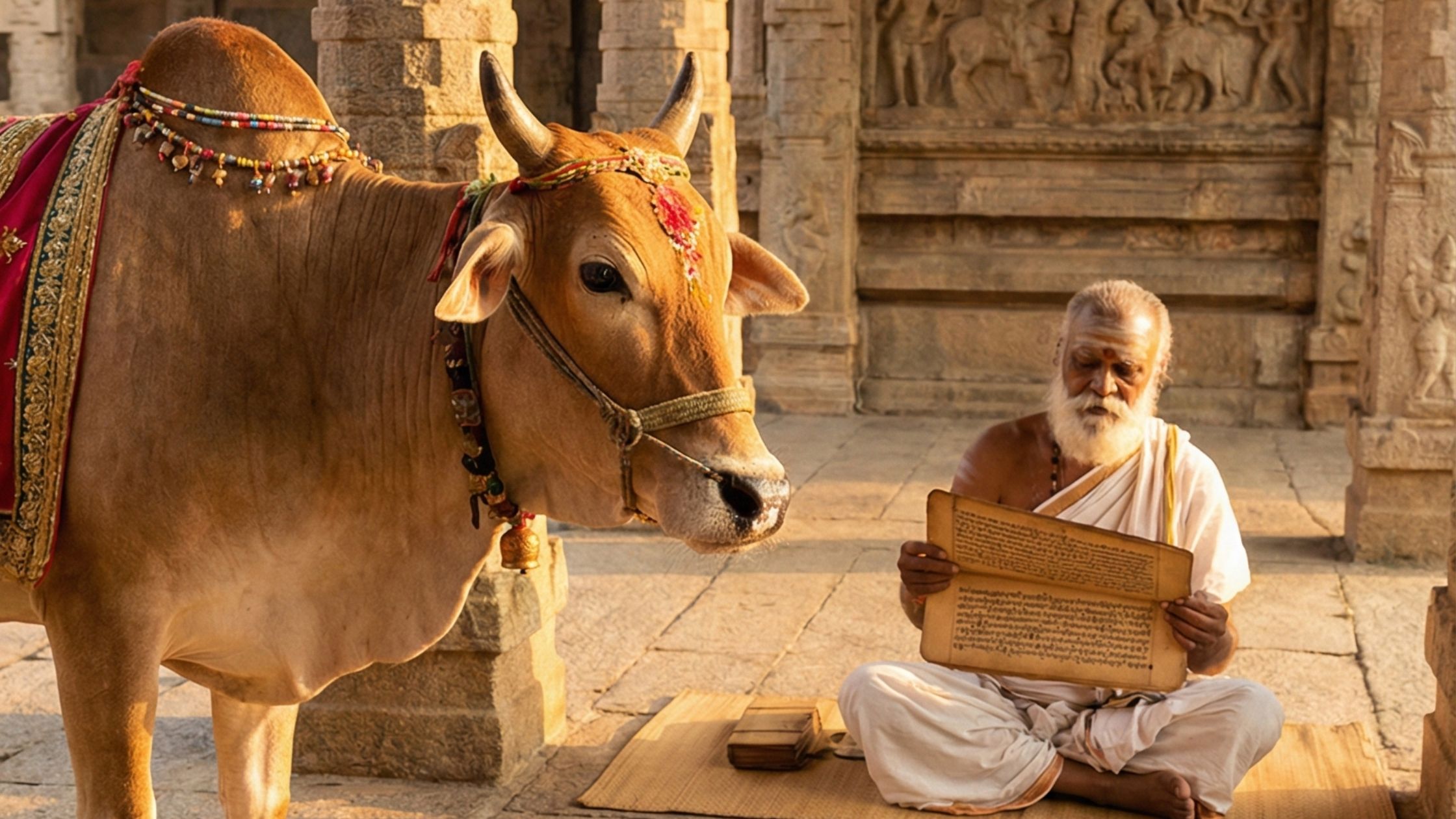
Why Is the Cow Called Mother in Hindu Dharma? The Theological, Historical, and Civilizational Basis Watch the full video explanation https://youtube.com/shorts/cYWXXVXly-g Why “Gau Mata”? The Real Reason Cows Are Called Mothers in Hinduism Introduction: Beyond Sentiment Into Systems “Cow is a mother? Seriously?” That’s the reaction. People laugh. Some find it quaint. Others find it backward. Most assume it’s either: Superstition Excessive sentimentality Convenient religious dogma Cultural quirk without rational basis But let’s go deeper. Because in Sanātana Dharma, the word “mother” (mātā) is not casual language. It is a theological category. And the cow’s inclusion in that category—as Gau Mātā (गौ माता)—is not arbitrary reverence. It’s documented recognition of a specific functional relationship between the cow and civilization, rooted in: Śāstra (scripture) Itihāsa (historical epic) Veda (revealed knowledge) Practical civilizational reality The cow is called “mother” for the same reason the Earth is called mother. Not because of emotion—because of sustained nourishment and life-support. Part I: The Concept of Sapta Mātā—The Seven Mothers Motherhood as a Theological Function In Hindu Dharma, motherhood is not limited to biological gestation. Mātā (माता) is a theological designation for that which sustains life through continuous nourishment. The tradition recognizes Sapta Mātā (सप्त माता) — Seven Mothers: 1. Janani Mātā (जननी माता) – The Biological Mother The woman who gave birth Provides initial nourishment through pregnancy and breastfeeding Primary caregiver during formative years 2. Guru Patnī (गुरु पत्नी) – The Teacher’s Wife Supports the guru’s household Creates conducive environment for learning Nourishes the student indirectly through her service 3. Rāja Patnī (राज पत्नी) – The King’s Wife / Queen Symbol of the state’s nurturing function Represents collective maternal care of citizens Embodies welfare aspect of governance 4. Deśa Mātā (देश माता) – The Motherland The nation that protects and provides identity Source of cultural and civilizational belonging Sustains community through shared values 5. Dhenu / Gau Mātā (धेनु / गौ माता) – The Cow Provides milk (primary nourishment) Bull powers agriculture (food production) Yields multiple products sustaining life 6. Pṛthvī Mātā (पृथ्वी माता) – The Earth Ground that sustains all life Yields crops, water, minerals Supports all beings without discrimination 7. Vedamātā (वेदमाता) – Mother Veda / Knowledge as Mother Sacred knowledge that guides life Reveals dharma and sustains cosmic order Nourishes the spirit The Common Principle All seven share one defining characteristic: Sustained nourishment without requiring destruction of the source. The cow is included deliberately. The reason is documented in śāstra. Part II: The Scriptural Foundation The Mahābhārata Declaration 📖 Mahābhārata, Anuśāsana Parva 75.19 Sanskrit (Devanāgarī): गावो विश्वस्य मातरः ॥ Sanskrit (IAST Transliteration): Gāvo viśvasya mātaraḥ Translation: “The cows are the mothers of the universe.” The Context: Bhīṣma Instructs Yudhiṣṭhira Who is speaking? Bhīṣma (भीष्म) — the eldest Kuru, lying on a bed of arrows after the Kurukshetra war, is imparting his final teachings on Dharma to King Yudhiṣṭhira. What is Anuśāsana Parva? The 13th book of the Mahābhārata, also called the “Book of Instructions” or “Book of Precepts.” After 18 days of catastrophic war, Yudhiṣṭhira is king—but devastated by the destruction. Bhīṣma, waiting for the auspicious uttarāyaṇa (northward journey of the sun) to leave his body, uses these final days to transmit comprehensive knowledge of: Rājadharma (duties of kings) Dānadharma (duties of giving) Mokṣadharma (path to liberation) Ethics, governance, social organization What does Anuśāsana Parva say about cows? According to the Parva, “several chapters are dedicated to cows, their importance to household’s food security, agriculture and wealth”. Bhīṣma explains: Why cows must be protected The merits of gifting cows The civilizational centrality of cattle Specific instructions on cow care The declaration “Gāvo viśvasya mātaraḥ” comes in this context—not as poetic hyperbole, but as dharmic principle. Additional Scriptural Support Mahābhārata, Anuśāsana Parva (Various Sections): “A vaishya should protect all animals especially the cow and the bull. These two are the mother and father of all mankind.” Why “mother” AND “father”? Cow (Dhenu) = Mother (provides milk/nourishment) Bull (Vṛṣabha) = Father (provides labor/agriculture) Together, they sustain civilization. Part III: The Vedic Basis—Aghnyā (The Unslayable) The Rigvedic Term Throughout the Ṛgveda (ऋग्वेद), cows are repeatedly called Aghnyā (अघ्न्या). Etymology: A (अ) = negation (not) Ghnya (घ्न्या) = from root han (हन्) = to kill/strike Meaning: “Not to be killed” / “Unslayable” / “Inviolable” Rigveda References: Ṛgveda 1.164.27: अघ्न्येयं सा वर्धतां महते सौभगाय “May this Aghnyā cow thrive for great prosperity.” Ṛgveda 5.83.8: सुप्रपाणं भवत्वघ्न्यायाः “There should be excellent facility for pure water for the Aghnyā cow.” Ṛgveda 10.87.16: यः पौरुषेयेण क्रविषा समङ्क्ते योऽश्वेन पशुना यातुधानः । योऽघ्न्यायाः भरति क्षीरमग्ने तेषां शीर्षाणि हरसापि वृश्च ॥ “Those who feed on human, horse, or animal flesh, and those who destroy the milk-giving Aghnyā cows—O Agni, sever their heads.” What This Establishes The Rigveda—humanity’s oldest surviving text—explicitly: ✓ Designates cows as protected beings (aghnyā) ✓ Associates cow protection with prosperity (saubhāgya) ✓ Prescribes severe punishment for cow-killing ✓ Links cow welfare to civilizational health This isn’t later interpolation or medieval reform. This is Vedic foundation. Part IV: The Functional Basis—Why “Mother” Makes Sense Sustained Nourishment Without Destruction The key to understanding why the cow is called “mother” lies in how motherhood is defined in Dharmic thought: Mother = That which sustains life continuously without requiring its own destruction. Compare: The cow: Gives milk daily (sustained nourishment) Produces ghee (ritual/cooking fat) Yields dung (fuel, fertilizer, building material) Provides urine (medicinal, purification agent per Āyurveda) Continues giving while alive Animals typically used for meat: Require slaughter (one-time use) Cannot provide sustained daily nourishment Destruction of the source terminates benefit The cow provides more value alive than dead—and over years, not moments. This is sustainable resource management encoded in theological language. The Vedic Economic Reality In Vedic society (roughly 1500–500 BCE), civilization functioned through: 1. Agriculture (Kṛṣi – कृषि) Bulls plowed fields Enabled large-scale grain production Ox-carts transported goods 2. Yajna (यज्ञ – Ritual Fire Sacrifice) Ghee (clarified butter from milk) was the primary oblation Fire rituals sustained ṛta (ऋत – cosmic order) Without ghee, yajna

Why Shiva Ratri—and Not Śiva Prātaḥ or Sāyaṅkāla? Understanding Night as the Gateway to Dissolution
Why Śiva Rātri—and Not Śiva Prātaḥ or Sāyaṅkāla? Understanding Night as the Gateway to Dissolution Watch the full video explanation https://youtube.com/shorts/-CQhypBaBYo Why Shivaratri at Night? Understanding Time and Dissolution Introduction: The Question That Reveals Everything Why is it Śiva Rātri (शिव रात्रि)? Why not Śiva Prātaḥ (शिव प्रातः) — Shiva morning? Why not Śiva Sāyaṅkāla (शिव सायंकाल) — Shiva evening? Why is Shiva worshipped at night? This isn’t a trivial question about scheduling rituals for convenience. The timing—specifically the choice of night (rātri) rather than day—encodes a fundamental understanding of what Shiva represents and how consciousness operates. Most people assume Mahāśivarātri occurs at night simply because: It’s tradition Night creates a devotional atmosphere Staying awake is more challenging (and therefore more meritorious) But these are secondary effects. The primary reason is architectural—embedded in the very nature of what Shiva IS and what night represents. Part I: Time Is Not Neutral States of Consciousness Mapped to Time In Sanātana Dharma, time (kāla) is not a neutral container through which events pass equally. Different times of day correspond to different states of consciousness: 1. Prātaḥ (प्रातः) – Morning (Sunrise to ~9 AM) Consciousness state: Awakening, activation, outward movement Characteristics: Senses begin to activate Mind turns outward toward the world Energy mobilizes for engagement Rajas (activity) increases Associated with: Creation, beginning, action, expansion Deities naturally aligned: Brahma (Creator), Surya (Sun), Ganesha (remover of obstacles for new endeavors) Why morning is NOT for Shiva: Morning is about manifesting into the world. Shiva is about withdrawing from manifestation. 2. Sāyaṅkāla (सायंकाल) – Evening (Sunset to ~7 PM) Consciousness state: Transition, review, settling Characteristics: Activity begins to complete Mind reviews the day’s experiences Energy transitions from external to internal Tamas (inertia) begins to assert Associated with: Completion, transition, boundary states Deities naturally aligned: Vishnu (Sustainer completing the day’s preservation), evening forms of the Divine Mother Why evening is NOT for Shiva: Evening is still processing the world. Shiva is beyond processing—he is the state that remains when processing stops. 3. Rātri (रात्रि) – Night (Deep night, especially 12 AM-3 AM) Consciousness state: Withdrawal, dissolution, bare awareness Characteristics: Sound reduces to minimum Vision withdraws (external stimuli decrease) Movement stops Identities loosen What remains: bare awareness Associated with: Dissolution, rest, deep states, the formless Deity naturally aligned: Shiva Why night IS for Shiva: Night naturally supports the state Shiva represents—consciousness stripped of activity. Part II: What Rātri Actually Means Etymology and Function Rātri (रात्रि) comes from: Rā (रा) = “to give” Tra (त्रा) = “to protect” Primary meaning: That which gives (rest) and protects (through stillness) The night: Protects by removing stimulation Gives rest by dissolving engagement Nourishes through withdrawal The Scriptural Definition 📖 Śiva Purāṇa, Vidyeśvara Saṁhitā 2.13 Sanskrit (Devanāgarī): रात्रिः ज्ञानप्रदा प्रोक्ता अज्ञानहरणी शिवा ॥ Sanskrit (IAST Transliteration): rātriḥ jñāna-pradā proktā ajñāna-haraṇī śivā Word-by-Word Breakdown: rātriḥ (रात्रिः) = night (nominative singular) jñāna-pradā (ज्ञानप्रदा) = giver of knowledge (jñāna = knowledge, pradā = giver) proktā (प्रोक्ता) = is declared, is said ajñāna-haraṇī (अज्ञानहरणी) = remover of ignorance (a-jñāna = non-knowledge/ignorance, haraṇī = remover) śivā (शिवा) = auspicious, belonging to Shiva Translation: “Night is declared as the giver of knowledge and the remover of ignorance—and it belongs to Shiva.” This Is Not Metaphor Modern readers often interpret this as poetic symbolism: “Night” = metaphor for darkness of ignorance “Knowledge” = metaphor for spiritual awakening “Shiva” = metaphor for the enlightened state But the text is more precise: Night is LITERALLY defined as: the absence of sensory dominance. During the day: Eyes dominate consciousness (visual input floods awareness) Ears process constant sound Touch engages with activity Mind is pulled outward by stimuli During night: Visual input reduces drastically (darkness) Sound minimizes (silence) Movement ceases (stillness) Mind is no longer hijacked by constant external pulls What remains when sensory dominance withdraws? Bare awareness. And Shiva represents exactly that. Part III: What Shiva Actually Represents Not a Being—A State In philosophical Shaivism, Shiva is not primarily a deity with a biography. Shiva is Śiva-tattva (शिव-तत्त्व) — the Shiva principle. Shiva represents: 1. Pure Consciousness (Cit) Awareness as such The “knowing” that persists regardless of what is known The witness that remains when experiences come and go 2. The State of Dissolution (Laya) Not destruction as violence But dissolution as return to source The relaxation of differentiation back into unity 3. Withdrawal from Manifestation Shiva is not the world-builder (that’s Brahma) Shiva is not the world-sustainer (that’s Vishnu) Shiva is the substratum that remains when the world dissolves 4. The Formless Ground Beyond attributes (nirguṇa) Beyond form (nirākāra) What’s left when everything else is taken away Shiva as Non-Activity Consider the symbolic iconography of Shiva: Seated in meditation on Mount Kailash: Not building kingdoms Not engaging in cosmic battles Not administering the universe Simply BEING Covered in ash (vibhūti): Ash = what remains after fire consumes everything Symbolizes dissolution of all that is temporary The final residue when manifestation ends Third eye closed (most of the time): When open = dissolution of ignorance/illusion When closed = preservation of manifestation The third eye’s natural state is CLOSED (non-activity) Crescent moon on his head: Specifically the Chaturdaśī (14th lunar day) crescent The moon almost dissolved into darkness Symbolizing the mind dissolving back into awareness The Ganga flowing from his matted hair: He holds the descent of the cosmic river But does so effortlessly Static containment, not active manipulation Shiva is associated with WITHDRAWAL, not engagement. Part IV: Why Night Supports the Shiva State The Natural Alignment 📖 Śiva Purāṇa, Vāyavīya Saṁhitā 1.21 Sanskrit (Devanāgarī): निशायां शिवभावः स्यात् मनोलयः प्रजायते ॥ Sanskrit (IAST Transliteration): niśāyāṁ śiva-bhāvaḥ syāt mano-layaḥ prajāyate Word-by-Word Breakdown: niśāyām (निशायाम्) = at night, in the night (locative case) śiva-bhāvaḥ (शिवभावः) = the state/mood of Shiva syāt (स्यात्) = arises, comes to be (optative mood, 3rd person singular) mano-layaḥ (मनोलयः) = dissolution of mind (manas = mind, laya = dissolution/merging) prajāyate (प्रजायते) = is born, is produced Translation: “At night, the state of Shiva arises, and the mind
Why the Mahabharata Is Written in Poetry: The Genius of Vyāsa and Ganesha’s Compact
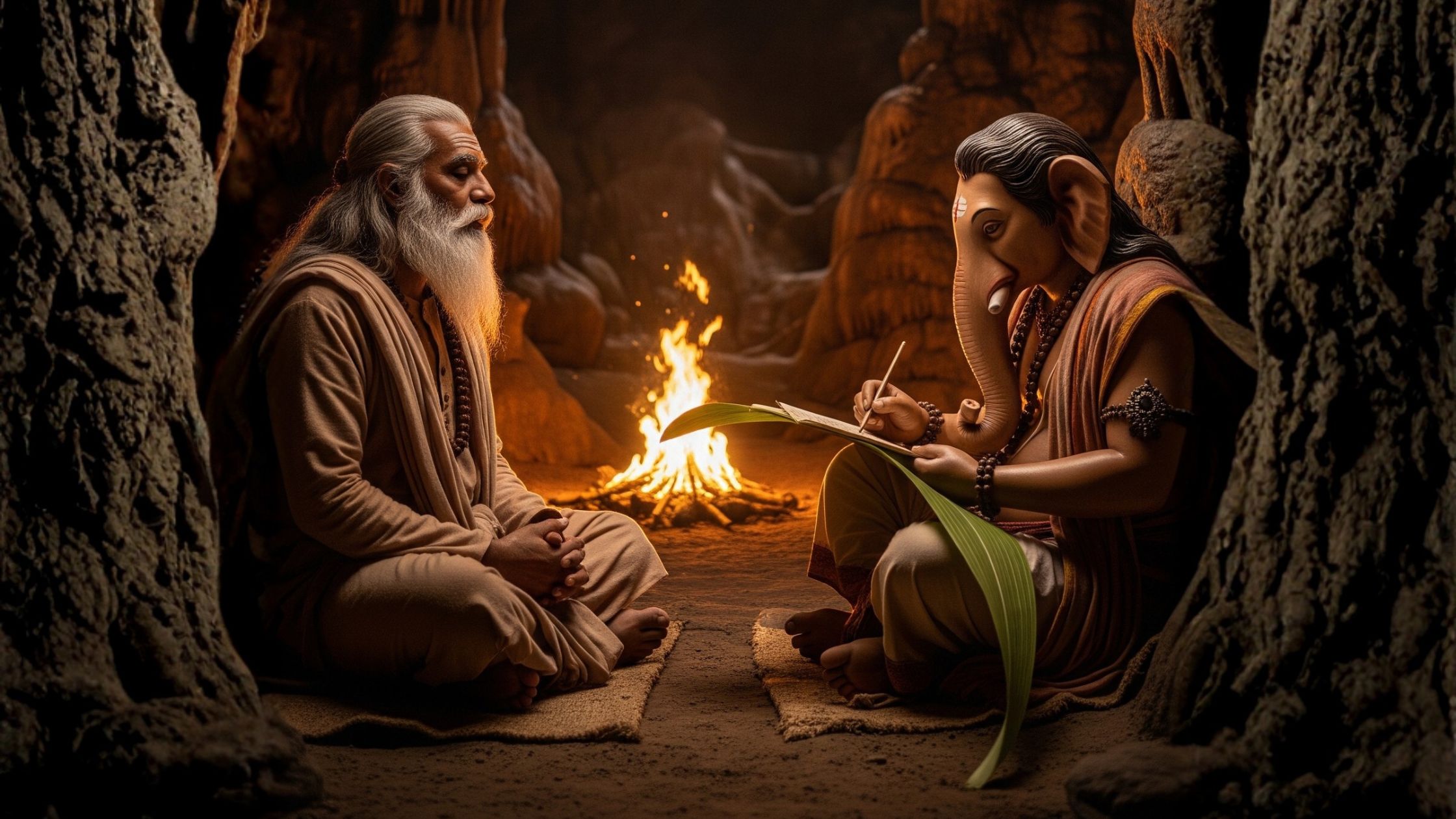
Why the Mahābhārata Is Written in Poetry: The Genius of Vyāsa and Ganesha’s Compact Watch the full video explanation https://youtube.com/shorts/FuGvqRaUQPI Why the Mahābhārata Is Written in Poetry: The Vyāsa-Ganesha Method Explained Introduction: The Question Nobody Asks Why is the Mahābhārata written in poetry? With over 100,000 verses (ś lokas)—making it the longest epic poem ever composed, roughly ten times the length of the Iliad and Odyssey combined—one might expect it to be written as straightforward prose narrative. Why verses? Why metrical composition? Why the dense, compact structure of śloka after śloka? The answer isn’t aesthetic preference. It isn’t literary convention. It’s practical necessity born from an extraordinary situation. The Mahābhārata is written in poetry because it was spoken without stopping and written with understanding—and normal speech could not survive those conditions. Let me explain. Part I: The Situation—Vyāsa’s Problem The Scale Was Immense Sage Ved Vyāsa (वेद व्यास), also called Krishna Dvaipayana (कृष्ण द्वैपायन), had witnessed the entire Mahābhārata unfold before him—through divine vision (divya-dṛṣṭi), spiritual insight, and direct participation in the events. He was not an outside observer. Vyāsa was: Grandfather to the heroes of the epic (father of Dhritarashtra, Pandu, and Vidura) Witness to the Kurukshetra war Compiler of the Vedas Author of the Brahma Sutras Custodian of civilization’s knowledge He had seen it all—past, present, and future—and understood that this story needed to be preserved for posterity. But there was a problem. The Content Was Already Complete in His Mind According to the Ādi Parva (first book) of the Mahābhārata itself, Vyāsa had already composed the entire epic in his mind before dictation began. “Sage Vyāsa, who was deep in contemplation, had visualized the whole Mahābhārata as if it occurred before his eyes. He saw the creation, the Vedas, the four Puruṣārthas (Dharma, Artha, Kāma, Mokṣa), and the code of conduct of mankind.” The text existed. Completely. Fully formed. In Vyāsa’s consciousness. But it needed to be externalized—written down—without: Pausing to revise Stopping to edit Breaking continuity Losing the flow Why No Pausing? The scale was simply too large to approach piecemeal. Think about it: ~100,000 verses (some counts say 100,000 ślokas, others 200,000 individual verse lines) ~1.8 million words total 18 Parvas (books/sections) Thousands of characters Multiple storylines woven together Philosophical discourses embedded throughout Complex timelines spanning generations If Vyāsa paused: He might lose the thread of the narrative Details could become inconsistent The monumental structure could collapse The integrity of the whole could be compromised The Mahābhārata needed to flow as one continuous revelation—like a river that, once it starts flowing, cannot be stopped mid-course without disrupting the entire current. So Vyāsa decided: the epic would be narrated, not written by him. He would speak it into existence, and someone else would transcribe. But who could keep up? Part II: The Scribe—Enter Ganesha Vyāsa Seeks Advice from Brahma According to Mahābhārata, Ādi Parva 1.73-78, Vyāsa meditated on his dilemma and was visited by Lord Brahma, the Creator. Vyāsa explained his situation: “Lord, I have conceived an excellent work of immense scope and profound significance. But I cannot think of anyone capable of taking it down to my dictation at the speed and scale required.” Brahma, recognizing the civilizational importance of preserving this knowledge, responded: “O sage, invoke Gaṇapati (Ganesha) and request him to be your amanuensis (scribe).” Why Ganesha? Ganesha is: Lord of Wisdom (बुद्धि-विनायक – Buddhi-Vināyaka) Remover of Obstacles (विघ्नहर्ता – Vighnahartā) Master of intellect and learning (सिद्धि-दाता – Siddhi-dātā) Capable of writing faster than any human Possessing perfect comprehension If anyone could handle the complexity and speed required, it was Ganesha. The Meeting Following Brahma’s advice, Vyāsa mentally invoked Ganesha. Ganesha appeared before him. Vyāsa’s Request: “O Lord Gaṇapati, I shall dictate the story of the Mahābhārata. I pray you to be graciously pleased to write it down.” Ganesha’s Response: Ganesha smiled—and agreed. But with a condition. Part III: The Conditions—The Genius of the Setup Condition #1: Ganesha’s Demand 📖 Mahābhārata, Ādi Parva 1.78 Sanskrit: गणेश उवाच — लिखिष्यामि मुने व्यास तव प्रोक्तम् अनुत्तमम् । यदि स्कन्दो न भवति कदाचित् कलमो मम ॥ IAST Transliteration: gaṇeśa uvāca — likhiṣyāmi mune vyāsa tava proktam anuttamam yadi skando na bhavati kadācit kalamo mama Translation: “Ganesha said: ‘O sage Vyāsa, I shall write this excellent work you will recite—but on one condition: my pen must not stop even for a moment. If you pause in your dictation, I shall stop writing and depart.’” What this meant: Continuous dictation with zero breaks No pausing to think No stopping for water, food, rest No hesitation Relentless flow This was an enormous challenge. Even the most trained orator cannot speak continuously for hours, let alone days or weeks, without rest. Condition #2: Vyāsa’s Counter-Demand Vyāsa, being equally wise, accepted Ganesha’s condition—but imposed his own: 📖 Mahābhārata, Ādi Parva 1.79 Sanskrit: व्यास उवाच — बुद्ध्वा मा लिखा क्वचित् ॥ IAST Transliteration: vyāsa uvāca — buddhvā mā likhā kvacit Translation: “Vyāsa said: ‘Agreed—but you too must not write a single syllable without properly understanding its meaning first.’” What this meant: Ganesha could not write blindly Every verse had to be comprehended before transcription Understanding was mandatory No mechanical copying Ganesha, smiling at the cleverness, responded: “Om” (Agreement) And thus began the dictation—and the writing—of the Mahābhārata. Part IV: The Problem—And the Solution The Impossible Situation Now stop and think about what these two conditions created: Condition 1 (Ganesha’s): Vyāsa cannot pause. Condition 2 (Vyāsa’s): Ganesha cannot write without understanding. The paradox: If Vyāsa speaks too fast → Ganesha has no time to understand → violates Condition 2 If Vyāsa speaks too slowly → he’s effectively pausing → violates Condition 1 If Ganesha writes immediately → he hasn’t understood → violates Condition 2 If Ganesha pauses to think → Vyāsa has to keep speaking but Ganesha isn’t writing → system breaks down Normal speech could not survive these constraints. If Vyāsa dictated in regular prose: Long sentences would require Ganesha to pause frequently to parse meaning Vyāsa
Lalita Sahasranama Decoded: The Architecture of Conscious Power | A Precision Map of How Reality Operates
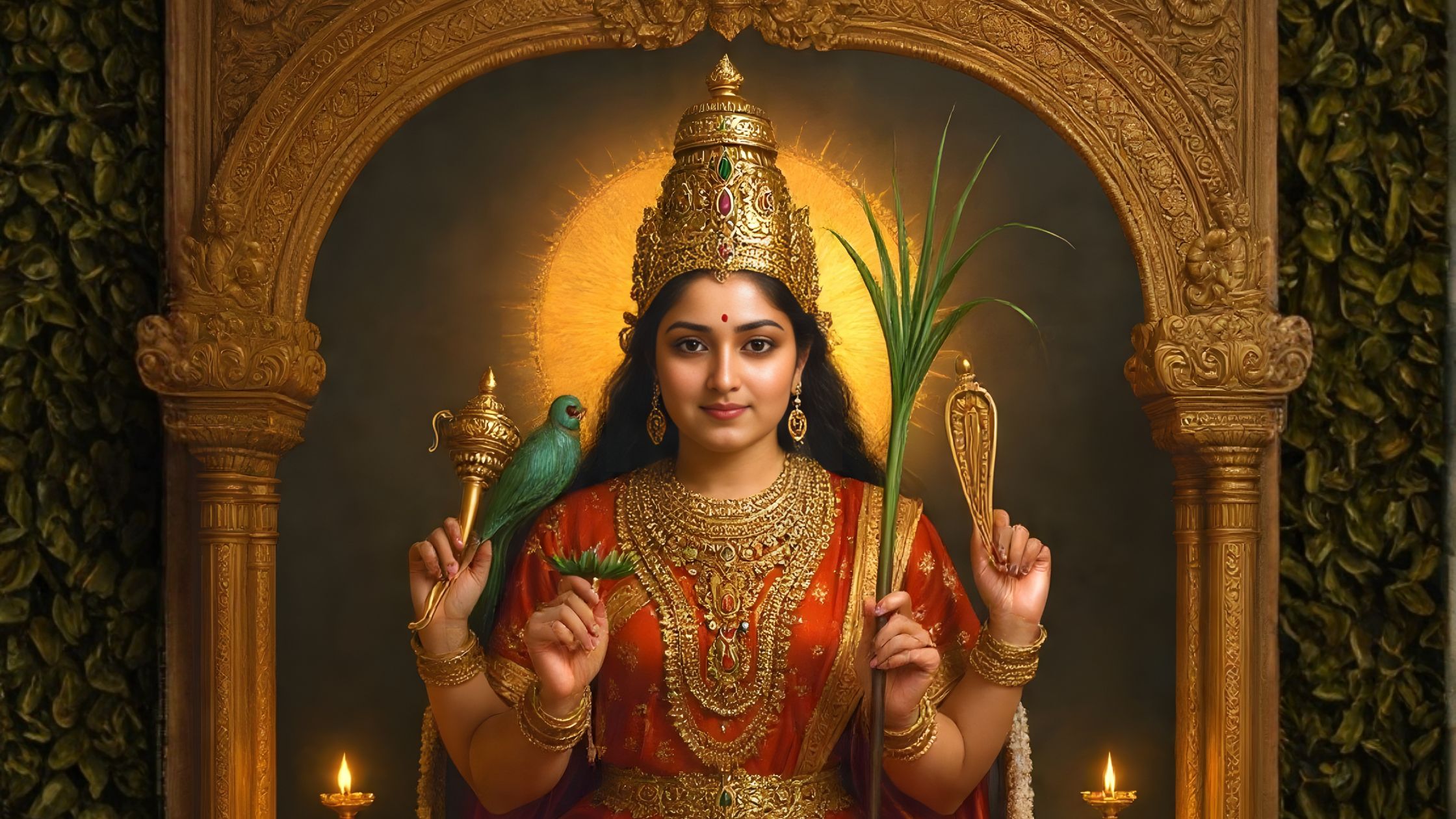
Lalita Sahasranama Decoded: The Architecture of Conscious Power—A Precision Map of How Reality Operates Watch the full video explanation Lalita Sahasranama: The Architecture of Conscious Power Introduction: Beyond Devotion Into Systems When most people encounter the Lalita Sahasranama, they experience it as a hymn—a thousand names chanted in devotion to the Divine Mother, Goddess Lalita. They hear the melodious Sanskrit. They feel the devotional atmosphere. They sense the power in the repetition. And they’re not wrong. The Lalita Sahasranama is all of these things. But that understanding is incomplete. Because this text is not only devotion. It is a precision map of how consciousness becomes power, and how power organizes reality. It is not merely poetic—it is architectural. Once you see the Lalita Sahasranama as a systems document—a technical specification for how divine intelligence structures and governs existence—the entire text shifts from mystical poetry into executable knowledge. The names stop being adjectives. They become functions. Part I: The Origin—Where and How This Text Arises Not a Temple Hymn—A Transmission of Guarded Knowledge The Lalita Sahasranama does not arise in a temple. It doesn’t emerge from popular devotional practice or folk tradition. It appears in the Brahmāṇḍa Purāṇa (ब्रह्माण्ड पुराण)—literally the “Purana of the Cosmic Egg (Brahm-Anda)”—one of the eighteen Mahapuranas that deals with cosmology, creation, and the structure of the universe itself. Specifically, it is embedded within the Lalitopākhyāna (ललितोपाख्यान), the “Narrative of Lalita,” which appears in the latter sections of the Brahmanda Purana. The Lalitopakhyana is structured as a dialogue between two figures: Hayagrīva (हयग्रीव) – An avatāra of Vishnu with the head of a horse, considered the storehouse of knowledge (jñāna-bhāṇḍāra) Sage Agastya (अगस्त्य) – One of the Saptarishis (seven great sages), known as a stabilizer of civilizations This framing is critical. Why Hayagrīva? Why Agastya? Hayagrīva represents: The repository of Vedic knowledge Divine intelligence in its pedagogical function The aspect of Vishnu that preserves and transmits sacred science Agastya represents: Civilization builder (he consecrated all of South India, according to yogic lore) The bridge between esoteric knowledge and practical implementation A seeker not of miracles, but of functional understanding The conversation between Hayagrīva and Agastya is not devotional storytelling. It is technical transmission. Hayagrīva is not narrating mythology—he is transmitting a guarded knowledge stream about the operational architecture of cosmic governance. The Context: Post-Victory Revelation The Lalita Sahasranama is revealed after the destruction of Bhaṇḍāsura (भण्डासुर). Who was Bhandasura? Bhandasura was a demon born from the ashes of Kāmadeva (the god of desire), created through the penance of the demon architect Chitrasena. He represented: Disorder (adharma) Fragmented consciousness Power misaligned with cosmic order Lalita’s Battle: Goddess Lalita emerged from the Cid-Agni-Kuṇḍa (चिदग्निकुण्ड – the fire-pit of consciousness) to destroy Bhandasura and his forces. She rode into battle on the Śrī Cakra (geometrical representation of reality’s structure), accompanied by her generals: Mantriṇī (मन्त्रिणी) – Commander of strategy, riding Geyacakra (chariot of music/mantra) Ḍaṇḍinī (डण्डिनी) – Commander of direct action, riding Giricakra (chariot of mountains) Jwālāmālinī (ज्वालामालिनी) – Protector who created a ring of fire around the army The Nitya Devis (नित्या देवी) – Fifteen eternal goddesses representing lunar tithis After Lalita destroys Bhandasura—after disorder is resolved and power is re-established in alignment with Dharma—only then is the Sahasranama revealed. That timing is deliberate. The Sahasranama is not a prayer for help in battle. It’s the post-victory debrief—the systematic enumeration of how the victory was possible, what functions were deployed, and how reality’s governance actually operates. Part II: The Opening Verse—Definition, Not Praise Śrīmad Bhāgavatam 10.90.27 Let’s examine the opening verse with precision: Sanskrit (Devanāgarī): श्रीमाता श्रीमहाराज्ञी श्रीमत्सिंहासनेश्वरी । चिदग्निकुण्डसम्भूता देवकार्यसमुद्यता ॥ Sanskrit (IAST Transliteration): śrī-mātā śrī-mahārājñī śrīmat-siṃhāsaneśvarī cid-agni-kuṇḍa-sambhūtā devakārya-samudyatā Word-by-Word Breakdown: 1. Śrī-mātā (श्रीमाता) śrī (श्री) = prosperity, abundance, grace, auspiciousness mātā (माता) = mother Translation: “The Mother who is Śrī” Not: Mother as emotional warmth or biological progenitor But: Mother as source—that from which manifestation arises In Śākta philosophy, the “mother” function means: The womb of possibility The field from which differentiation emerges The matrix that holds potential before actualization 2. Śrī-mahārājñī (श्रीमहाराज्ञी) śrī (श्री) = prosperity, abundance mahā (महा) = great, supreme rājñī (राज्ञी) = queen, sovereign ruler Translation: “The Great Queen who is Śrī” Not: Queen as hierarchical position within a monarchy But: Queen as sovereign intelligence—authority that does not borrow power, but generates it intrinsically This is autarchy (self-rule) in the philosophical sense—power that is self-originating, not derivative. 3. Śrīmat-siṃhāsaneśvarī (श्रीमत्सिंहासनेश्वरी) śrīmat (श्रीमत्) = endowed with śrī, glorious siṃhāsana (सिंहासन) = throne, seat of power īśvarī (ईश्वरी) = ruler, controller, sovereign Translation: “The Glorious Ruler of the Throne” The throne here is not physical furniture. It is the command center from which order is issued. In systems terminology: the executive function from which governance protocols originate. 4. Cid-agni-kuṇḍa-sambhūtā (चिदग्निकुण्डसम्भूता) cit (चित्) = consciousness, awareness agni (अग्नि) = fire kuṇḍa (कुण्ड) = pit, receptacle, altar sambhūtā (सम्भूता) = born from, emerged from Translation: “Born from the fire-pit of consciousness” Critical insight: This is not biological birth. This is emergence from awareness itself. Fire symbolizes transformation—the alchemical process by which potential becomes actual. The “fire of consciousness” means: the transformative power inherent in pure awareness. Lalitā emerges not from matter, not from history, not from a preceding cause—but from consciousness deciding to manifest. 5. Devakārya-samudyatā (देवकार्यसमुद्यता) deva (देव) = divine, gods kārya (कार्य) = work, function, duty samudyatā (समुद्यता) = engaged in, ready for, committed to Translation: “Engaged in divine function” Not: Passive divinity sitting in transcendence But: Active governance—the continuous management of reality The Combined Statement When we read these five names together, we get a systems definition: Lalitā is: The source from which manifestation emerges (śrī-mātā) Sovereign intelligence generating its own authority (śrī-mahārājñī) The command center issuing governance protocols (śrīmat-siṃhāsaneśvarī) Consciousness transforming itself into executable form (cid-agni-kuṇḍa-sambhūtā) Actively engaged in maintaining cosmic function (devakārya-samudyatā) This is not praise. This is definition. The text is establishing parameters. It’s saying: Lalitā is not a being inside the universe. She is the organizing consciousness
Did Krishna Really Have More Than 1,60,000 Children? Understanding the Dwarka Years Through Śāstra
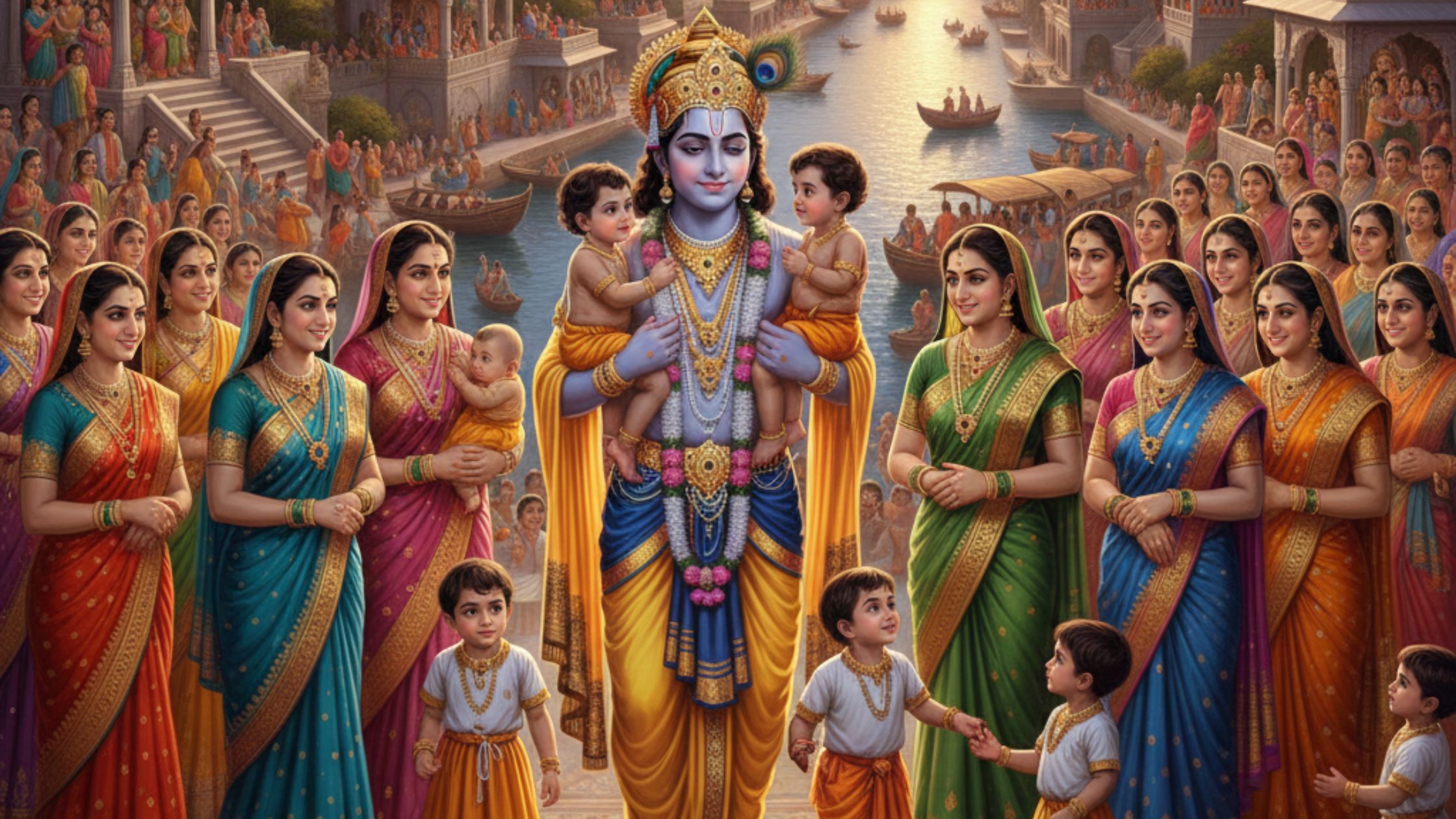
Did Krishna Have 1,60,000 Children? The Complete Story of Krishna’s Dvāraka Family Watch the full video explanation https://youtube.com/shorts/4X9KfitjzVI Did Krishna Have 1,60,000 Children? The Complete Story of Krishna’s Dvāraka Family Introduction: The Story Most People Don’t Know When people think of Krishna, they imagine the playful child stealing butter in Vrindavan, or the divine charioteer delivering the Bhagavad Gita on the battlefield of Kurukshetra. But between these two iconic moments lies an entire life—a life lived as a king, a householder, a husband, and a father. Most devotional literature focuses on Krishna’s childhood leelas (divine plays) or his role in the Mahabharata. But the decades Krishna spent ruling Dvāraka (द्वारका)—the golden city he established on the western coast of India—remain relatively unknown outside scholarly circles. And it’s in these Dvāraka years that we encounter one of the most extraordinary claims in Hindu scripture: Krishna had more than 1,60,000 children. Yes, that number comes directly from our texts—specifically the Śrīmad Bhāgavatam, one of the eighteen Mahāpurāṇas and perhaps the most authoritative source on Krishna’s complete life. This isn’t hyperbole. It’s not symbolic metaphor. It’s stated matter-of-factly in genealogical sections that treat Krishna’s household as a historical reality requiring documentation. But how do we understand this number? What does it mean? And what does it reveal about how the tradition views Krishna—not just as a divine avatar, but as someone who chose to live a complete human life? Let’s examine the texts. Part I: The Foundation—What the Bhāgavata Purāṇa Actually Says The Queens: 16,108 Wives To understand Krishna’s children, we must first understand his marriages. The Śrīmad Bhāgavatam (10th Canto, chapters 59-90) provides detailed accounts of Krishna’s marriages, which fall into two distinct categories: 1. The Aṣṭabharya (अष्टभार्या) – Eight Principal Queens The Bhāgavata Purāṇa lists eight principal queens: Rukmiṇī (रुक्मिणी) – Princess of Vidarbha, considered Lakshmi’s incarnation Satyabhāmā (सत्यभामा) – Daughter of King Satrajit Jāmbavatī (जाम्बवती) – Daughter of Jambavan (the bear-king) Kālindī (कालिन्दी) – Daughter of the Sun God, found near river Yamuna Mitravindā (मित्रविन्दा) – Princess of Avanti, Krishna’s cousin Nāgnajitī (नाग्नजिती) / Satyā – Princess of Kosala Bhadrā (भद्रा) – Princess of Kekeya, Krishna’s cousin Lakṣmaṇā (लक्ष्मणा) – Princess of Madra Each marriage has its own elaborate story—Rukmiṇī’s elopement, Jāmbavatī’s 28-day duel backstory, Satyabhāmā’s Syamantaka jewel narrative, and so on. These eight queens were Krishna’s principal consorts, living in grand palaces, participating in royal functions, and bearing children whose names and deeds are individually recorded. 2. The Junior Queens: 16,100 Women Rescued from Narakāsura But the Bhāgavatam doesn’t stop there. Bhāgavata Purāṇa 10.59.33 describes Krishna’s battle with Narakāsura (नरकासुर), a powerful demon-king who had: Terrorized the heavens and earth Stolen Aditi’s earrings (mother of the gods) Kidnapped and imprisoned 16,100 princesses from various kingdoms When Krishna defeated Narakāsura and liberated these women, they all requested to marry him. In ancient Indian society, women who had been kidnapped—even if they remained virtuous—faced social stigma and would struggle to find suitable husbands. Krishna’s marriage to all 16,100 women was an act of: Dharmic protection: Restoring their honor and social standing Compassion: Ensuring their security and dignity Divine grace: All 16,100 are identified in tradition as manifestations of Goddess Lakshmi, representing devoted souls seeking divine union Total Wives: 8 principal queens + 16,100 junior queens = 16,108 wives The Children: “Thousands of Sons” Now we arrive at the crucial verse about children: 📖 Śrīmad Bhāgavatam 10.90.27 Sanskrit (Devanāgarī): तासां पुत्रसहस्राणि बभूवुर् नृपनन्दन । Sanskrit (IAST Transliteration): tāsāṁ putra-sahasrāṇi babhūvur nṛpa-nandana Word-by-Word Breakdown: tāsām (तासाम्) = of them (genitive plural feminine – referring to the queens) putra (पुत्र) = sons, children sahasrāṇi (सहस्राणि) = thousands (nominative plural neuter) babhūvuḥ (बभूवुः) = were born, came into being (perfect tense, 3rd person plural) nṛpa-nandana (नृपनन्दन) = O joy of the king (vocative, addressing King Parīkṣit) Translation: “From these queens, O descendant of kings, there were born thousands of sons.” What the Text Actually Says—and Doesn’t Say Notice what the verse does: ✓ Confirms: Krishna had children from his queens ✓ Quantifies: Uses the term “thousands” (sahasrāṇi) ✓ Establishes scale: This wasn’t a small family Notice what it doesn’t do: ✗ List individual names: Beyond the children of the eight principal queens, most names aren’t recorded ✗ Describe individual lives: No detailed biographies for most children ✗ Provide exact count: The text says “thousands,” tradition later calculates the specific number The Bhāgavatam is doing something interesting here: it establishes genealogical scope without getting lost in exhaustive detail. Why? Because the point isn’t to catalog every individual—it’s to demonstrate that Krishna lived a complete householder life at unprecedented scale, fulfilling his role as king and family patriarch during his time in Dvāraka. Part II: The Traditional Calculation—How We Arrive at 1,61,080 Later genealogical traditions and commentaries on the Bhāgavatam provide the specific calculation: The Formula Each of the 16,108 queens had 10 sons. 16,108 queens × 10 sons each = 1,61,080 children Sources for This Calculation While the base text (Bhāgavatam 10.90.27) doesn’t give this exact formula, later texts and traditions elaborate: 1. Commentarial Traditions Vaishnava commentaries drawing from Visvanatha Chakravarti Thakura’s interpretations provide additional genealogical details about Krishna’s extensive family. 2. Harivaṁśa Purāṇa The Harivaṁśa (हरिवंश), literally “The Genealogy of Hari,” serves as a supplement to the Mahabharata. It consists of sections describing Krishna’s ancestors and progeny, extending the genealogical record beyond what the Bhāgavatam provides. The Harivaṁśa tracks: Krishna’s immediate children (especially from the eight principal queens) Grandchildren and great-grandchildren The continuation of the Yadu dynasty even after Krishna’s departure In its final sections, it enumerates the genealogy of the Hari dynasty up through many subsequent generations 3. Named Children of the Aṣṭabharya From the eight principal queens, specific children are named and their stories told: From Rukmiṇī: Pradyumna (प्रद्युम्न) – eldest son, considered the reincarnation of Kāmadeva (god of love), described in the Mahabharata as a portion of Sanat Kumara Multiple other sons (10 total) From Jāmbavatī: Sāmba (साम्ब) – famous for his beauty and his role in events leading
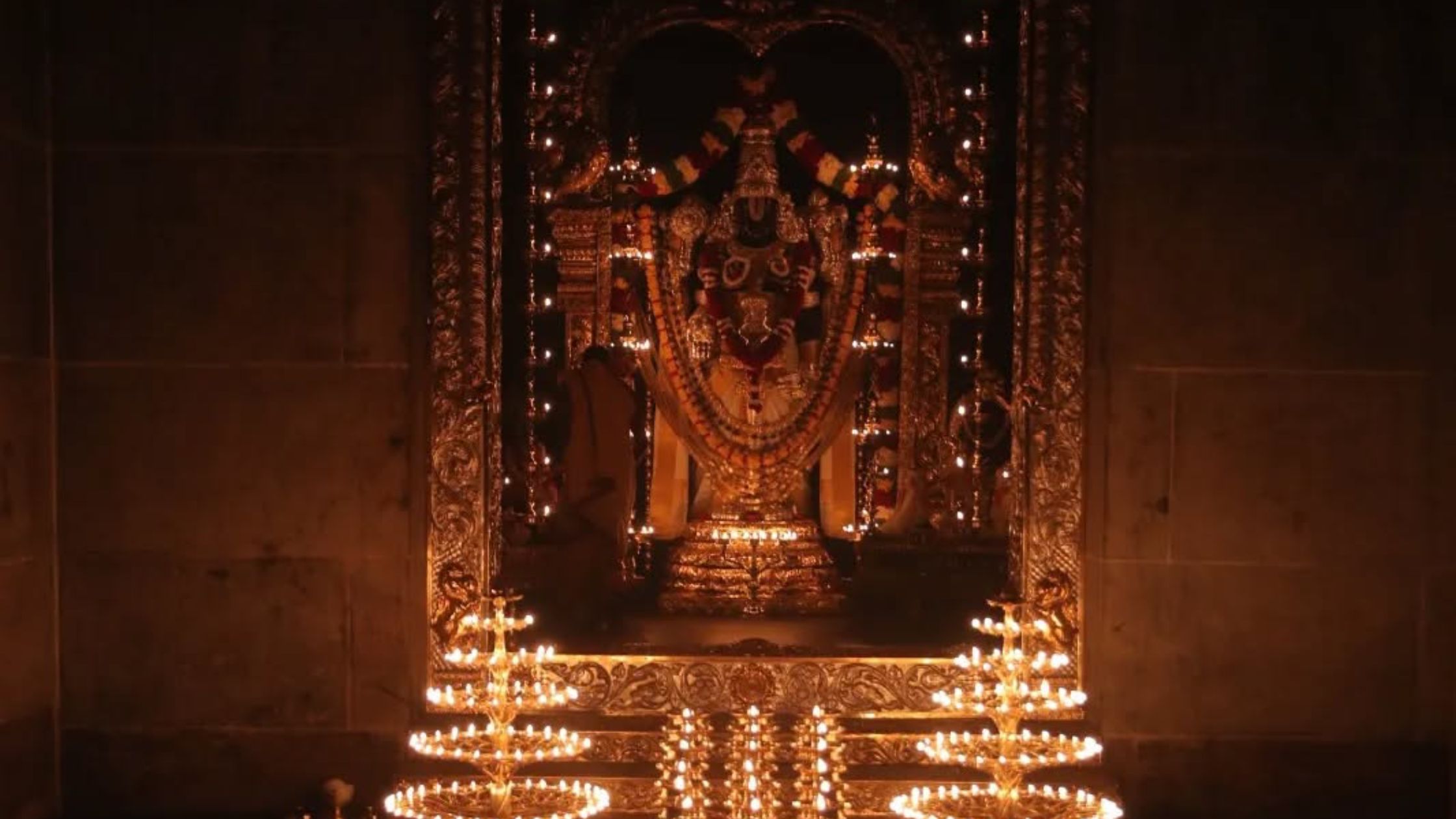
Why a Temple Form Is Called a Deity, Not an Idol: The Science of Consecration in Hinduism
Why a Temple Form Is Called a Deity, Not an Idol: Understanding Sacred Consecration in Sanātana Dharma Watch the full video explanation https://youtube.com/shorts/VTabKXsHxGY Deity vs Idol: Why Hindu Temple Forms Are NOT Idols Explained Introduction: The Power of a Single Word Language shapes reality. The words we use to describe sacred practices reveal—or conceal—depths of civilizational understanding that have been preserved for millennia. In modern discourse, the terms “idol” and “deity” are often used interchangeably when discussing Hindu temple worship. But this linguistic conflation obscures a profound philosophical and theological distinction that lies at the heart of Sanātana Dharma’s approach to the Divine. When we call a consecrated temple form an “idol,” we reduce it to crafted material—stone, bronze, or wood shaped by human hands. When we call it a “deity,” we acknowledge something far more profound: a living seat of divine consciousness, ritually invoked and permanently established through ancient Vedic protocols. This distinction is not merely semantic. It reflects an entire cosmology, a sophisticated understanding of consciousness and energy, and a living tradition that has sustained billions of devotees across millennia. The Scriptural Foundation: What the Bhāgavata Purāṇa Reveals To understand this distinction at its source, we must turn to one of Hinduism’s most authoritative texts—the Śrīmad Bhāgavatam (Bhāgavata Purāṇa), composed between the 4th-7th centuries CE and attributed to Sage Vyāsa himself. The Foundational Śloka Bhāgavata Purāṇa 11.2.47 provides the scriptural cornerstone for understanding deity worship: Sanskrit (Devanāgarī): अर्चायामेव हरये पूजां यः श्रद्धयेहते । न तद्भक्तेषु चान्येषु स भक्तः प्राकृतः स्मृतः ॥ Sanskrit (Transliteration): arcāyām eva haraye pūjāṁ yaḥ śraddhayehate na tad-bhakteṣu cānyeṣu sa bhaktaḥ prākṛtaḥ smṛtaḥ Translation: A devotee who faithfully engages in the worship of the Deity in the temple but does not behave properly toward other devotees or people in general is called a prākṛta-bhakta, a materialistic devotee, and is considered to be in the lowest position. Breaking Down the Verse: arcāyām (अर्चायाम्) = in the arcā form / deity form eva (एव) = certainly, indeed haraye (हरये) = to Lord Hari (Viṣṇu) pūjām (पूजां) = worship yaḥ (यः) = who śraddhayā (श्रद्धया) = with faith īhate (ईहते) = engages na (न) = not tad-bhakteṣu (तद्भक्तेषु) = toward the devotees cānyeṣu (चान्येषु) = and toward others sa (स) = he bhaktaḥ (भक्तः) = devotee prākṛtaḥ (प्राकृतः) = materialistic smṛtaḥ (स्मृतः) = is considered The Critical Insight The verse uses the term arcā (अर्चा)—not “idol” (pratimā) or “image” (mūrti in its mundane sense). The arcā form is specifically the consecrated deity form in which the Supreme Lord chooses to make Himself accessible. The arcā form is worshipped as Hari Himself. This is not symbolic worship—it is understood as direct worship of the Divine Presence that has been ritually invoked and established in the form. The verse doesn’t warn against worshipping idols—it addresses the incomplete understanding of a devotee who recognizes the Lord in the arcā form but fails to see the same Divine Presence in devotees and all living beings. Prāṇa Pratiṣṭhā: The Science of Consecration The transformation from material form to divine seat occurs through Prāṇa Pratiṣṭhā (प्राण प्रतिष्ठा)—the ancient Vedic ceremony of consecration. Etymology and Meaning Prāṇa (प्राण) derives from the root pra (forth) + an (to breathe), meaning: Life force Vital energy The breath that animates all living beings Consciousness itself Pratiṣṭhā (प्रतिष्ठा) derives from prati (toward) + sthā (to stand/establish), meaning: To be established To be installed permanently To be consecrated in place Prana pratishtha is the rite or ceremony by which a murti (devotional image of a deity) is consecrated in a Hindu temple, following detailed steps outlined in the Vedic scriptures, where verses (mantras) are recited to invite the deity to reside in the murti. The Ritual Process The consecration ceremony is not a simple blessing—it’s an elaborate, multi-day (sometimes multi-week) ritual protocol governed by Āgama Śāstras (temple manuals), following these key stages: 1. Karmakutir (कर्मकुटीर) – Purification from Creation: The idol is touched with Darba grass to remove any negative influences, the pujari closes the eyes of the Murthi by applying a layer of honey and ghee along with specific mantras. 2. Adhivāsa Rituals – Preparatory Immersions: Jalādhivāsa (जलाधिवास) = Immersion in sacred waters for purification Dhanyādhivāsa (धन्याधिवास) = Burial in grains (rice/wheat) for earth’s blessings Gṛtādhivāsa (घृताधिवास) = Immersion in clarified butter (ghee) 3. Snapana/Abhiṣeka (स्नापन/अभिषेक) – Sacred Bathing: The form is bathed with sacred substances including: Pañcāmṛta (five nectars: milk, yogurt, ghee, honey, sugar) Holy river waters Herbal infusions Fragrant oils 4. Mantra Invocation – The Moment of Transformation: At the exact astrologically calculated auspicious time (muhūrta), priests chant specific Vedic mantras to: Invoke the deity’s presence Request the Divine to take residence Transfer consciousness through ritual technology 5. Netra Ānvāraṇa (नेत्र आन्वारण) – Opening of the Eyes: The Purohit performs Netra Anvaran or the opening of the eyes during Pran Pratishta, after which the idol becomes an auspicious deity. This is the climactic moment—when the eyes of the form are ritually opened for the first time, the Divine is understood to begin actively “seeing” through the form. 6. Prāṇa Transfer – Infusion of Life Force: Through specialized techniques preserved in lineages, priests facilitate the transfer of: Prāṇa (life-breath) Jīva (individual consciousness) Daśa Indriyāṇi (ten sense faculties) Through Nayas, the divine shakti from the Purohit enters Murthi including Prana or life-breath, Jiva or soul, and the ten Indriyas. The Philosophical Foundation Consecration is a live process like transforming mud into food through agriculture, or food into flesh and bone through digestion—if you can make flesh or even a stone or an empty space into a divine possibility, that is called consecration. This isn’t superstition—it’s sophisticated philosophical technology based on the understanding that: Everything is Energy: Modern science is telling you that everything is the same energy manifesting itself in a million different ways—what you call as divine, what you call a stone, what you call a man or a woman, are all the same energy functioning in different ways. Technology Makes the Difference: Just as
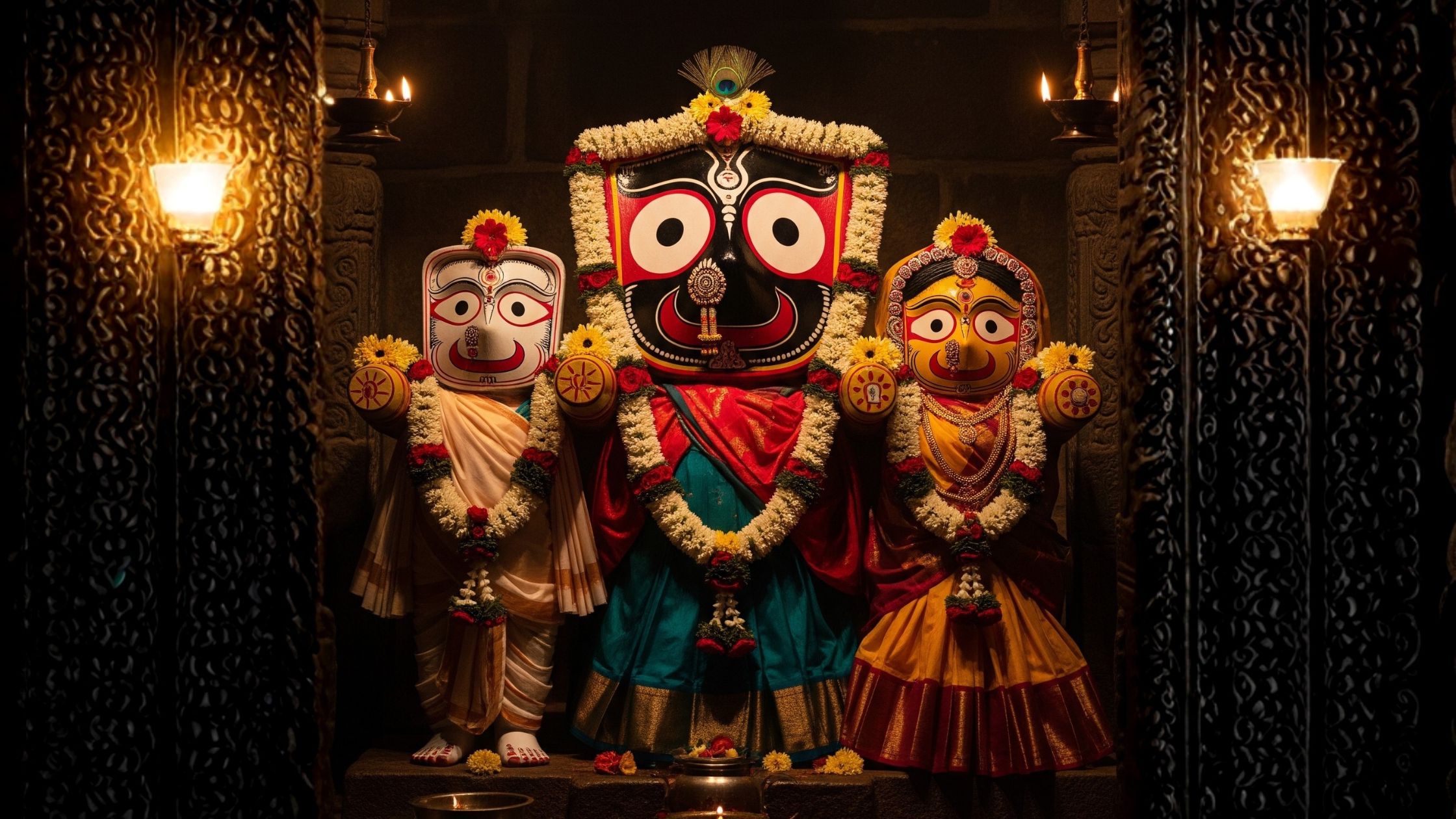
The Living Deity: Why Jagannath Deity’s Body At Puri Jagannath Is Recreated Through Time
The Living Deity: Why Jagannath’s Body Is Recreated Through Time Watch the full video explanation Why Jagannath’s Body Is Recreated: The Nabakalebara Ritual Explained Most temple traditions seek permanence through material—stone that endures centuries, bronze that withstands millennia. But in Puri, Odisha, the Jagannath Temple follows a radically different logic. Here, the deity is not meant to resist time. The deity participates in time. The wooden form of Jagannath is recreated according to a precise ritual cycle. This process—called Nabakalebara (New Embodiment)—is not frequent. It occurs only when an additional lunar month appears during Ashadha (June-July), creating a rare calendrical alignment that happens every 8, 12, or 19 years. Understanding this ritual changes how we understand body, continuity, and presence in Sanātana tradition. This is not about preservation. This is about transformation as design. Part I: The Choice of Wood—Accepting Impermanence Why Daru Brahma? The Jagannath deity is made of Daru Brahma—sacred neem wood. This choice is intentional and philosophical. Wood responds to climate. Wood carries age within it. Wood reflects time passing through visible transformation—grain deepening, surface wearing, material gradually returning to earth. Stone resists. Metal endures. Wood participates. By choosing wood, the tradition accepts—no, integrates—impermanence into the system. The deity’s body is not meant to transcend decay. It is meant to move through it with structure and dignity. This is not weakness. This is sophistication. The Conceptual Foundation According to temple texts dealing with the principles of image construction, idols made of jewels have a lifespan of 10,000 years, metal images 1,000 years, wooden images between 12-18 years, and clay images only one year. The Jagannath tradition knows this. And instead of choosing permanence through material, it chooses continuity through ritual. The form may change. The presence remains. Part II: The Trigger—When Time Creates Space Adhikamasa: The Astronomical Alignment Nabakalebara is not arbitrary. It follows cosmic rhythm. The ritual is performed when an intercalary month (Adhikamasa) occurs in Ashadha, meaning two lunar months of Ashadha fall in one year. This creates an extended period—three fortnights instead of two. The extra time is not incidental. It’s essential for the 12-step process: Search for sacred trees (Banajaga Yatra) Identification and consecration Transport to Puri Carving of new forms Transfer of continuity (Brahma Parivartana) Burial of previous bodies In the 20th century alone, Nabakalebara was celebrated in 1912, 1931, 1950, 1969, 1977, and 1996. The most recent occurred in 2015, and the next is expected in the 2030s. This is not superstition. This is a calendar system that creates liturgical space within astronomical cycles. Part III: Banajaga Yatra—The Search for Daru Criteria Beyond the Visible When Adhikamasa approaches, a team of Daitapati servitors—descendants of the tribal chief Vishwavasu who originally worshipped Nila Madhava—undertake the Banajaga Yatra, a ritual journey to locate suitable neem trees. The criteria are exacting: For Lord Sudarshana’s Daru: The tree must have three branches For Lord Jagannath’s Daru: The tree should be dark or dark-red in color, with a straight trunk and four clear branches. It should be away from human settlement. An anthill with snakes should be at the foot For all Darus: No bird’s nest should be present Natural markings (conch, disc symbols) should be visible The tree must meet specific age and height requirements This search is led by Daitapatis who receive signs through dreams and meditative insights. This is not random selection. This is ritual botany—a system where natural signs are read as indices of sacred suitability. The Moment of Designation Once identified, the trees are not simply cut. They are transformed in status. A yaga (fire sacrifice) is performed for three days. The trees are then touched with axes made of gold, then silver, and finally cut with an iron axe. This sequence—gold, silver, iron—marks a transition from the purely sacred to the materially functional. The tree enters a new identity. It becomes the future body of the deity. From this point, the tree carries responsibility. Part IV: Return and Preparation The Public Journey The logs are placed on newly constructed wooden carts and brought back to Puri in a ceremonial procession. This journey is slow. It is watched. It is public. The arrival is not private. The wood is received with the same attention given to arriving royalty. The logs are kept near Koili Baikunt ha (also called Koili Vrindavan), a sacred space that functions as a ritual threshold. The temple doors close. Movement is restricted. What follows happens in concealment. The Carving: Duty, Not Art Hereditary artisans called Biswakarma Maharanas—belonging to families entrusted with this role for generations—begin carving the new forms. The work is done over 21 days, by approximately 50 carpenters, all working in complete secrecy. This activity is not treated as artistic creation. It is treated as ritual manufacture. Measurements are fixed. Proportions are preserved. Despite centuries passing and multiple cycles of Nabakalebara, the deities are always recreated exactly as they were—with rounded arms, no visible legs, and the same wide, cosmic eyes. There is no innovation. There is no stylistic evolution. Continuity governs every decision. Why? Because it is believed that Jagannath himself commanded King Indradyumna: “In this form, beyond human standards of perfection, I shall accept the devotion of my devotees until the end of Kali Yuga”. The form is fixed. What changes is only the material vessel. Part V: Brahma Parivartana—The Transfer of Continuity The Midnight Rite When the new bodies are complete, a night-time rite called Brahma Parivartana takes place on Chaturdashi (the 14th day of the dark fortnight) at midnight. This is the ritual’s conceptual core. The old and new deities are placed facing each other. The Brahma Padartha—the divine essence embedded in the old forms—is transferred to the new ones in total secrecy. The Protocol of Secrecy Even the priests who perform this task are blindfolded, their hands and feet wrapped in thick silk cloth. The entire town of Puri experiences a blackout. No one except authorized Daitapati servitors can witness the process. It is believed that anyone watching
When Knowledge Claims Totality: Questioning the Completeness of Vedic Transmission
When Knowledge Claims Totality: Questioning the Completeness of Vedic Transmission Watch the full video explanation https://youtube.com/shorts/QO-0Yj2_79A What Happened to the Original Vedic Branches? I’m going to say something uncomfortable. I question whether the Vedas we have today represent the complete Vedic transmission. Before you close this tab, understand: this question doesn’t come from skepticism. It comes from śāstra itself—from the very texts we revere. My name is Jayanth Dev, and if this question makes you uncomfortable, stay with me. Because the discomfort itself is worth examining. What Does “Veda” Actually Mean? The word Veda (वेद) derives from the Sanskrit root √vid (विद्), meaning “to know.” But this isn’t casual knowledge. When the ancient rishis used the term “Veda,” they were pointing to something absolute: comprehensive knowledge addressing the totality of existence. Veda, by definition, must be complete. It must speak to origins and dissolution, mind and matter, cosmic order and ultimate reality. When a text carries the title “Veda,” it inherits this expectation of comprehensiveness. This is where my question begins. Because if Veda signifies complete knowledge, and if what we possess today is demonstrably fragmentary, then we must ask: What are we actually holding in our hands? The Textual Anchor—Śvetāśvatara Upaniṣad 6.18 Let me ground this inquiry in śāstra—in a verse from one of the principal Upanishads. Sanskrit (IAST): यो ब्रह्माणं विदधाति पूर्वं यो वै वेदांश्च प्रहिणोति तस्मै। तं ह देवमात्मबुद्धिप्रकाशं मुमुक्षुर्वै शरणमहं प्रपद्ये॥ Yo brahmāṇaṁ vidadhāti pūrvaṁ yo vai vedāṁś ca prahiṇoti tasmai | Taṁ ha devam ātmabuddhiprakāśaṁ mumukṣur vai śaraṇam ahaṁ prapadye || Translation: “To that effulgent One who in the beginning created Brahmā and who indeed delivered the Vedas to him—to that God who illuminates Himself by His own intelligence, I, desiring liberation, take refuge.” The Śvetāśvatara Upaniṣad locates the origin of the Vedas in a transcendental dimension—before creation itself, before even Brahmā, the cosmic creator. What This Verse Establishes 1. The Vedas precede creation. They are not products of human thought. They exist in a pre-cosmic state—apauruṣeya (not of human origin), eternal, self-existent. 2. The Vedas are transmitted, not composed. Brahmā receives them. The rishis perceive them. Humans preserve them. But no one creates them. 3. The source transcends any manifestation. That “effulgent One” who is the source of the Vedas is beyond all forms, beyond Brahmā himself. The tension: If the Vedas are pre-cosmic, eternal, and comprehensive, then they cannot, by definition, be limited to what has been transmitted through specific lineages or preserved in particular manuscripts. The verse itself invites us to distinguish between: The transcendental Veda (eternal, complete, pre-cosmic knowledge) The transmitted Vedas (historical texts, subject to preservation, loss, variation) The Historical Reality We Cannot Ignore Let’s move from philosophy to facts. According to Patañjali’s Mahābhāṣya and the Caraṇa-vyūha, the original Vedic corpus was divided into approximately 1,131 śākhās or branches across the four Vedas. Here’s what existed versus what survives: Rigveda: Original śākhās: 21 Surviving śākhās: 2 (Śākala and Bāṣkala) Loss: Over 90% Yajurveda: Original śākhās: 101 Surviving śākhās: 5-6 Loss: Over 94% Sāmaveda: Original śākhās: 1,000 Surviving śākhās: 3 (Kauthuma, Rāṇāyanīya, Jaiminīya) Loss: Over 99% Atharvaveda: Original śākhās: 9 Surviving śākhās: 1-2 (primarily Śaunakīya) Loss: Over 88% Total loss: Over 99% of original Vedic branches have disappeared. Why the Loss of a Śākhā Matters When we speak of a “lost śākhā,” we’re not talking about a slightly different version of the same hymn. A complete śākhā included: The Saṁhitā (Hymn collection) The Brāhmaṇa (Ritual explanations) The Āraṇyaka (Forest meditations) The Upaniṣad (Philosophical teachings) Kalpa Sūtras (Ritual manuals) Prātiśākhya texts (Linguistic analyses) Living interpretive traditions When a śākhā went extinct, all of this disappeared—entire knowledge systems, ritual applications, interpretive frameworks, philosophical elaborations. Consider the Śaṅkhāyana śākhā of the Rigveda. Until recently, only two elderly practitioners in Banswada, Rajasthan, were the last surviving transmitters. An entire recension hanging by the thread of two septuagenarians. When they pass, if the transmission hasn’t been successfully continued, that śākhā becomes extinct—not theoretically, but actually. The Philosophical Question This Raises If we accept that: The Vedas signify complete, comprehensive knowledge This knowledge is described in śāstra as pre-cosmic and transcendental Yet what we possess is demonstrably a fraction of what once existed Then we must ask: What does it mean to claim “Vedic authority” when we’re working with fragments? The Honest Response “The transcendental Veda is complete and eternal. The transmitted texts are historical manifestations—precious, invaluable, but incomplete.” The Śvetāśvatara Upaniṣad’s verse gives us this framework: The Transcendental Veda: Pre-cosmic, eternal, self-existent Complete by definition Not bound by time, language, or lineage The Transmitted Texts: Historical artifacts Subject to preservation, loss, corruption Fragmentary due to time’s attrition The gap between these two is not a crisis—it’s a reality. What This Means for Practice and Study Acknowledging this gap doesn’t weaken the tradition—it strengthens it through intellectual honesty. 1. Humility in claims: Be cautious about absolutist statements like “the Vedas say this definitively” when we’re working with a surviving fraction. Different śākhās may have offered different perspectives. 2. Urgency in preservation: Recognizing the fragility of what remains should motivate extraordinary care in preservation, documentation, and transmission. 3. Openness to living realization: If the Vedas are ultimately transcendental, then authentic spiritual realization remains possible even when texts are incomplete. The rishis accessed this knowledge through inner perception; the texts are records, not the source itself. 4. Rigorous scholarship: Study what we have with precision, compare śākhās where possible, acknowledge textual variations, and resist conflating “what one recension says” with “what the Veda says universally.” Why This Matters Beyond Academia 1. Honest Faith is Stronger Than Blind Faith When you know the historical realities and still choose to engage deeply with the tradition, your faith becomes more robust, not weaker. 2. It Prevents Fundamentalism Fundamentalism thrives on the illusion of absolute textual completeness. Recognizing that we’re working with fragments makes us less dogmatic and more discerning. 3. It Honors the Tradition’s Own Values The Vedic tradition values viveka (discriminative wisdom), vicāra (inquiry), and satya (truth). Pretending we have
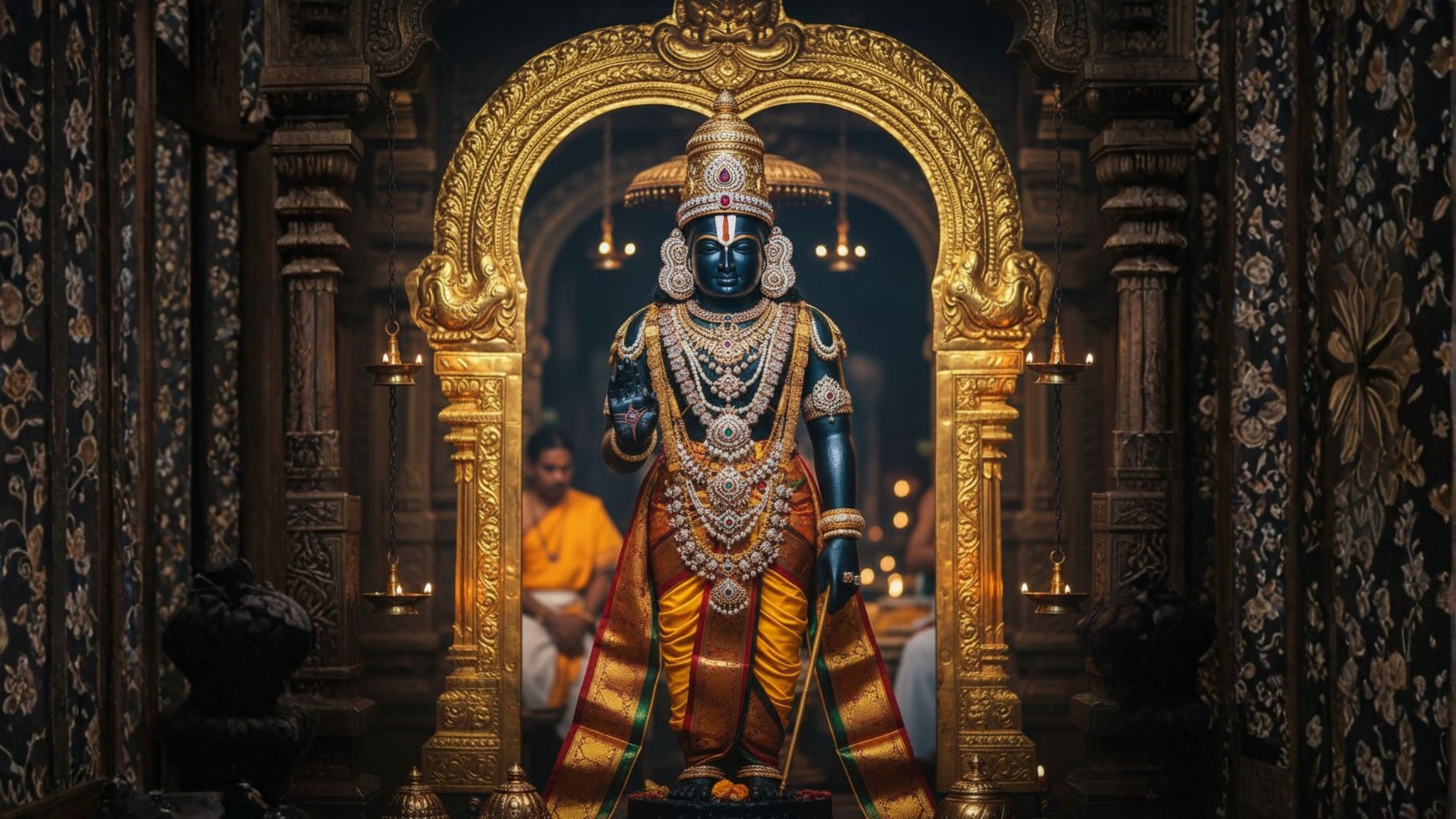
How Lord Venkateswara Came to Tirumala: The Sacred Story of Divine Love, Separation, and Reunion
How Lord Venkateswara Came to Tirumala: The Complete Sacred Story Watch the full video explanation https://youtube.com/shorts/Fq-hLcuK4ok How Lord Venkateswara Came to Tirumala: The Complete Sacred Story Every year, over 50-80 million pilgrims climb the seven hills of Tirumala to stand before Lord Venkateswara—making the Tirumala Venkateswara Temple the most visited religious site on Earth, surpassing even Vatican City and Mecca. But why? Why does Vishnu—who resides eternally in Vaikuntha, the supreme spiritual abode—choose to remain on earth in stone form at Tirumala? Why did He take a massive loan from Kubera that devotees are still repaying? Why does He stand with both Lakshmi and Padmavati on His chest? The answers lie in one of the most profound love stories in Hindu tradition—a narrative that begins with an insult in heaven and culminates in an eternal commitment to humanity during Kali Yuga. This isn’t just temple legend. It’s a story encoded in multiple Puranas (Padma, Varaha, Skanda, Brahma, Bhavishyottara) and celebrated through centuries of devotion. Today, we’re unraveling every layer. Part I: The Question That Changed Everything The Great Debate at Mount Mandara The story begins not on earth, but in the celestial realm during a grand Yajna (sacrificial ritual) on Mount Mandara, where the greatest sages of creation had assembled. The Participants: Sage Bhrigu (one of the Saptarishis, the seven great sages) Numerous other rishis and celestial beings Purpose: To determine the ultimate beneficiary of sacred offerings The Question: After the yajna concluded, a theological debate arose: “Among the Trimurti—Brahma (Creator), Vishnu (Preserver), and Shiva (Destroyer)—who embodies the highest principle? Who is most worthy of receiving the fruits of yajna?” Centuries of scholarly dispute had failed to resolve this. The sages finally turned to Sage Bhrigu, renowned for his wisdom and unique qualification—he possessed an extra eye in the sole of his foot, symbolizing his ability to see truth even in the lowest places. The Mission: “O Sage Bhrigu, you must visit each of the Trimurti and test them. Determine who demonstrates the greatest qualities of patience, humility, and divine perfection. That deity shall be declared supreme.” The First Test: Lord Brahma Bhrigu first approached Lord Brahma in his celestial abode, Brahmaloka. What he found: Brahma was simultaneously: Chanting the Vedas Creating new worlds Meditating on cosmic principles Engaged in divine contemplation with Saraswati So absorbed in the act of creation was Brahma that he did not immediately acknowledge Bhrigu’s arrival. Bhrigu’s Response: Feeling slighted, Bhrigu cursed Brahma: “You are so consumed with your own creative power that you ignore a sage seeking truth. For this ego, you shall have no temples dedicated exclusively to your worship on earth.” (This curse explains why Brahma temples are extremely rare—the most famous being in Pushkar, Rajasthan.) The Second Test: Lord Shiva Next, Bhrigu traveled to Mount Kailash, Shiva’s abode. What he found: Lord Shiva was engaged in intimate privacy with Goddess Parvati, absorbed in divine union (maithuna). Again, Bhrigu’s arrival went unnoticed. Bhrigu’s Response: Enraged by what he perceived as disrespect, Bhrigu cursed Shiva: “You are so lost in worldly enjoyment that you ignore a seeker of truth. For this, you shall be worshipped primarily in linga form (symbolic form) rather than anthropomorphic form on earth.” (This explains the prevalence of Shiva Lingas in temples rather than full idol depictions.) The Third Test: Lord Vishnu—The Kick That Changed Cosmic History Finally, Bhrigu reached Vaikuntha, the eternal abode of Lord Vishnu. What he found: Vishnu was reclining on Ananta Shesha (the cosmic serpent), in Yoga Nidra (divine yogic sleep), with Goddess Lakshmi massaging his feet. Once again, Bhrigu’s arrival was not immediately acknowledged. But this time, Bhrigu’s response was different. The Fateful Kick: Overcome with rage at being ignored by all three gods, Bhrigu kicked Lord Vishnu on the chest—specifically on the Srivatsa mark, the divine spot where Goddess Lakshmi eternally resides. Vishnu’s Astonishing Response: Instead of anger, Vishnu: Rose immediately and bowed to Bhrigu Apologized profusely: “O great sage, forgive me for not noticing your arrival. My sleep must have caused you pain.” Began massaging Bhrigu’s feet, saying: “Your blessed foot that touched my chest must surely be hurting. Please allow me to relieve your pain.” While massaging, Vishnu pressed the extra eye on Bhrigu’s sole, destroying it The Symbolism: That extra eye represented Bhrigu’s ego—his pride in his own spiritual accomplishment. By destroying it, Vishnu was: Teaching the ultimate lesson in humility Showing that true divinity responds to insult with compassion Demonstrating perfect equanimity Bhrigu’s Realization: Overcome with emotion, Bhrigu fell at Vishnu’s feet: “You are indeed the Supreme! Only you possess infinite patience, boundless compassion, and complete freedom from ego. The yajna offerings belong to you.” But there was an unintended consequence. Part II: The Separation—When Lakshmi Left Heaven Lakshmi’s Justified Anger While Vishnu’s response was divinely perfect, Goddess Lakshmi was devastated. Her Perspective: The chest where Bhrigu’s foot struck was her eternal abode—the Srivatsa mark symbolizing her presence. The kick was not just an insult to Vishnu; it was a violation of her sacred space. Yet Vishnu had: Not defended her honor Apologized to the offender Even massaged the feet that kicked her dwelling Lakshmi’s Heartbreak: “If my Lord values the ego of a sage more than my dignity, then I have no place in Vaikuntha.” Different Puranic Accounts: Version 1 (Padma Purana): Lakshmi silently left Vaikuntha and descended to Kolhapur (ancient Karavira) in Maharashtra, where she began deep meditation. Version 2 (Skanda Purana): Lakshmi cursed Sage Bhrigu before leaving, declaring that his descendants would face hardship. She then took rebirth on earth. The Cosmic Consequence: When Lakshmi left, Vaikuntha lost its completeness. Lakshmi represents: Sri (prosperity, grace, beauty) Completeness (pūrṇatva) Divine feminine energy (śakti) Without her, even the highest heaven felt empty. Vishnu’s Decision Vishnu, realizing the depth of separation, made a choice: “I shall not remain in Vaikuntha without my beloved consort. I too shall descend to earth.” But this wasn’t a temporary visit—it was a permanent commitment. The Destination: The Venkata Hills (Seshachalam, meaning “Hills
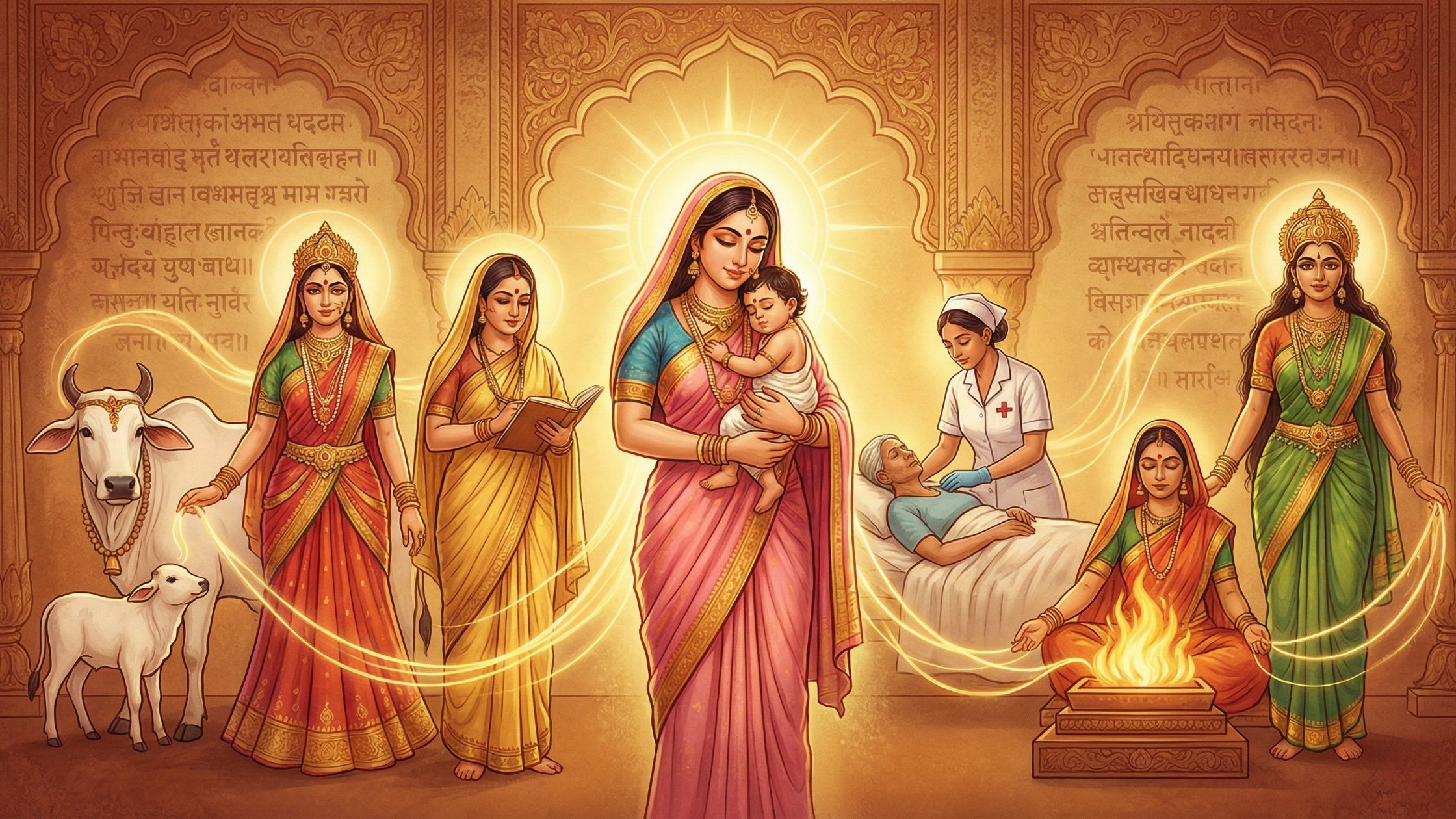
Seven Mothers in Sanatana Dharma: The Sacred Principle of Saptamatrika Explained
Seven Mothers in Sanatana Dharma: The Sacred Principle of Saptamatrika Explained | Vedic Wisdom Watch the full video explanation https://youtube.com/shorts/r0munFBd1t4 The Seven Mothers: Understanding Saptamatrika in Sanatana Dharma You were born with seven mothers. Not metaphorically. Not poetically. But according to the precise taxonomical framework of Sanatana Dharma—the eternal philosophical order that underpins what is commonly called Hinduism. This isn’t sentiment. This is structure. Because in the Vedic worldview, motherhood was never confined to biological birth alone. It was recognized as a fundamental principle—the essence of nurturing, protection, and sustenance that operates at multiple levels of existence simultaneously. This concept is encoded in the tradition as Saptamatrika (सप्तमातृका)—the Seven Mothers—and understanding it reveals something profound about how ancient Indian civilization understood the architecture of care, duty, and social order. The Seven Mothers: A Complete Framework According to classical Dharmashastra texts, particularly the Manusmriti and various Puranas, seven types of relationships carry the sacred designation of “mother” (मातृ – matri): 1. Janani Mata (जननी माता) — The Birth Mother Function: Biological creation and primary nurturing Your birth mother—the woman who carried you, delivered you, and provided your first sustenance—holds the primary position not because other mothers are lesser, but because she is the biological origin point. The Vedic texts are explicit: “Janani janmabhumischa svargadapi gariyasi” (जननी जन्मभूमिश्च स्वर्गादपि गरीयसी) — “Mother and motherland are greater than even heaven.” This isn’t hyperbole. It’s a hierarchy of gratitude. Heaven is abstract; mother is immediate. Heaven is possible; mother is actual. Everything you experience flows through the gateway she provided. Scientific Parallel: Modern developmental psychology confirms that the mother-child bond formed in gestation and early infancy creates the neurological template for all future attachments, emotional regulation, and social bonding. 2. Guru Patni (गुरु पत्नी) — The Guru’s Wife Function: Intellectual and spiritual nurturing In the Gurukula system (ancient India’s residential education model), students didn’t just receive instruction from the Guru—they lived as family members in the Guru’s household, often for years or decades. The Guru’s wife—Guru Patni or Guru Mata—managed the household that sustained this education. She ensured students were fed, clothed, and emotionally supported while they underwent intensive intellectual and spiritual training. She wasn’t a passive figure. In many traditions, she had teaching authority herself, particularly in: Practical dharma (daily ritual practice) Behavioral refinement (sadachara) Household management (grihasta duties) Specific knowledge transmissions when she was accomplished in certain arts or sciences Historical Example: Gargi Vachaknavi and Maitreyi weren’t just wives of sages—they were formidable philosophers in their own right, participating in the highest-level metaphysical debates recorded in the Upanishads. The Guru’s wife represents the principle: Wisdom requires nurturing environments. Intellectual growth doesn’t happen in isolation—it happens in sustained, supportive contexts. 3. Brahmani (ब्राह्मणी) — The Brahmin Woman Function: Preservation of sacred knowledge and ritual purity In Vedic civilization, Brahmin women weren’t merely wives of priests—they were custodians of civilizational memory. They maintained: Oral tradition transmission (passing Vedic chants to the next generation) Ritual precision (ensuring ceremonies were performed correctly) Cultural continuity (preserving festivals, customs, and sacred calendars) Dharmic education (teaching children foundational values) The Brahmani represents collective motherhood—nurturing not just individual children but the civilization’s intellectual and spiritual inheritance itself. Anthropological Insight: In societies without writing (or where writing was restricted), women’s role as primary socializers of children meant they were the actual transmission mechanism for cultural knowledge. The Brahmani is the institutionalization of this function. 4. Rajni (राज्ञी) — The Queen Function: Protection and governance The queen (or the wife of the king/ruler) was considered mother because she participated in the protection function of sovereignty. In Dharmashastra, the king’s primary duty was rakshana (protection)—defending the realm from external threats, maintaining internal order, and ensuring justice. The queen participated in this duty, especially in: Administering justice to women (cases involving women’s welfare, family disputes) Managing royal charities (food distribution, hospital patronage, educational endowments) Diplomatic functions (representing the kingdom, negotiating alliances) Succession and stability (ensuring legitimate heirs, maintaining royal continuity) Historical Examples: Rani Ahilyabai Holkar (1725-1795) ruled Malwa kingdom with legendary administrative competence and justice Rani Chennamma of Kittur (1778-1829) led armed resistance against British colonial expansion Rani Durgavati (1524-1564) ruled Gondwana and died defending her kingdom in battle The Rajni represents: Motherhood as protection at scale. Just as a mother protects her child, the queen protects the realm’s children. 5. Dhenu/Go Mata (धेनु/गो माता) — The Cow Function: Nourishment and sustenance The designation of the cow as mother—Go Mata—is perhaps the most misunderstood aspect of Hindu philosophy, reduced to caricature or dismissed as superstition. But the logic is precise and agrarian-economic: In pre-industrial agricultural societies, the cow provided: Milk (complete protein source for vegetarian populations) Dairy products (ghee, yogurt, butter—essential fats and nutrients) Draft power (oxen for plowing, transportation) Fertilizer (cow dung for enriching soil, fuel for cooking) Building material (cow dung plaster for homes) Ritual essentials (ghee for yajnas, panchagavya for purification) A single cow could sustain multiple families across generations. Her offspring continued this sustenance cycle. She was, quite literally, a renewable resource system. Ecological Note: Modern regenerative agriculture is rediscovering what Vedic civilization encoded—integrated crop-livestock systems are more sustainable, productive, and resilient than monoculture farming. The cow represents: Motherhood as continuous nourishment. She gives without depletion, sustains without exhaustion—the ideal of nurturing itself. 6. Dhatri/Dhaya (धात्री/धाय) — The Nurse/Wet Nurse Function: Caretaking and healing In ancient India, Dhatri referred to any woman who provided care—particularly wet nurses (women who breastfed others’ children), midwives, healers, and caretakers. This recognition is profound because it acknowledges: Care work is sacred work. In royal and wealthy families, children were often nursed by Dhatri Mata (nurse mothers) who became lifelong members of the household, honored and provided for. They weren’t servants—they were family. Mythological Example: In the Mahabharata, Kunti’s nurse is mentioned with respect and affection. In the Ramayana, Urmila’s companions who cared for her during Lakshmana’s 14-year absence are honored figures. The Dhatri represents: Motherhood through chosen service. Biology isn’t the only bond—dedicated care creates maternal relationship. Modern Parallel: Foster mothers, adoptive mothers,