What Krishna Actually Said About Varna: Guna, Karma, and the Word They Never Used Watch the full video explanation What the Bhagavad Gita Actually Says About Varna: Guna, Karma, and the Fuller History “Hinduism has a caste system.” That is the accusation, and the people making it do not even reach for outside proof. They quote our own Krishna to prove it. So let us open the verse they quote. चातुर्वर्ण्यं मया सृष्टं गुणकर्मविभागशः । cāturvarṇyaṃ mayā sṛṣṭaṃ guṇa-karma-vibhāgaśaḥ “The fourfold varna was created by Me, divided according to guna and karma.” Quality and action. Bhagavad Gita, Chapter 4, Verse 13. Guna. Karma. Now find the word janma in that line. Birth. It is not there. Krishna had the entire verse to say it. He had every opportunity to say varna is determined by the family you are born into. He chose quality and action instead. Someone will say, “But he still calls being born a Brahmana fortunate elsewhere in the tradition.” Correct. A rich man’s son has an advantage over a poor man’s son too. Nobody disputes that head starts exist. But everyone still expects the poor man’s son to be able to rise. A head start was never meant to be a finish line. That collapse, head start into fixed destiny, is something later hands added. It is not in Krishna’s verse. So the door was open thirty-two centuries ago. Let me walk you through it four times. The Boy With No Father’s Name A boy stands in front of his guru. Asked his father’s name, he has none to give. “I don’t know,” he says. “My mother doesn’t know either.” Any court in that era throws a boy like this out for the shame alone. No lineage to claim, no father’s name to anchor him to a varna. The guru, Gautama, looks at him and says something that should stop you cold: only a Brahmana speaks with truth like that. He is admitted on the spot. His honesty was his entire lineage. Reference: Chandogya Upanishad 4.4. This is the story of Satyakama Jabala, and it sits inside one of the oldest Upanishads we have. Not a modern reform tract. Not a reaction to colonial pressure. A text that predates the word “caste” by well over two thousand years, and it stages, deliberately, a boy with no traceable birth being declared a Brahmana on the strength of his honesty alone. The Man Who Wrote the Book They’re Quoting From Now go to the man who wrote the very text this entire argument keeps borrowing lines from. Born on a river island. To a fisherwoman. Before marriage. Krishna Dvaipayana. You know him as Vyasa. He arranged all four Vedas with his own hands. He composed the Mahabharata itself, the epic inside which the Bhagavad Gita sits, the epic that supplies half the verses people quote when they want to argue Hinduism is rigid and closed. Sit with that. The scripture at the center of their argument was written by a man their argument would have disqualified from ever holding a scripture in the first place. The God Who Chose a Shudra’s Kitchen Here is the one that should end the debate permanently. A sage curses Yama, the god of Dharma himself, for punishing him too harshly. The sentence: be born of a maidservant. A shudra. Yama does not fight the curse. He accepts it. He takes birth in Hastinapura. They name him Vidura. He grows into the one voice in that entire royal court that nobody can out-argue. Bhishma, the eldest and most respected man in the kingdom, listens when Vidura speaks. Years later, Krishna arrives in Hastinapura to try to stop a war before it starts. Duryodhana lays out gold plates and a king’s feast for him. Krishna walks past all of it. He goes to Vidura’s house instead. Eats plain food, served by Vidura’s own hands. Tells him this is the only meal in the entire city offered with love instead of ambition. God himself, in human form, chose a shudra’s kitchen over a king’s palace. Reference: Mahabharata, Adi Parva 96-100; Udyoga Parva. The Philosopher Who Knelt on a Street Last one. The biggest name this tradition ever produced. Adi Shankaracharya. The philosopher who built Advaita Vedanta into a complete system, who walked the length of the subcontinent establishing four monastic seats that still stand today. Walking the streets of Kashi after his morning bath, ritually purified, an outcaste blocks his path. “Move aside,” Shankaracharya says, out of ritual habit more than malice. The outcaste does not move. He answers with a question instead. Which should move? This body made of matter, or the consciousness inside it? Show me where they differ. Shankaracharya, the sharpest philosophical mind of his age, goes silent. Then he bends down and touches the man’s feet. जाग्रत्स्वप्नसुषुप्तिषु स्फुटतरा या संविदुज्जृम्भते । चण्डालोऽस्तु स तु द्विजोऽस्तु गुरुरित्येषा मनीषा मम ॥ jāgrat-svapna-suṣuptiṣu sphuṭatarā yā saṃvid ujjṛmbhatecaṇḍālo’stu sa tu dvijo’stu gurur ity eṣā manīṣā mama “That consciousness which shines clear in waking, dream, and deep sleep, dwelling in every body from Brahma down to the ant, whoever holds this truth firmly, outcaste or twice-born, he is my guru. This is my firm conviction.” Reference: Manisha Panchakam, Verse 1, Adi Shankaracharya. The single greatest philosopher this civilization produced knelt on a public street and called an outcaste his teacher. Where Krishna Says All of This Leads And Krishna already told you where this door opens onto. स्त्रियो वैश्यास्तथा शूद्रास्तेऽपि यान्ति परां गतिम् ॥ striyo vaiśyās tathā śūdrās te ‘pi yānti parāṃ gatim “Women, vaishyas, and shudras. They too reach the supreme destination.” Bhagavad Gita, Chapter 9, Verse 32. He names the shudra out loud, by category, in the same breath as women and merchants who were themselves often shut out of the highest philosophical claims by the surrounding culture. Parām gatim. The highest goal in the entire text. The same destination available to anyone else who reaches it through devotion. The Word
Did Ravana Really Sing the Shiva Tandava Stotram? I Followed the Trail. Here Is Where It Ends.
Did Ravana Really Sing the Shiva Tandava Stotram? I Followed the Trail. Here Is Where It Ends. Watch the full video explanation Did Ravana Really Compose the Shiva Tandava Stotram? A Textual Investigation Everyone knows the story. Ravana travels to Kailasha. In his arrogance, he tries to lift the entire mountain with his bare hands to carry it back to Lanka. Shiva, undisturbed, presses down with a single toe. Ravana is trapped beneath the weight of the mountain he tried to steal, and he screams. That scream is said to shake all three worlds. It earns him the name Ravana, the one who makes others roar or weep. Then, trapped and humbled, he composes a hymn so ferocious and so perfect that Shiva forgives him on the spot and gifts him the Chandrahasa sword. Everyone assumes this comes straight from the Valmiki Ramayana. It does not. Not in the way the story is usually told. I went looking for the actual verse. I read it in Sanskrit. And what I found does not collapse the story. But it does not confirm it the way you have been told either. This is an honest account of exactly what the text says, exactly what it does not say, and exactly where the trail runs out. Part I: The Episode Is Real. Let’s Start There. The Kailasha episode does exist in the Valmiki Ramayana. It sits in the Uttara Kanda, the seventh and final book of the epic, in Sarga 16. Ravana is there. The mountain lifting is there. The trapping is there. The scream that gives him his name is there. The Chandrahasa sword, gifted by Shiva afterward, is there. None of that is a later fabrication grafted onto nothing. The bones of the story are genuinely in the Sanskrit text. And here is the exact verse describing what Ravana did once he was pinned under the mountain: एवमुक्तस्तदामात्यैस्तुष्टाव वृषभध्वजम्। सामभिर्विविधैः स्तोत्रैः प्रणम्य स दशाननः। संवत्सरसहस्रं तु रुदतो रक्षसो गतम्॥ evam uktas tadāmātyais tuṣṭāva vṛṣabhadhvajamsāmabhir vividhaiḥ stotraiḥ praṇamya sa daśānanaḥsaṁvatsarasahasraṁ tu rudato rakṣasaso gatam “Thus advised by his ministers, Dashanana bowed before the bull-bannered Lord and praised Him with Sama hymns and various stotras. A thousand years passed as that Rakshasa wept.” Read that verse slowly, because everything in this investigation hangs on exactly what it does and does not say. Part II: What the Verse Actually Confirms The verse confirms three things clearly. One. Ravana did praise Shiva while trapped. The verb tuṣṭāva means “he praised” or “he pleased through praise.” This is not ambiguous. Two. He used sāmabhiḥ, meaning hymns in the style of the Sama Veda, and vividhaiḥ stotraiḥ, meaning various kinds of praise-hymns. Not one hymn. Various hymns, of a Sama Vedic character. Three. This praise continued for a thousand years, saṁvatsarasahasram, while the Rakshasa wept under the weight of the mountain. So the core event, a weeping Ravana composing praise-hymns to Shiva while trapped, is genuinely present in the Valmiki text. I want to be completely clear about that before I say what comes next, because what comes next is going to sound like I am tearing the story down. I am not. I am telling you what is actually written and what is not. Part III: What the Verse Does Not Say Here is the part almost nobody checks. Valmiki does not record a single word of what Ravana sang. No hymn is quoted. No verse is reproduced. No specific line of praise appears anywhere in this sarga, or anywhere else in the entire Valmiki Ramayana. The text tells us that praise happened. It does not show us the praise. This matters enormously, because the hymn everyone actually associates with this story, the one that opens jaṭāṭavī-galajjala-pravāha-pāvita-sthale, the Shiva Tandava Stotram itself, appears nowhere in this sarga, and nowhere in the Valmiki Ramayana at all. Go looking for it. It is not there. So the plot is in Valmiki. The specific hymn is not. Part IV: The Number That Does Not Add Up Now here is where the popular retellings start contradicting themselves, and not just contradicting Valmiki. Ask most people how many verses Ravana composed under that mountain, and you will hear one number repeated constantly, in temple discourses, in devotional articles, in Mahashivratri retellings every year: 1008 verses, composed extempore, on the spot, in a single continuous outpouring of devotion. Now go count the actual Shiva Tandava Stotram as it survives today, the text that is chanted, printed, and recited in every tradition that preserves it. Sixteen verses. Seventeen in a few regional versions. Never anywhere close to a thousand. This is not a small discrepancy you can wave away as rounding. It is a gap of nearly two orders of magnitude between the number the oral tradition insists on and the number the actual surviving text contains. I want to offer the most honest explanation for this gap, rather than just pointing at it. In Hindu tradition, the number 1008 is not always meant as a literal count. It shows up again and again as a formula for totality and auspiciousness. A deity’s thousand names is called a Sahasranama. Japa malas are traditionally counted in multiples that resolve to 108. When oral tradition wants to say “he praised without limit, without holding anything back,” it often reaches for 1008 as shorthand for boundlessness, not as an actual tally someone counted. That is almost certainly what happened here. Somewhere in the retelling, the poetic formula “1008” hardened into a literal historical claim, the way an idiom gets mistaken for a fact after enough generations of retelling. And once that happened, nobody went back to check the formula against the actual surviving text, because the actual surviving text was never really the point of the devotional retelling in the first place. But the mismatch is real, and it is the second sign that we are dealing with a legend that has been reshaped in transmission, sitting on top of a much smaller, much
Manusmriti Has Been Tampered: The Textual Evidence Nobody Checks
Manusmriti Has Been Tampered: The Textual Evidence Nobody Checks Watch the full video explanation Manusmriti Tampered? The Textual Proof in Meter, Language & Contradiction Manusmriti is the most quoted, most attacked, most defended, and least read text in Indian discourse. Everyone has an opinion on it. Politicians cite it. Activists burn it. Traditionalists defend it. Op-eds are written about it weekly. And almost none of the people arguing about it have sat down with the Sanskrit and read all 2,685 verses themselves. I did. What I found doesn’t fit either side of the existing debate cleanly. It’s not “Manusmriti is a perfect, eternal, unchanged code of dharma.” It’s also not “Manusmriti is uniformly regressive and that’s simply what ancient India believed.” What the text itself shows, when you actually examine it line by line in the original Sanskrit, is a document that has been edited, layered, and altered over a long stretch of history — and the seams of that editing are still visible if you know where to look. This isn’t a theological argument. It’s a textual one. And textual arguments don’t require belief — they require evidence. So let’s go through the evidence. Why This Matters Before We Even Start Before getting into the proof, it’s worth being clear about why this question — is the Manusmriti we have today the Manusmriti that was originally composed — actually matters, beyond academic curiosity. Manusmriti has been used as a reference point in: Colonial-era British codification of “Hindu law” Caste-based legal and social arguments for over a century Political rhetoric on both the right and the left Modern court arguments and constitutional debates in India Western academic characterizations of “what Hinduism teaches” about gender and caste Every single one of these uses assumes the text being cited is stable — that the verse numbers and content correspond to something Manu (or whoever the original compiler was) actually composed, in that form, at that time. If that assumption is wrong — if substantial portions of the text were added centuries after the original composition — then every argument built on top of it, on every side, is standing on a foundation nobody verified. That’s the claim I’m making. Here’s the evidence. The Verse Everyone Quotes (And Stops Reading After) Start with the verse that gets circulated constantly, especially in arguments defending the text’s treatment of women: Manusmriti 3.56 यत्र नार्यस्तु पूज्यन्ते रमन्ते तत्र देवताः। यत्रैतास्तु न पूज्यन्ते सर्वास्तत्राफलाः क्रियाः॥ Yatra nāryastu pūjyante ramante tatra devatāḥYatraitāstu na pūjyante sarvāstatraphalaḥ kriyāḥ “Where women are honored, the gods rejoice there. Where they are not honored, all rituals there become fruitless.” This verse sits inside a chapter (Adhyaya 3) dealing with marriage, the household, and domestic ritual obligations. Read on its own, it’s a strong, unambiguous statement: a household’s spiritual fruitfulness is conditional on how it treats its women. Not as a courtesy. As a structural requirement for ritual to even function. Hold that verse in your mind. We’re coming back to it. Now let’s look at how this text was actually built — because the composition itself contains the proof of tampering before we even get to contradictions. Proof One: The Meter Doesn’t Lie Sanskrit shastra literature wasn’t written in free verse. It was composed in strict, mathematically defined meters — and Manusmriti specifically was composed almost entirely in one meter: Anushtubh (अनुष्टुभ्). What Anushtubh Actually Requires Anushtubh is a four-line (pada) verse structure: 4 padas (quarter-lines) per shloka 8 syllables per pada 32 syllables total per verse Specific syllable-weight (laghu/guru — light/heavy) patterns at fixed positions, especially the 5th, 6th, and 7th syllables of each pada, which follow near-rigid rules This isn’t a loose stylistic preference, like a poet today choosing to rhyme or not rhyme. It’s closer to a mathematical constraint. A composer trained in classical Sanskrit prosody (chandas) internalizes this structure the way a trained musician internalizes a time signature — you don’t “accidentally” break it any more than a concert pianist accidentally plays in the wrong key for sixteen bars without noticing. What I Found When you go through Manusmriti verse by verse and scan the meter — not skim it, scan it syllable by syllable — a number of verses simply don’t fit. Not by a single misplaced syllable that could be explained by regional pronunciation drift. By structural breaks: padas with the wrong syllable count, weight patterns that violate the basic laghu-guru rules at fixed positions, lines that only resolve into meter if you force an unnatural reading. A composer capable of producing 2,500+ technically correct Anushtubh verses does not suddenly forget how Anushtubh works for a scattered subset of verses. That kind of inconsistency doesn’t happen within a single composer’s hand. It happens when a second hand, at a different time, with a different (often looser) command of classical prosody, inserts material into an existing structure. This is the same logic textual historians use across every tradition, not just Sanskrit. If you found a building where 90% of the brickwork follows one mortar technique and 10% follows a visibly different, cruder technique, you wouldn’t conclude the original builder randomly forgot his own method ten percent of the time. You’d conclude someone else patched the wall later. The meter is the mortar. And the patches are visible. Proof Two: The Vocabulary Has a Timestamp Sanskrit, more than almost any other ancient language, can be dated internally — not perfectly, but with real precision — because of how its vocabulary, compound formation, and administrative/legal terminology evolved across distinct, identifiable periods. How This Works Specific categories of vocabulary anchor a text to an era: Administrative and revenue terms — the words used for land categories, tax structures, court officials, and punitive systems shift across centuries as actual administrative systems shifted. A term describing a specific judicial role or land-revenue category didn’t exist before the system it names existed. Compound formation style — Sanskrit compounds (samasa) became progressively more elaborate over centuries. Early classical compounds tend to be tighter and
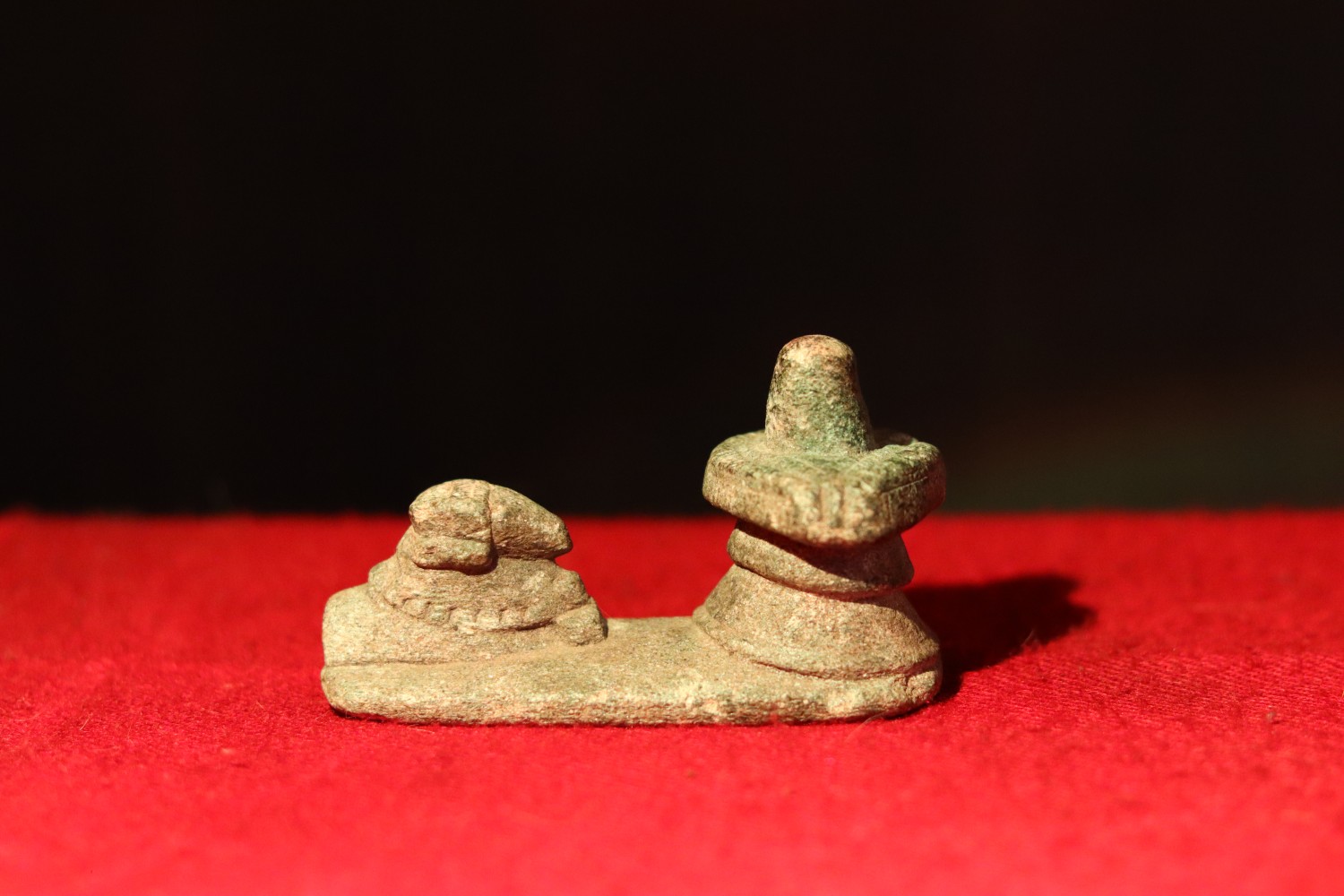
The Shiva Shrine Found Underground: What a 500-Year-Old Miniature Temple Reveals About Sacred Geometry
The Shiva Shrine Found Underground: What a 500-Year-Old Miniature Temple Reveals About Sacred Geometry Watch the full video explanation Shiva Linga Found Underground: The Sacred Science of Temple Architecture Decoded. I found a Shiva Linga buried underground. That sentence alone deserves a pause. But what this small carved stone revealed was far more significant than the discovery itself. What you are about to read will permanently change how you see every Shiva temple you walk into. Because what looks like a simple stone object is actually a compressed architectural manual, a cosmological diagram, and a hydraulic engineering document—all carved from one piece of granite. Let’s decode it piece by piece. What Was Found: The Object Itself This is a miniature Shiva shrine—technically called a Cala-Linga (चल-लिंग), meaning a portable or movable linga—carved entirely from a single block of granite. It contains, in perfect miniature: The Shiva Linga (the central upright form) The Yoni-pitha (the base platform and drainage vessel) The Somasutra (the sacred drainage channel for Abhisheka liquid) Nandi carved in front of the Linga (the divine bull, Shiva’s vehicle and gate-keeper) Every single element. One stone. No assembly. No joints. This matters enormously, and here’s why: this wasn’t decorative. This was a complete, functioning sacred installation—a full Shiva temple in miniature, engineered to receive ritual worship (puja) and sacred bathing (Abhisheka) exactly as a large temple Linga would. The fact that it was found buried underground suggests one of several possibilities we’ll explore: intentional concealment during invasion, ritual burial after damage, or the weight of centuries of soil accumulation over an abandoned rural shrine. But first—let’s understand what’s actually carved here. Part I: The Three Divisions of a Shiva Linga — A Cosmic Trinity in Stone Most people who visit Shiva temples see only the uppermost cylindrical portion of the Linga receiving Abhisheka. What they don’t know is that this visible section is just one-third of the complete structure. The Lingas in temples are often formed in three parts. Each part represents a different cosmic principle: 1. Brahmabhaga (ब्रह्मभाग) — The Square Base Shape: SquareDeity Represented: Lord BrahmaPrinciple: CreationLocation: Lowest — embedded in the earth/pedestal The lowest part which is square, is called Brahmabhaga and represents Brahma, the creator. Why square? In sacred geometry, the square (chaturasra) represents: The four directions (north, south, east, west) The four Vedas The stable, fixed nature of the material world The earth element (prithvi tattva) The Brahmabhaga is always buried—it goes into the earth, connecting the Linga to the material foundation of existence. Creation begins below ground, in the dark, in potential. Just as a seed germinates underground before breaking into light. 2. Vishnubhaga (विष्णुभाग) — The Octagonal Middle Shape: OctagonalDeity Represented: Lord VishnuPrinciple: Preservation/SustenanceLocation: Middle — also embedded within pedestal The next part in the middle is the octagonal Vishnubhaga or Vishnu-pitha, which signifies Lord Vishnu the sustainer. Both of these parts form the pedestal. Why octagonal? The octagon represents the transition between: Square (fixed, material, earthly) Circle (infinite, spiritual, divine) This is Vishnu’s role: the bridge between creation and liberation, between matter and consciousness. Eight directions (ashtadisha)—the octagon encompasses all spatial reality, which Vishnu sustains. The Vishnubhaga is also hidden—sustenance works quietly, without display. The most essential processes (digestion, circulation, ecological cycles) operate invisibly. 3. Rudrabhaga (रुद्रभाग) — The Visible Cylindrical Top Shape: Cylindrical (with rounded top)Deity Represented: Lord Shiva/RudraPrinciple: Transformation, DissolutionLocation: TOP — the only visible portion above the pedestal The Rudrabhaga is the round and visible portion of the Shivling, often referred to as the ‘pujabhaga’ because it is the part that is worshipped… The Rudrabhaga is the only part visible above the pedestal and is the focal point of worship. Why cylindrical? The cylinder/circle represents: Infinity (no beginning, no end) The flame (Jyotirlinga — column of fire/light) The Absolute beyond form The space element (akasha) The profound teaching: Only Rudra is visible. Brahma (creation) and Vishnu (preservation) are hidden. We can see transformation and dissolution—but creation and sustenance operate in the background. This mirrors our experience of the universe: we see change, aging, death. We see the flame but not the root. The Linga’s structure encodes this cosmological truth in physical form. The Complete Trimurti in One Stone RUDRABHAGA [VISIBLE — Cylinder] Shiva / Dissolution ↑ VISHNUBHAGA [HIDDEN — Octagon] Vishnu / Sustenance ↑ BRAHMABHAGA [BURIED — Square] Brahma / Creation This vertical progression is not arbitrary—it represents the spiritual journey of consciousness: Beginning in material creation (square/earth) Sustaining through cosmic balance (octagon/transition) Culminating in pure transcendence (cylinder/fire/liberation) Part II: The Yoni-Pitha — Sacred Geometry, Not Vulgarity Surrounding the base of the Linga is the Yoni-pitha (योनिपीठ)—the vessel or basin that receives Abhisheka liquid. The Misconception: Western scholars and colonial-era interpreters consistently interpreted this as sexual symbolism—male and female anatomy joined. This interpretation, while literally possible, misses the deeper cosmological meaning entirely. The Authentic Śāstra Interpretation: In Shaiva Agama texts, the Yoni represents: Prakriti (प्रकृति) — Nature, the material field of existence Shakti — The divine feminine creative energy The womb of manifestation — That from which all phenomena arise Param-akasha — The infinite space/field The Linga represents Purusha (पुरुष) — pure consciousness, unmanifest awareness. The Union: When Purusha (pure consciousness) enters Prakriti (field of nature), existence itself arises. This isn’t a statement about human sexuality—it’s a description of how the universe comes into being at the most fundamental level. The Linga in Yoni represents: Consciousness + Field = All Manifest Reality This is identical to what modern physics describes as quantum field theory: a field (Prakriti) that manifests particles (Purusha) through their interaction. The Yoni-Pitha as Hydraulic System There’s another dimension to the Yoni-pitha that most people completely overlook: it’s an engineered drainage system. The base isn’t just symbolic—it’s functional hydraulic architecture. Notice on this miniature shrine: The angled facets around the base of the Linga The slight tilt of the entire pitha The spout or outlet extending from the base This is intentional engineering. During Abhisheka, when milk, water, honey, ghee, or other sacred liquids
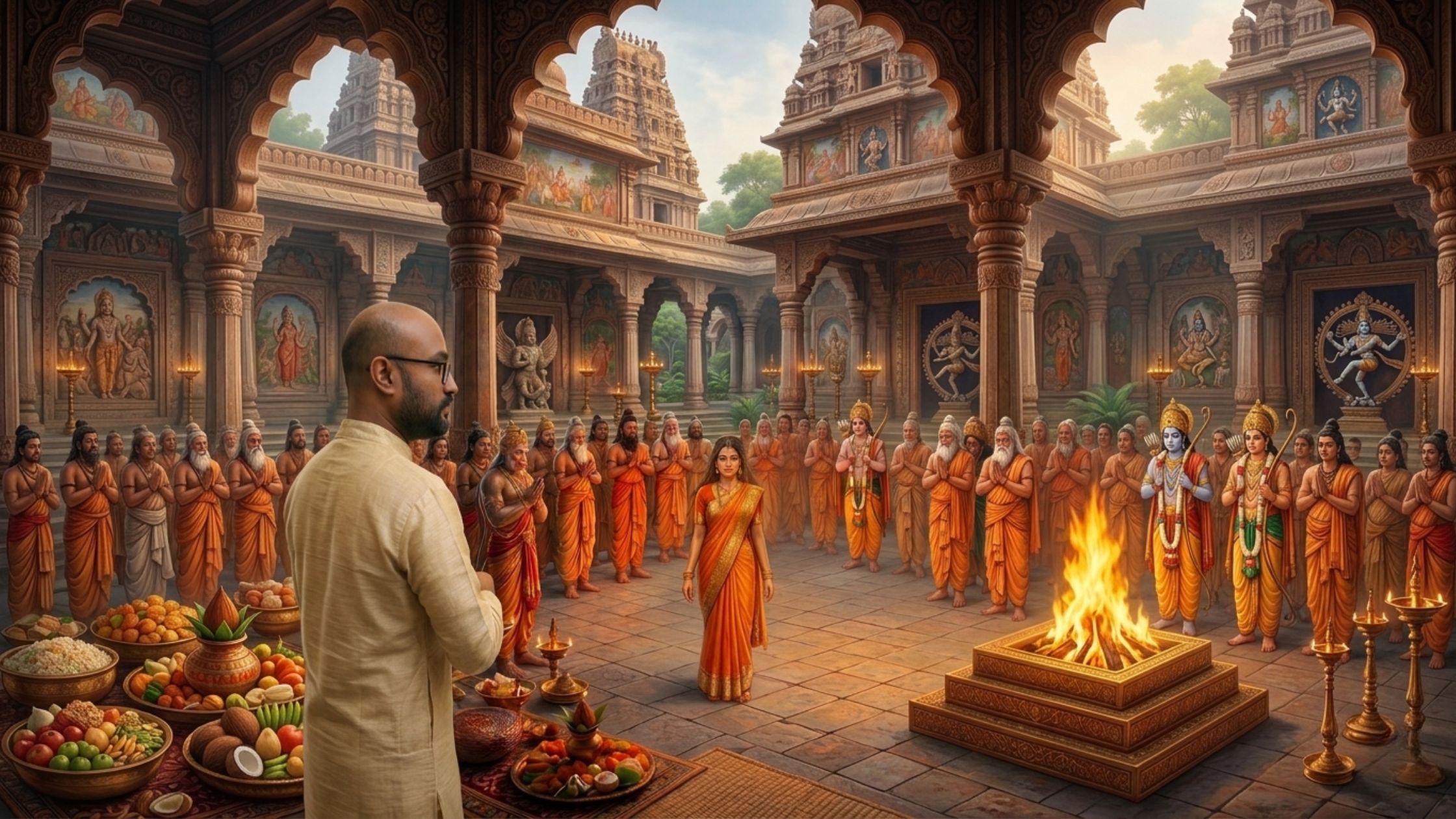
Ravana Never Kidnapped Sita — Maya Sita, the Agni Pariksha & the Sanskrit Truth Hidden Across Five Puranas
Ravana Never Kidnapped Sita — Maya Sita, the Agni Pariksha & the Sanskrit Truth Hidden Across Five Puranas Explained Watch the full video explanation https://youtube.com/shorts/N6YX2c8tF5Q?feature=share Ravana Never Touched Sita. Five Puranas Say So. Here Is the Sanskrit Proof. The Ramayana You Were Never Fully Told For most people who grew up with the Ramayana, this is the story: Sita was abducted by Ravana. She spent ten months imprisoned in the Ashoka Vatika in Lanka. Rama fought and won a war to bring her back. And then — in the part that has disturbed readers and scholars for centuries — Rama asked Sita to prove her purity by walking into fire. This reading of the Agni Pariksha as a test — a husband doubting his wife after she had endured captivity through no fault of her own — has generated more pain, more feminist critique, and more theological defensiveness than any other single episode in Hindu scripture. Millions of devotees struggle with it. Critics of the tradition wield it. Scholars debate it. But there is a parallel tradition, preserved across multiple Puranas and authoritative Ramayana texts, that offers a completely different reading — not through reinterpretation or modern rationalization, but through different source texts. Texts that say, in precise Sanskrit, that Ravana did not abduct Sita. That the real Sita never left Agni’s protection. That the Agni Pariksha was not a test of purity but a divine exchange — a returning. This is the doctrine of Maya Sita — the Illusory Sita — and it is not a marginal theory or a medieval theological invention to protect Sita’s honour. It is a narrative strand that appears in the Kurma Purana, the Padma Purana, the Brahmanda Purana (via the Adhyatma Ramayana), the Brahma Vaivarta Purana, and the Ramcharitmanas of Tulsidas. Five major texts. Five different tellings. One consistent theological conclusion: Sita was never a victim. She was always protected. And Ravana spent ten months guarding fire. The Puranic Framework: Which Texts Say What Before examining each strand of the Maya Sita tradition, it is important to understand the Puranic framework within which multiple versions of the Ramayana exist. The Ramayana is not one book. It is a tradition — a narrative that, as with all great dharmic epics, was received, retold, expanded, and interpreted across cultures, centuries, and traditions. The original Valmiki Ramayana is the adi-kavya — the foundational poem — composed in approximately the 5th to 4th century BCE, with later sections added through the 3rd century CE. It is the authoritative text and runs to approximately 24,000 shlokas across seven kandas. In the Valmiki Ramayana’s Yuddha Kanda, the Agni Pariksha does occur — and significantly, it ends with Agni himself appearing from the flames and testifying to Sita’s purity, handing her back to Rama with the declaration that she is without fault. Rama then explains to those assembled that he always knew Sita was pure; the ordeal was for the world, not for him. But the Valmiki Ramayana does not contain the Maya Sita motif. The substitution narrative — where Agni conceals the real Sita and places an illusory Sita in her place before Ravana arrives — enters the tradition through a specific cluster of later Puranic texts. The Kurma Purana: The First Text to Record the Substitution The Kurma Purana is one of the eighteen Mahapuranas, associated with the Kurma (tortoise) avatar of Vishnu. Scholars date the earliest layers of the Kurma Purana to approximately the 6th–8th century CE, with later sections compiled through the 11th century. The Kurma Purana’s version of the Maya Sita event is precise and theologically deliberate. When Ravana arrives at the hermitage in Panchavati disguised as an ascetic, Sita becomes aware of his approach. She does not flee helplessly. She prays to Agni — the god of fire, the sacred witness of all Vedic rituals, the keeper of all offerings — and asks for his protection. Stirred by Sita’s prayers, Agni appeared and produced a Sita who was really an illusion. This Maya Sita he left in the real Sita’s place. As for the real Sita, she was absorbed into the fire. Ravana, without any awareness of the substitution, abducts the illusory Sita. The entire war was fought over a Sita who was not even real. When Rama triumphed over Ravana and recovered Sita, a test by fire (Agni Pariksha) was held. In the process, the Sita who was an illusion was returned to the fire and the real Sita emerged once again. Thus the real Sita was never tainted by Ravana’s touch. Three things are immediately significant in this version: First, Sita is not passive. She initiates the protection through her own prayer. Her devotion to Agni — the Vedic witness of her marriage to Rama — is what summons the divine intervention. This is not rescue. This is a woman of extraordinary spiritual power activating a cosmic safeguard. Second, Agni is not an external protector imposing himself on the situation. He responds to Sita’s prayer — to her devotion, her tapas, her own spiritual authority. The protection is not granted despite Sita; it is granted through Sita. Third, the Agni Pariksha becomes, in this framework, not a test but a completion. The exchange that was made at Panchavati is now reversed at Lanka. The borrowed form goes back to fire. The real Sita emerges. The debt is settled. The Padma Purana: Sita Who Knew The Padma Purana is among the largest of the eighteen Mahapuranas, containing approximately 55,000 verses. It is primarily a Vaishnava text, presenting Sita as an avatar of Lakshmi and Rama as the supreme Vishnu. Its account of the Maya Sita event deepens the Kurma Purana’s version significantly by emphasising Sita’s foreknowledge and her own agency. In the Padma Purana version: Treta Yuga was an era where no harm can come to a person who is righteous. Ravana disguised as a sage, came to abduct Sita; he didn’t know that Sita was a human incarnation of Goddess Lakshmi,
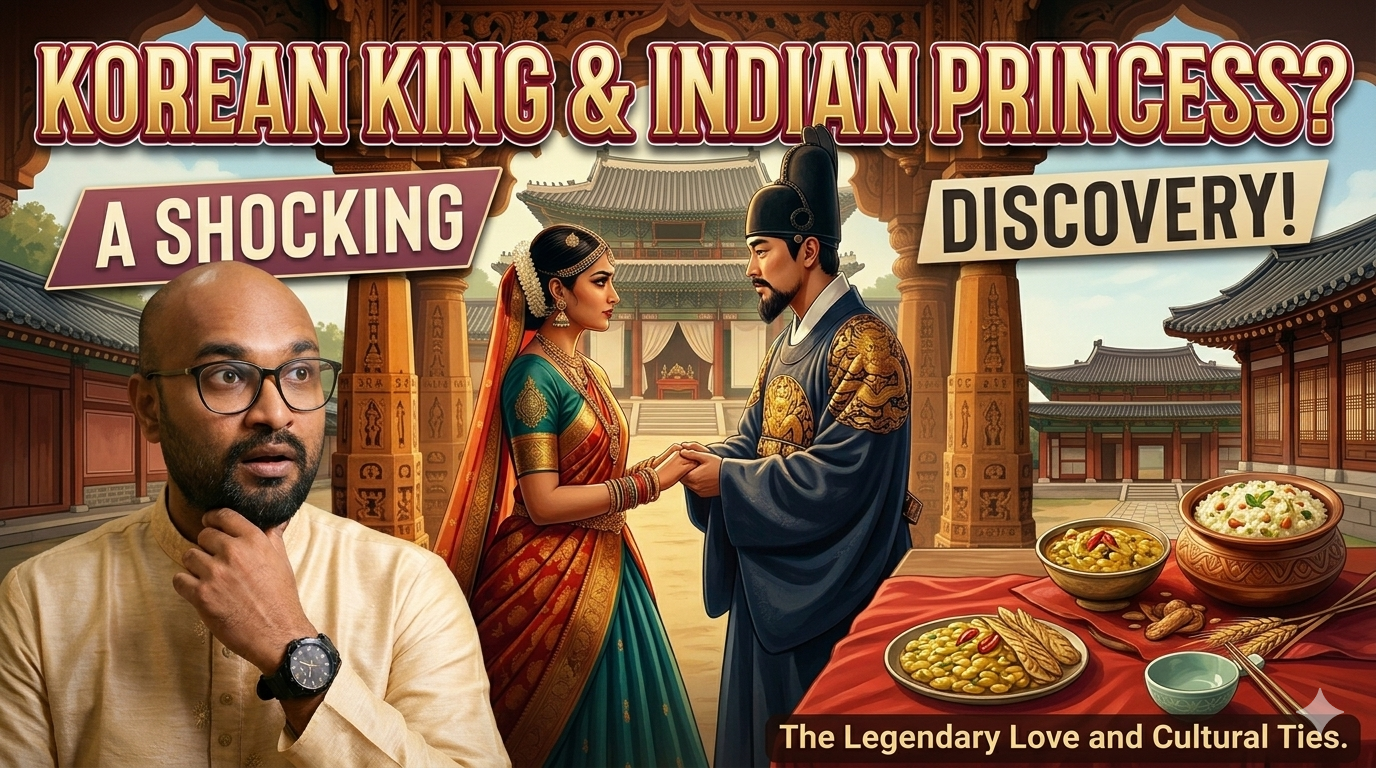
Why Korean and Tamil Share Hundreds of Similar Words — The 2,000-Year-Old Story Nobody Taught You
Why Korean and Tamil Share Hundreds of Similar Words — The 2,000-Year-Old Story Nobody Taught You Watch the full video explanation https://youtube.com/shorts/15cwZ590IOk Every Name of a Hindu Deity Is a Mantra — The Sanskrit Science Behind Shiva vs. Shiv, Rama vs. Ram The Word That Started It All In Korean, a child calls her father Appa. Her mother is Omma. Rice is ssal. Grass is pol. Day is nal. In Tamil, a child calls his father Appa. His mother is Amma. Cooked rice is soru. Grass is pul. Day is naal. Two languages geographically separated by over 5,000 kilometres of ocean. No shared empire, no recorded colonial encounter, no common ancestor language family that mainstream linguistics acknowledges. And yet the words for the most fundamental things — parent, food, earth, time — arrive in both languages wearing the same sound. This is either an extraordinary coincidence or the faint echo of a contact so ancient it left its mark in language before it was even recognized as history. The story that may explain it begins around 48 CE, in the court of a Korean king who refused to marry anyone his ministers chose for him — because, he said, the heavens would bring his queen to him across the sea. The Ay Kingdom: The Buffer State That Bridged the World To understand what happened, you need to know about a kingdom that most Indian history syllabuses skip entirely. Between the powerful Pandya, Chola, and Chera kingdoms of ancient Tamilakam, there existed a smaller, strategically significant territory called the Ay Kingdom (also spelled Ayi, Aai, or Ai). The name derives from the early Tamil word ay — meaning cowherd — because the people of this region were predominantly a pastoral, cattle-herding community. Their leaders held the Tamil title Ayar, and the community is the same that later Tamil Sangam literature and Puranic texts would call Aayar — the cowherd class from which, notably, the Krishna-Gopal tradition of the Yadavas also drew its cultural vocabulary. The Ay kingdom occupied the southernmost tip of the Indian subcontinent — the region encompassing present-day Kanyakumari district and the areas that would later become Venad and ultimately Travancore (Thiruvananthapuram). It was not a military superpower. It was something more strategically important: a maritime trading kingdom, positioned at the exact point where the Indian Ocean’s east-west trade routes converged. Ancient Tamil Nadu’s maritime capabilities during the Sangam period (roughly 3rd century BCE to 3rd century CE) are among the most underappreciated facts in world history. Tamil kings sent trade missions to Rome, Southeast Asia, and the Gulf of Aden. Tamil merchants are documented in Egyptian papyri. Pepper, pearls, ivory, and cotton from Tamilakam reached Mediterranean markets directly. The Ay kingdom, sitting at the tip of this oceanic highway, was not a backwater — it was a departure point. And around 48 CE, according to the oldest surviving Korean chronicle, something arrived from this direction that would change Korean history. The Samguk Yusa: The Korean Text That Records It All The Samguk Yusa (三國遺事 — “Memorabilia of the Three Kingdoms”) is a 13th-century CE Korean historical chronicle compiled by the Buddhist monk Iryeon (also written as Il-yeon), who lived from 1206 to 1289. It is housed today as National Treasure No. 306-3 of Korea. Iryeon compiled the text at Ingak Temple, drawing on multiple earlier sources — including court records, Buddhist monastery archives, Chinese annals, and most crucially, a lost text called the Garakgukgi (the Record of Garak Kingdom), which contained the foundation history of Geumgwan Gaya. The Samguk Yusa is not a simple historical record. It is, as its name implies, supplementary material — stories, legends, myths and oral traditions that the more officially-oriented Samguk Sagi did not include. Iryeon was meticulous: he visited sites personally, recorded local traditions, tested physical relics, and noted when sources conflicted. He did not claim everything he recorded was literal history. The Samguk Yusa functions more like what we might today call a cultural archive — a repository of what the Korean people remembered about themselves. Within this archive, in the section on Geumgwan Gaya, is the founding legend of the kingdom. And within that founding legend is one of the most remarkable cross-cultural stories in ancient Asian history. Kim Suro, the King Born from a Golden Egg According to the Samguk Yusa, the kingdom of Geumgwan Gaya was founded around 42 CE in what is now Gimhae, South Gyeongsang Province, in southeastern Korea near the modern city of Busan. The founding myth describes nine clan chiefs (gan) gathering at a mountain peak called Gujibong, where they sang a ritual song and were commanded by a heavenly voice. A golden bowl wrapped in red cloth descended from the sky. Inside were six golden eggs. Twelve days later, six boys emerged from the eggs. The first and most radiant of these was Suro — later known as Kim Suro — who was chosen as king. Kim Suro is not a minor figure in Korean history. He is the legendary progenitor of the Gimhae Kim clan — today one of the most common surnames in South Korea. His descendants, and those of the queen he would marry, include tens of millions of living Koreans. An archaeological site in modern Gimhae preserves tombs attributed to Kim Suro and his queen. He is the acknowledged founding figure of Geumgwan Gaya, the most powerful of the six city-states of the Gaya Confederacy, which controlled the iron trade of the Korean Peninsula from the 1st to the 6th century CE. In the seventh year of his reign, the court ministers urged him to choose a queen from among the maidens they presented to him. Suro refused. He declared that his queen would be sent by heaven, and that he would wait. He did not wait long. The Princess from Ayuta: Heo Hwang-Ok Arrives The Samguk Yusa records that in 48 CE, a 16-year-old princess from a distant kingdom called Ayuta (阿踰陁) set sail across the sea.
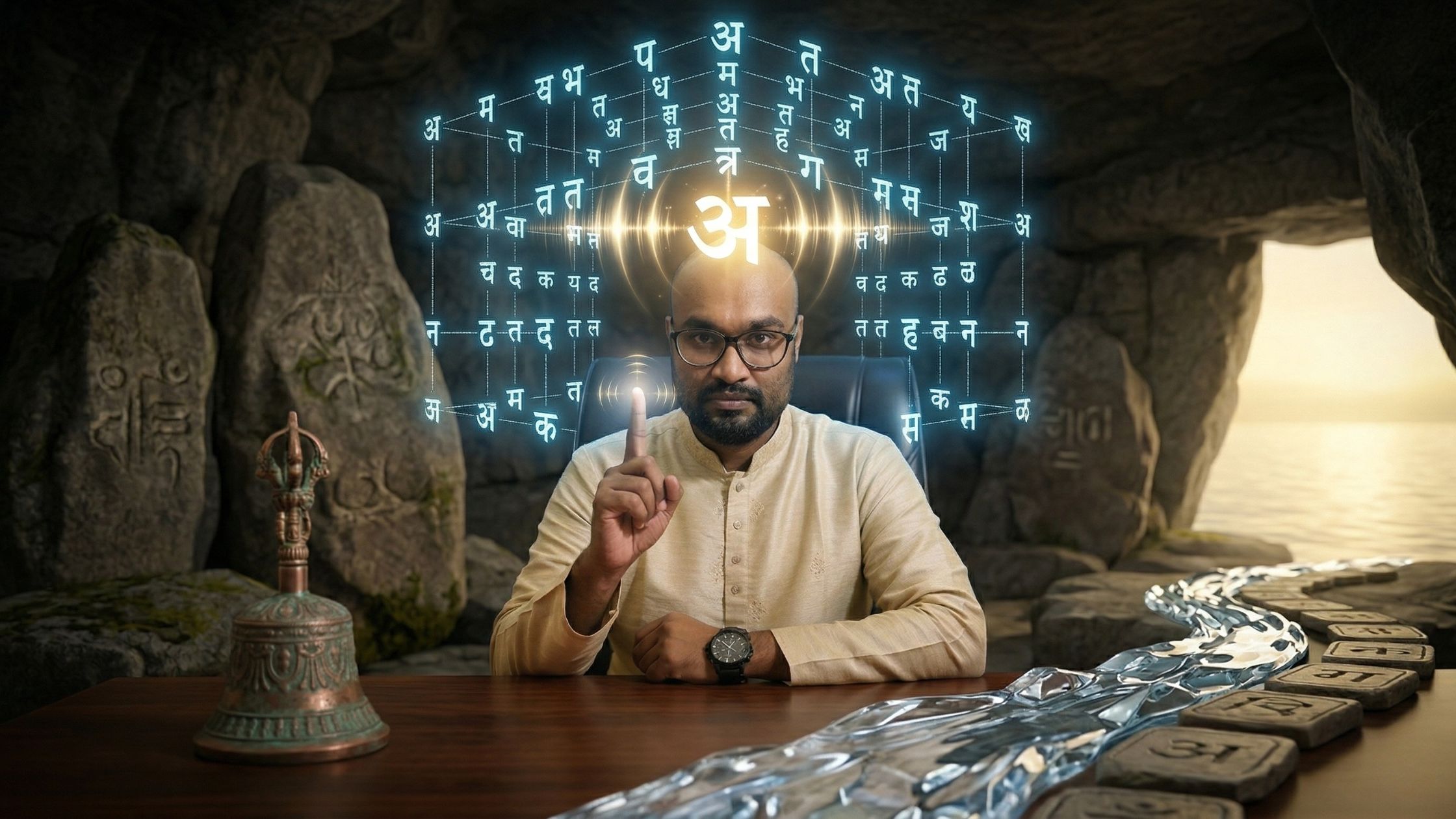
Every Name of a Hindu Deity Is a Mantra. Here Is What That Actually Means.
Every Name of a Hindu Deity Is a Mantra. Here Is What That Means. Watch the full video explanation Every Name of a Hindu Deity Is a Mantra — The Sanskrit Science Behind Shiva vs. Shiv, Rama vs. Ram The Argument That Has No Winner Open any comment section on a video about Hinduism, and within thirty seconds you will find it. Someone says Shiva. Someone corrects them — it’s Shiv. Someone corrects the corrector — actually, Shiva is the proper Sanskrit form. The original person returns with something about how North India has preserved the original pronunciation, or how South India has corrupted it with added vowels, or how the real pronunciation is in the Vedas and nobody is chanting it right anyway. Everyone leaves angrier than they arrived. Nobody learns anything. And the deity whose name they were arguing about sits in silent, impartial amusement. Here is what none of these arguments engage with: in Sanskrit, a divine name is not a label. It is a mantra. And once you understand what that means — what a mantra is, what sound does in the body, and what the tradition has recorded about the specific sounds inside the names of Shiva, Rama, and Krishna — the entire argument dissolves. Not because one side wins. But because both sides were debating a boundary fence while the field itself stretched out behind them, unmapped and enormous. What Is a Mantra? The Question Before the Question The word mantra comes from two Sanskrit roots: manas (mind) and trana (to protect, to cross, to liberate). A mantra is a sound structure that liberates the mind. Not an affirmation. Not a password. A phonetic form — arranged with exact precision — that does something to the nervous system, the breath, and the field of consciousness of the person who utters it. This is not mysticism. This is the Vedic tradition’s oldest applied science: Shiksha — the study of sound. The Paniniya Shiksha describes the process of speech production from the ground up. When there is a desire to speak, a measured amount of life-breath (prana) is retained in the lungs. This breath moves upward as an airstream, passes through the vocal cords, and sets them vibrating. The resulting sound is then shaped by the mouth, tongue, palate, teeth, and nose into specific varna — speech sounds. Each varna arises from a specific location in the vocal apparatus. Each has a specific effect when produced. Shiksha is one of the six Vedangas, dealing with phonetics and phonology of Sanskrit. Practitioners studied the letters of the Sanskrit alphabet, accent, quantity, stress, melody, and rules of euphonic combination of words during a Vedic recitation. The function of Shiksha is to fix the parameters of Vedic words. Phonetics is most important in the case of the Vedic language, because we see that change in sound leads to change in results and effect. Read that last line again slowly. Change in sound leads to change in results and effect. This is not a philosophical statement about aesthetics. This is a technical statement about vibration. The Vedic tradition built an entire science — one of only six Vedangas, the six essential disciplines for studying the Vedas — on the principle that how you say a thing determines what the thing does. Mispronounce a mantra and it fails to function.Mispronounce a divine name and it still carries devotion — but loses its full vibrational structure. These are two different claims, and the tradition holds both simultaneously. We will return to this. The Six Vedangas: The Architecture of Vedic Knowledge To understand why sound matters this much in Hinduism, you have to understand the structure the tradition built around the Vedas. The Vedas are not books. They are sound-structures — vibration sequences that were received by the rishis in meditative states and transmitted orally for thousands of years before a single syllable was written. The entire Vedic tradition was an oral transmission because the text without the sound is not the Veda. The sound is the Veda. To preserve this, the tradition developed six supplemental disciplines — the Shadanga Vedanga — the six limbs of the Veda-body: Shiksha (phonetics) — the nose of the Veda-body Vyakarana (grammar) — the mouth Chandas (prosody/meter) — the feet Nirukta (etymology) — the ears Kalpa (ritual science) — the arms Jyotisha (astronomy/timing) — the eyes Paniniya Shiksha narrates two verses on the importance of the Vedangas which describe the Veda as a Purusha having six limbs as six Vedangas: Chandas are His two feet, Kalpa are His two arms, Jyotisha are His eyes, Nirukta is His ears, Shiksha is His nose and Vyakarana is His mouth. That Shiksha — the study of sound and phonetics — is called the nose of the Veda-body is deeply deliberate. The nose is the organ of breath. The breath is the vehicle of sound. Without the breath, the Veda-body cannot live. Without correct pronunciation, the Vedic mantra cannot function. The Taittiriya Upanishad — one of the oldest Upanishads, dated by scholars to no later than 600 BCE — opens its first chapter, the Shikshavalli, with a direct definition of phonetic study: OM śikṣāṁ vyākhyāsyāmaḥvarṇaḥ svaraḥ mātrā balam sāma santānaḥiti uktaḥ śikṣādhyāyaḥ “We will explain Shiksha: sound, tone, measure, force, modulation, and connection — thus is stated the chapter on phonetic instruction.” — Taittiriya Upanishad 1.2 (Shikshavalli) Six elements are named. Each one is a distinct phonetic parameter. Not aesthetic guidelines — technical parameters. Varna (the specific sound), svara (its pitch accent), matra (its duration), balam (its force of articulation), sama (its tonal modulation), and santana (its connection to adjacent sounds). Every syllable in a Vedic mantra was mapped across all six dimensions. This is the tradition within which every divine name in Sanskrit was composed. The A-Kara: Why One Vowel Changes Everything Now we arrive at the centre of the argument. The difference between Shiva and Shiv, between Rama and Ram, between Krishna and Krishn is, in each case,
Was Jesus Really in India? The Bhavishya Purana, the Tomb in Kashmir, and the Shroud That Changes Everything
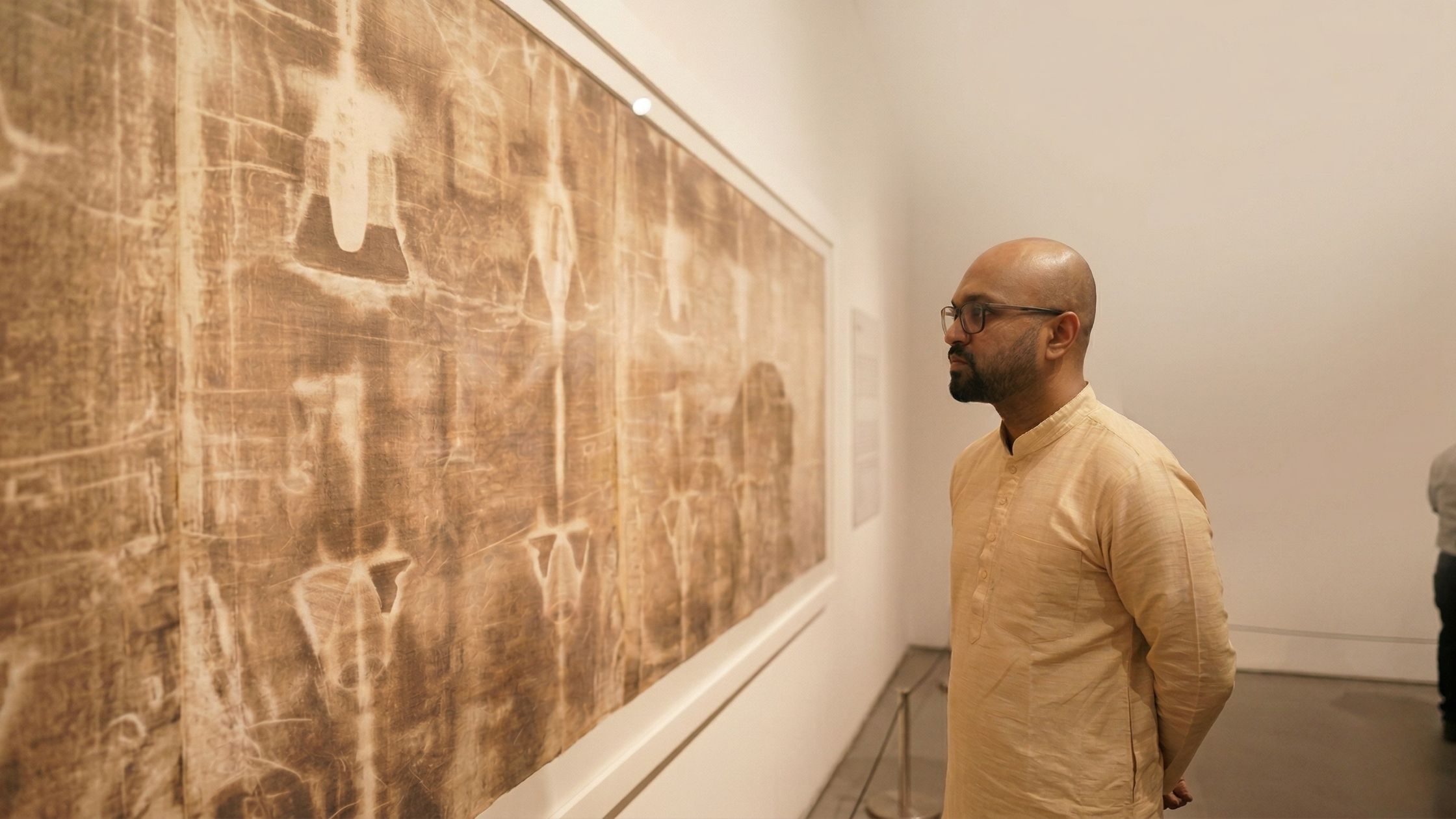
Was Jesus Really in India? The Bhavishya Purana, the Tomb in Kashmir, and the Shroud That Changes Everything Watch the full video explanation The Bhavishya Purana, Roza Bal Tomb in Kashmir & the Shroud of Turin — Evidence Analysed The Question That Unsettles Everyone Christians say he ascended to heaven.Muslims say he was never crucified and was raised alive.Hindus aren’t supposed to have an opinion. And yet — buried in the third Khanda of the Pratisarga Parva of the Bhavishya Mahapurana, sitting untouched in a narrow alley in downtown Srinagar, and locked inside a linen cloth in a chapel in Turin, Italy — there is a trail of evidence that suggests the story of Jesus of Nazareth did not end where either Rome or Jerusalem believed it did. This is not a conversion argument. This is not theology.This is a historical and textual investigation. And it begins, as all things Dharmic do, with a king. King Shalivahana and the Stranger in the Himalayas The Bhavishya Purana’s Pratisarga Parva, third Khanda, chapter 19 opens with context that is easy to miss — but essential. The Pratisarga Parva’s 19th chapter is framed by the reign of Shalivahana, described as the grandson of Vikramaditya. This is historically significant. Shalivahana is not a mythological figure. He is the founder of the Shaka Era (śakābda) — the Indian calendar still used in official government documents today, with its epoch at 78 CE. His dynasty is attested in multiple inscriptions and regional texts. The Kathasaritsagara tradition, medieval Prakrit literature, and several regional chronicles preserve legends of this king. The Bhavishya Purana describes his military achievements before the encounter: he defeated the Shakas (who were difficult to subdue), the Cīnas (Chinese), people from Tittiri, Bahikas, the Romans (Romajān), and the descendants of Khuru. Having subdued all of them, he established a critical boundary — the Sindhu River — as the dividing line between the Aryan lands and the Mleccha territories, naming this separated land Sindhusthānam. Verses 17–21 of Pratisarga Parva 3.19 (Sanskrit): vikramāditya-pautraśca pitr-rājyaṁ grhītavānjitvā śakāndurādharṣāṁś cīna-taittiri-deśajān bāhlikān-kamā-rūpāśca romajān-khurājāñchhataṁteṣāṁ koṣān-gṛhītvā ca daṇḍa-yogyānakārayat sthāpitā tena maryādā mlecchāryāṇāṁ pṛthak-pṛthaksindhusthānam iti jñeyaṁ rāṣṭram āryasya cottamam “He established the boundary dividing the Mlecchas and the Aryans separately. The country known as Sindusthāna became the greatest land of the Aryans.” The framing matters. The Mleccha lands — the lands of the barbarians, the rule-less, the non-Dharmic — lie west of the Sindhu. That is where the stranger comes from. That is the land Jesus describes as having failed. The Meeting at Himatunga — The Shloka by Shloka Breakdown After establishing his kingdom, the Bhavishya Purana tells us that Shalivahana travels to Himatunga — the high Himalayas — and enters the region of Hūnadesa, which corresponds to the area around Ladakh, Manasarovar, and Western Tibet. This is the land of the Hunas, the northern frontier people. There, on a mountain, he sees a man. Verse 22: ekadā tu śakādhīśo himā-tuṅgaṁ samāyayauhūna-deśasya madhye vai giri-sthānaṁ puruṣaṁ śubhamdadarśa bala-rāmā rājā “Once the subduer of the Śakas came to Himātuṅga, and in the interior of Hūnadesa, the powerful king beheld an auspicious man living on a mountain.” The man is described as śubham — auspicious, benevolent-looking. His complexion is golden. His clothes are white. He is a figure of immediate spiritual presence. Shalivahana asks who he is. Verse 23: ko bhavatam iti taṁ prāhasa hovāca mudānvitaḥīśā-putraṁ māṁ viddhikumārī-garbha-sambhavam “The king asked, ‘Who are you, sir?’ The man replied joyfully: ‘Know me as Īśā-putra — the Son of God — born from the womb of a virgin.’” Two extraordinary claims in one verse. Īśā-putra — Son of God (Īśā = Lord of all, putra = son). Kumārī-garbha-sambhavam — born from the womb of a virgin (kumārī = unmarried woman, garbha = womb, sambhavam = born of). This is not vague. In the entire Puranic literature, across hundreds of thousands of verses describing tens of thousands of characters, there is no other figure described in this specific combination: Son of God, born of a virgin, coming from the mleccha lands west of the Sindhu. Verse 24: mleccha-dharmasya vaktāraṁsatyavata-parāyaṇamiti śrutvā nṛpa prāhadharmaḥ ko bhavato mataḥ “‘I am the expounder of the religion of the Mlecchas and am wholly devoted to Absolute Truth.’ The king then asked: ‘What are the religious principles according to your understanding?’” Notice that the Bhavishya Purana calls him a mleccha-dharma-vaktā — the expounder of the mleccha religion. This is the text’s Dharmic classification. He is not being identified as an avatar of Vishnu or a manifestation of Brahma. He is being placed within the Puranic taxonomy of spiritual teachers across traditions — acknowledged, engaged with, and respected — but clearly external to Arya Dharma. Verses 25–26 (The Core Statement): śruto vāca mahārājaprāpte satyasya saṁkṣayenirmāryāde mleccha-deśemasīho ‘ham samāgataḥ īśāmasī ca dasyūnāṁprādurbhūtā bhayaṅkarītām ahaṁ mlecchatāḥ prāpyamasīhatvaṁ upāgataḥ “O great king — when the destruction of truth had come to pass in the lawless lands of the Mlecchas, I, Masīha the prophet, arrived. Finding the fearful, rule-less condition spreading from Mleccha-deśa, having come among them, I assumed prophethood.” And then, the name that ties it all together — Isha Masih (Īśāmasīhaḥ). Isha — the Lord, or, in Aramaic usage, Jesus.Masih — the Anointed One. The Hebrew Māšīaḥ. The Arabic al-Masīḥ. In the Quran, Jesus is called Isa al-Masih in multiple verses. In Syriac Christian tradition, he is called Isho Meshiha. In the New Testament, the word Christos is the Greek translation of the Hebrew Mashiach — the Messiah, the Anointed. The name the Bhavishya Purana records — Īśāmasīhaḥ — is phonetically, linguistically and spiritually identical to the name by which Jesus is known across the Semitic world. The Critical Question: When Did This Meeting Happen? This is where the interpretation becomes genuinely fascinating. Shalivahana’s era is historically established at approximately 78 CE. The crucifixion of Jesus of Nazareth is historically estimated at between 30 and 33 CE. Standard Christian theology holds that the resurrection and ascension occurred three days after the crucifixion. But the Bhavishya Purana’s figure
Is the Bhavishya Purana Fake? The Truth Behind India’s Most Controversial Scripture
Is the Bhavishya Purana Fake? A Scholar’s Defense of India’s Most Misunderstood Mahapurana Watch the full video explanation https://www.youtube.com/shorts/cyokIVFGRik The Truth Behind India’s Most Controversial Scripture The Argument That Loses Before It Begins Every few weeks, someone in a comment section declares it with great confidence: “The Bhavishya Purana is fake.” They say it because it mentions Queen Victoria. Because it names Akbar. Because somewhere in its pages, a figure named Isha Putra speaks to a king about being born of a virgin. To a modern, sceptically-trained mind, these feel like proof of forgery. How can an ancient text know about 18th-century monarchs unless someone sat down in the 1800s and wrote it? But before we answer that question, there is a more important one we need to ask: What do we actually mean when we call a scripture “fake”? Because the moment we answer that properly, the entire debate shifts. First, the Scriptural Foundation — What the Other Puranas Say About the Bhavishya Purana This is where most internet debates begin in the wrong place. They treat the Bhavishya Purana as a standalone, isolated text that must justify its own existence. But in the Puranic canon, no text stands alone. The Srimad Bhagavatam (12.7.23–24) explicitly lists the eighteen Mahapuranas by name. The Bhaviṣya Purāṇa is named alongside the Vishnu Purana, Shiva Purana, Bhagavata Purana, and Skanda Purana. It is not a fringe text, not an Upapurana, not a later addition to the canon. It is one of the eighteen. The same Srimad Bhagavatam (12.13.4–9) then gives the verse count for each of the Mahapuranas: catuḥ-daśa bhaviṣyam syāt tathā pañca-śatāni ca— Śrīmad Bhāgavatam 12.13.4–9 The Bhaviṣya Purāṇa, it declares, consists of fourteen thousand five hundred verses. This is a cross-referencing of one scripture by another — the kind of internal corroboration that the Puranic tradition used to establish authenticity. The Vishnu Purana does not need Western scholars to validate it because other Puranas have already vouched for it. The Bhavishya Purana has the same standing. Furthermore, the Padma Purana, Uttara Khanda (236.18–21) classifies the eighteen Puranas according to the three gunas. It places the Bhaviṣya Purāṇa in the Rajasika category: bhaviṣyaṁ vāmanaṁ brahmaṁ rājasāni nibodhame— Padma Purāṇa, Uttara Khaṇḍa 236.18–21 Alongside Brahma-vaivarta, Markandeya, Vamana, Brahmanda and Brahma Puranas, the Bhaviṣya is here classified as Rajasika — active, historical, world-engaged. Not fraudulent. Not interpolated. Simply a Purana of a different character than the contemplative Saattvika ones. The Āpastamba Dharmasūtra, one of the oldest surviving dharmic legal texts, quotes from a work it calls the Bhaviṣyat Purāṇa. This reference, noted by scholar F.E. Pargiter, places the existence of a text by this name well within the ancient Puranic tradition — certainly predating the medieval period. The content available to us today may have grown around that ancient core, but the core itself is ancient. This is where the argument must begin — not with what a Western Orientalist said in 1912, but with what the Puranas themselves said to each other across millennia. Understanding the Bhavishya Purana: Its Structure and Its Parvas The Bhavishya Purana as it exists today is divided into four sections, each with a distinct character and age: 1. Brahma Parva — 215 chapters. This is the oldest and most established section. It deals with Dharma, the worship of Surya (the Sun god), creation narratives, the duties of the twice-born, qualities of women, the eight forms of marriage, and the Gayatri mantra. This section draws from and is drawn upon by multiple other Puranic and Dharmashastra texts. 2. Madhyama Parva — 62 chapters. A Tantra-oriented section dealing with worship, rites and the nature of the divine. 3. Pratisarga Parva — 100 chapters across four Khandas (sub-sections). This is the famous and controversial section. The first and second Khandas deal with ancient cosmological and dynastic history. The third Khanda covers the medieval period. The fourth Khanda moves into the modern era. This section includes discussions of foreign religions, invasions, Kali Yuga kings and prophecies. 4. Uttara Parva — 208 chapters. Often treated as an independent work called the Bhavisyottara Purana. It is primarily a handbook of religious rites, festival dates, pilgrimage sites and Vrata (vow) observances. The existence of clearly different compositional layers within these four sections is not a scandal. It is a feature. It is exactly what we would expect from a living Puranic text. What “Living Scripture” Actually Means — The Puranic Tradition They Don’t Teach You Here is the crucial concept that the fake-or-real debate consistently ignores. The Puranas are living texts. This is not a defensive argument invented to protect them from criticism. It is a function the Puranas themselves declare. The word Purana derives from Sanskrit: pura (ancient) + nava (new). Ancient-yet-always-new. The Puranic tradition explicitly understood itself as one that absorbed, responded to, and recorded the present moment within the framework of eternal Dharma. The Skanda Purana, the largest of the Mahapuranas at over 81,000 verses, contains chapters that are dated to the medieval period. No serious scholar calls the Skanda Purana fake because of this. The same principle applies to the Padma Purana, the Brahma Purana, and others. A text that speaks only of the past is a historical record. A text that speaks of the past, the present and the future simultaneously is a Purana. The Bhavishya Purana — with the word bhaviṣya meaning “future” embedded in its very name — is perhaps the most transparent about this purpose of any scripture in the tradition. When the Bhavishya Purana describes Mughal kings as demonic forces operating in Kali Yuga, or Queen Victoria as Vikatavati ruling through eightfold policy, it is doing exactly what a Purana is designed to do: placing current events within the framework of cosmic time and Dharmic reckoning. This is not fraud. This is the Puranic method. The Kavi tradition in Sanskrit, it must also be noted, writes events in the past tense even when prophesying the future — a poetic device called bhaviṣyat-purāṇa-style narration. To read
Why Do We Ring the Temple Bell? The Ancient Science of Sound, Silence, and Sacred Preparation
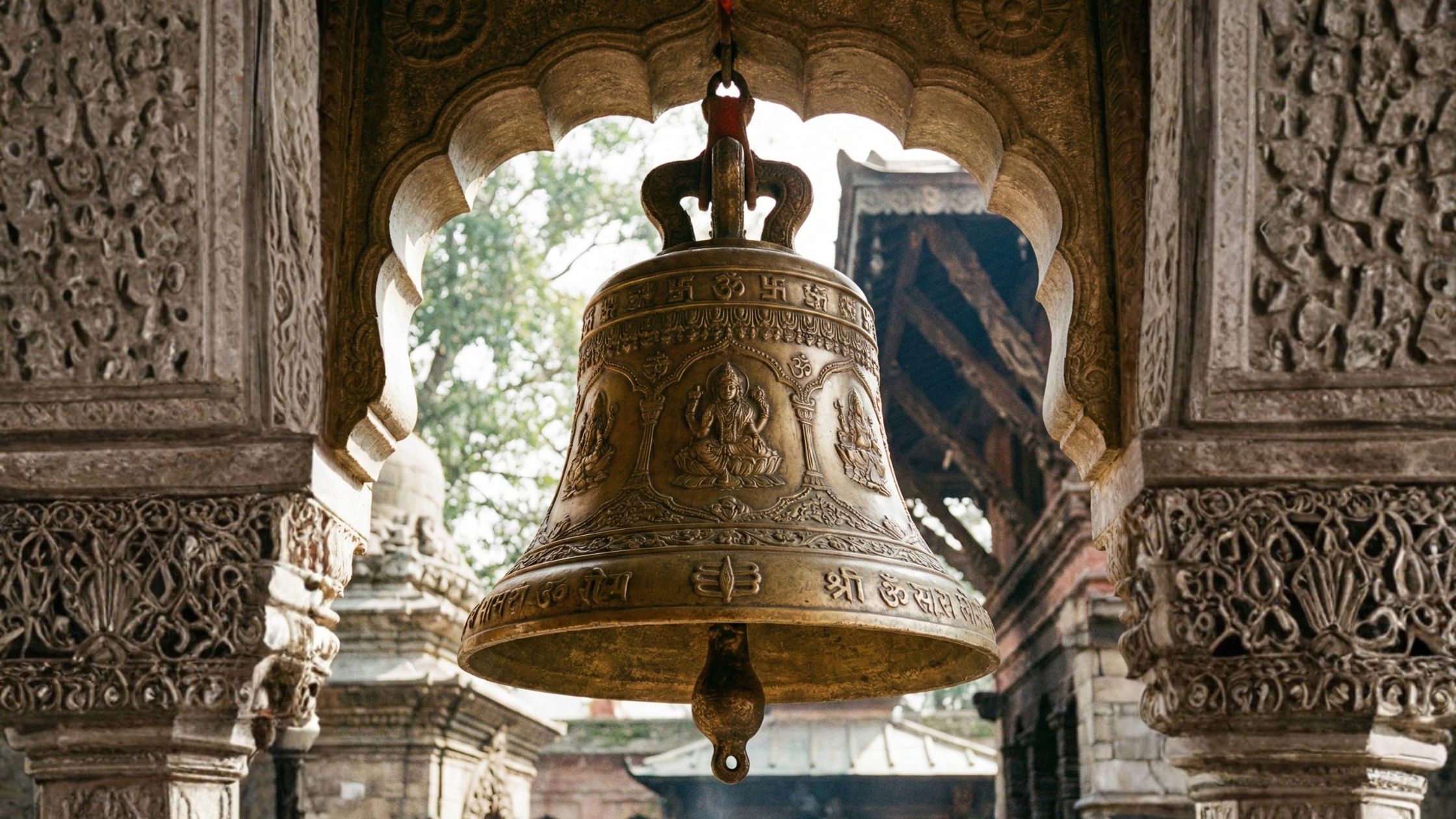
Why Do We Ring the Temple Bell? Watch the full video explanation https://youtube.com/shorts/BYZUy3WW5qU The Ancient Science of Sound, Silence, and Sacred Preparation The Sound That Begins Everything You have heard it thousands of times. A single, clear, metallic ring — sometimes deep and resonant, sometimes high and sharp — that cuts through the air the moment you step into a temple corridor. Your hand reaches up almost automatically. You strike the bell once, perhaps twice, and walk on. What just happened? Most people would answer: you announced yourself to the deity. You performed the prescribed greeting. You followed tradition. All of these are true in the most surface sense. But the ghanta — the temple bell — in classical Hindu understanding, is not a greeting mechanism. It is a precision instrument designed to achieve a specific transformation in the human mind. And the transformation it is designed to achieve is the one thing no deity can grant you on your behalf: the cessation of inner noise. Nada Brahma: Sound as the First Principle of Creation To understand why Hindu temple architecture placed so much importance on the specific resonance of a bell struck at the threshold of sacred space, you need to understand the Hindu cosmological view of sound. The concept of Nada Brahma — sound as Brahman, or the ultimate reality — is not a metaphor. It is a philosophical position stated explicitly across the Upanishads, the Agama texts, and the Natya Shastra. The universe, in this view, did not begin with a big bang in the sense of an explosion. It began with a vibration — the primal sound Aum — which differentiated itself into the spectrum of frequency that we experience as the manifest world. The Katha Upanishad declares that OM is the goal toward which all Vedas point, toward which all austerities travel. Sound, in this cosmology, is not a secondary phenomenon produced by material objects. Sound — or more precisely, vibration — is the primary stratum of reality out of which material objects emerge. If this is the underlying metaphysics of the tradition, then the ritual use of sound in temple worship is not decorative. It is therapeutic. It is corrective. The bell does not exist to make the temple feel more mystical. It exists to interact with the vibrational state of the human nervous system and shift it toward something closer to stillness. The Architecture of the Ghanta The traditional Hindu temple bell — the ghanta or ghanti — is not a casually designed object. Its specifications are laid out in meticulous detail in the Agama texts, particularly in the Shaiva Agamas and the ritual manuals (puja paddhati) used by temple priests across different regional traditions. The bell is typically made from an alloy of five metals: copper, zinc, tin, lead, and a small proportion of gold or silver. These five metals — panchaloha — are the same alloy used for deity installation, and their combination is believed to produce a sound with a specific vibrational quality that resonates with the energy field of a properly consecrated temple. The shape of the bell — wider at the base, tapering toward the top, with a handle often cast in the form of Nandi (Shiva’s bull) or a Garuda or a simple lotus — is acoustically engineered. When struck correctly, the bell produces not a single note but a complex harmonic chord containing multiple overtones simultaneously. It is this chord — this cluster of simultaneous frequencies — that constitutes the bell’s real function. Modern acoustic research confirms what temple builders understood empirically: a complex harmonic sound struck in a reflective stone enclosure produces a standing wave pattern that fills the space with what physicists call acoustic resonance. In plain language: the sound of a temple bell, rung in a stone temple, fills the space with vibration in a way that interacts with and affects the listener’s brainwave activity. Invite the Devas, Dispel the Rakshasas The traditional verse from temple Agama practice says: ring the bell to invite the devas and to drive away the rakshasas. This is often read as a purely liturgical statement — invite the gods, drive away the demons. But a more sophisticated reading, consistent with the Agamic tradition’s approach to symbol, understands ‘devas’ and ‘rakshasas’ as functional states of the human mind. Deva — from the root div, meaning light or to shine — refers in the psychological sense to the luminous, sattvic qualities of the mind: clarity, discernment, calm attention, openness to the subtle. Rakshasa — from the root raks, meaning to obstruct or to seize — refers to the turbulent, tamasic and rajasic qualities: anxiety, agitation, distraction, the internal noise of unprocessed emotion and undirected thought. When you ring the bell at the temple threshold, you are performing a sonic clearing of the inner landscape. You are inviting the qualities of attention, clarity, and stillness — the conditions under which genuine encounter with the divine is possible — and you are actively expelling the competing demands of the ordinary mind: the grocery list, the work email, the unresolved conversation, the ambient worry. The bell does not wake God. God does not need waking. The bell wakes you. The Neuroscience of a Single Bell Stroke Modern neuroscience has begun to map what the Agamic tradition described functionally. The human brain operates in different frequency bands: beta waves (14-30 Hz) characterize ordinary waking thought — the rapid, fragmented, problem-solving mode in which most of us spend most of our day. Alpha waves (8-13 Hz) are associated with relaxed attention, creative reception, and the early stages of meditative states. Theta waves (4-7 Hz) correspond to deep meditation and the threshold of sleep — states associated with profound insight and inner quiet. A sharp, complex harmonic sound — like a well-made temple bell — produces what psychoacousticians call an orienting response: the brain stops its current processing loop, widens its attention, and briefly enters a state closer to alpha. In the second or